How does the Singapore American School (SAS) help children develop skills of self-regulation and resilience? By integrating social-emotional learning (SEL) into the curriculum for early childhood education (3 to 4 years). The school’s Early Learning Center Counsellor and Designated Safeguarding Lead, KRISTI MACKINTOSH, shares why this is important for young children.
What is social-emotional learning?
Social-emotional learning (SEL) is the process through which children develop the skills to understand themselves, manage their emotions and build positive relationships.
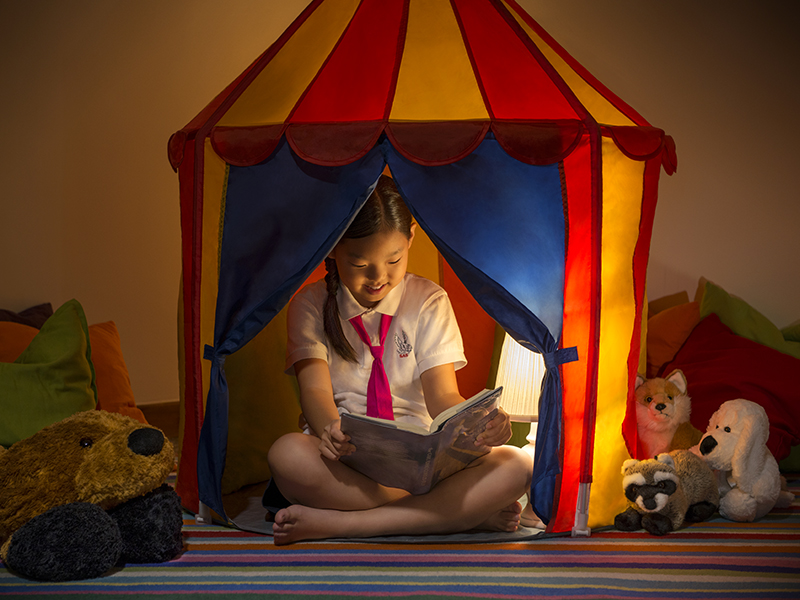
In the early years, SEL is the foundation of learning itself. It includes:
- Learning to name feelings
- Beginning to manage frustration
- Waiting for a turn
- Entering play successfully
- Using words instead of hands
- Recovering after disappointment
- Feeling safe and connected to adults
Research consistently shows that children who develop strong social-emotional skills early are better able to focus, collaborate and cope with challenges later in life.
How does social-emotional learning feature in the early childhood education curriculum at SAS?
At SAS, social-emotional learning is both intentional and embedded. We use the evidence-based Second Step programme as a structured framework for explicitly teaching key social-emotional skills.
What makes SEL at SAS distinctive is how it is woven into a Reggio-inspired, play-based environment and reinforced through Responsive Classroom practices.
This means children learn and practise these skills daily through morning meetings, shared problem-solving, consistent language and classroom routines that build belonging and responsibility.
Importantly, our approach is grounded in the Reggio Emilia philosophy, which views children as capable, curious and full of potential. We believe young children are not simply learning to manage behaviour; they’re learning to understand themselves and participate meaningfully in a community.
The environment itself plays an active role in this process, often described as the ‘third teacher’. Classrooms are intentionally designed to promote independence, collaboration and calm engagement. Materials are accessible, spaces are predictable, and visual supports help children recognise and regulate their emotions.
How is SEL carried out at SAS on a daily basis?
It’s integrated through daily routines, play and relationships.
Morning arrival: Teachers intentionally support separation routines, helping children transition calmly and confidently.
Play-based learning: During block play, art or dramatic play, teachers coach skills such as turn-taking, negotiating roles, managing disappointment and inviting peers to join.
Structured social-emotional learning lessons: These are short, developmentally appropriate lessons from Second Step. Students are introduced to skills such as listening, identifying feelings, calming down and solving problems. These skills are then practised naturally throughout the week.
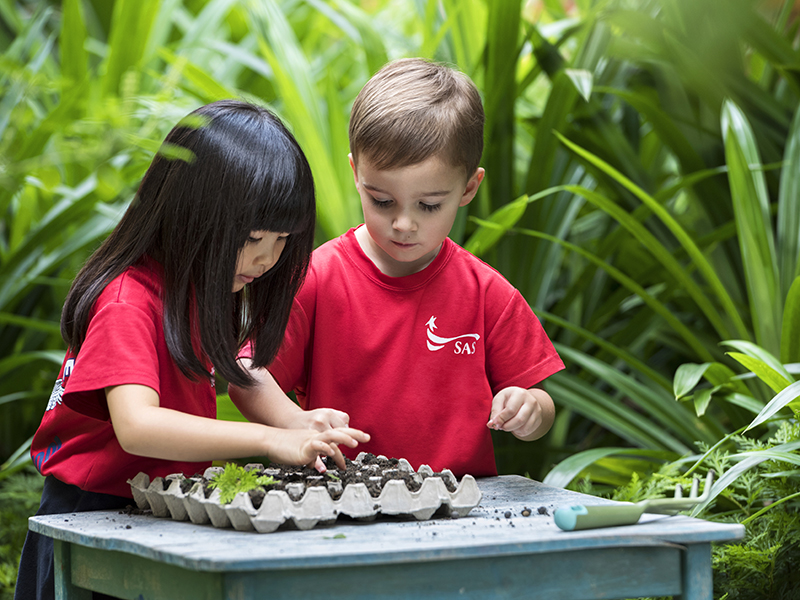
Regulation routines: Children learn concrete calming strategies such as belly breathing, self-talk, “stop and think”. They’re also supported through co-regulation with trusted adults.
Extra support: For some children, additional small-group or individual support may be provided to strengthen specific social-emotional skills. These are aligned with best-practice school counselling models.
As SAS is an international community, we also bring a strong cultural lens to our SEL approach. Children come from diverse backgrounds, languages and family systems. We intentionally create space for different emotional expressions and family values while still teaching shared community expectations.
Will outcomes be different if SEL is introduced later, say from primary school onwards?
Early childhood is a critical window for brain development. Executive function skills – including attention control, emotional regulation and impulse control – grow significantly during the preschool years. This lays a foundation that continues to develop through adolescence and into early adulthood.
When children learn these skills early, they build neural pathways that support later academic and social success.
Introducing social-emotional learning in primary school is helpful but is powerful when begun early. By the time children reach primary, patterns of behaviour, coping and peer interaction are already more established.
Starting social-emotional learning in preschool allows us to:
- Normalise emotional language
- Teach safe conflict resolution from the outset
- Reduce later behavioural difficulties
- Strengthen resilience during transitions
- Build a culture of psychological safety
What does SEL look like in the classroom at SAS?
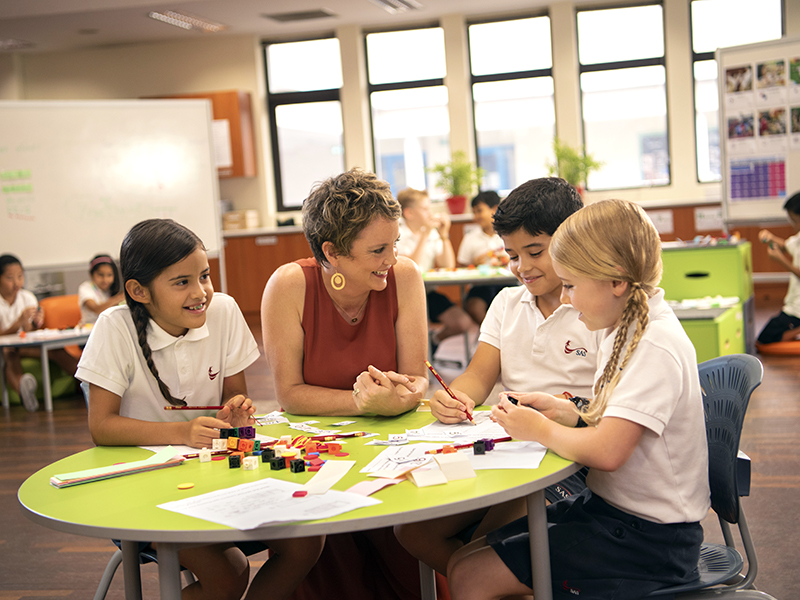
In an SAS Early Learning Center classroom, social-emotional learning looks like:
- A teacher kneeling at eye level, coaching two children through a disagreement
- A child putting a hand on their tummy and taking a calming breath
- A group discussing how a character in a story might be feeling
- A teacher saying, “I can see you’re frustrated. Let’s figure this out together.”
- Children inviting a new classmate to join play
It is gentle, consistent and embedded in everyday moments.
How can parents continue this at home?
Simple ways to reinforce SEL at home include:
- Naming feelings during daily experiences: “You seem disappointed the rain stopped our plans.”
- Modelling calm regulation strategies
- Encouraging problem-solving rather than immediately solving problems
- Practising respectful requests: “Face the person, use a strong, kind voice.”
- Creating predictable routines
Consistency between school and home strengthens children’s sense of safety and competence.
In an expatriate context where transitions, cultural shifts and family stressors can be more frequent, these skills are especially protective. When children can name their feelings, regulate their bodies and trust the adults around them, they’re better equipped to navigate change with confidence.
Singapore American School is at 40 Woodlands Street 41.
6363 3403 | sas.edu.sg
Liked this article on Singapore American School’s Early Learning Centre? Read more about how SAS creates a sense of belonging for international students. You can also head to our Kids section for more about schools in Singapore and things to do with kids.
To make the most of living in Singapore, read our latest City Guide here for free!