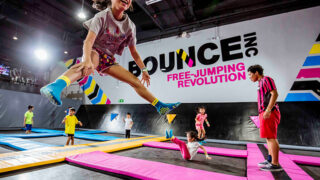
There’s a wide range of preschool curriculums in Singapore – from Reggio Emilia to IB Primary Years Programme (PYP), Early Years Foundation Stage (EYFS) and many more. Here’s what’s on offer at 12 international preschools, including some bilingual preschools.
Rain Trees International Kindergarten – EYFS preschool curriculum
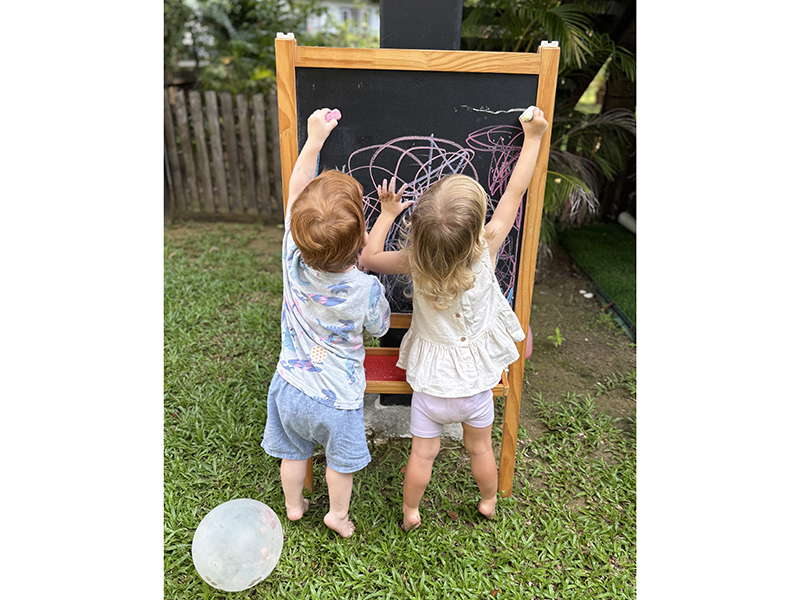
Rain Trees International Kindergarten effectively uses the small, precious window of opportunity in children’s early years to build the confidence, emotional stability, independence and essential life skills they need for every stage of life.
The school follows the British Early Years Foundation Stage (EYFS) preschool curriculum by providing a rich, play-based approach in an intentional, screen-free environment. Hands-on sensory activities, music, movement and puppets spark natural curiosity. Phonics, reading and daily Mandarin lessons, with an optional afternoon immersion programme, are seamlessly integrated as children grow.
Each day, children explore the school’s sprawling 35,000-square-foot outdoor garden through play. Whether growing herbs and vegetables, getting messy in the mud kitchen, riding bikes, climbing or playing games, they build physical coordination and social confidence. Learning extends beyond the gates through themed field trips to places like the Singapore Zoo, Chinatown and the Science Centre. These trips tie in with the topic, as well as hands-on after-school activities.
Rain Trees’ boutique size fosters a close-knit, family-centred community where experienced educators know and nurture each child individually. Parents enjoy direct, daily contact with the principal and teaching team at morning drop-off. There are also updates via the school app, weekly newsletters, progress reports and bi-annual conferences.
By prioritising real-world discovery and human connection during these crucial formative years, Rain Trees empowers children to become confident, capable lifelong learners.
255 Holland Road
6474 6181 | raintreeskindergarten.com
Singapore American School – Reggio Emilia-inspired early years learning led by curiosity
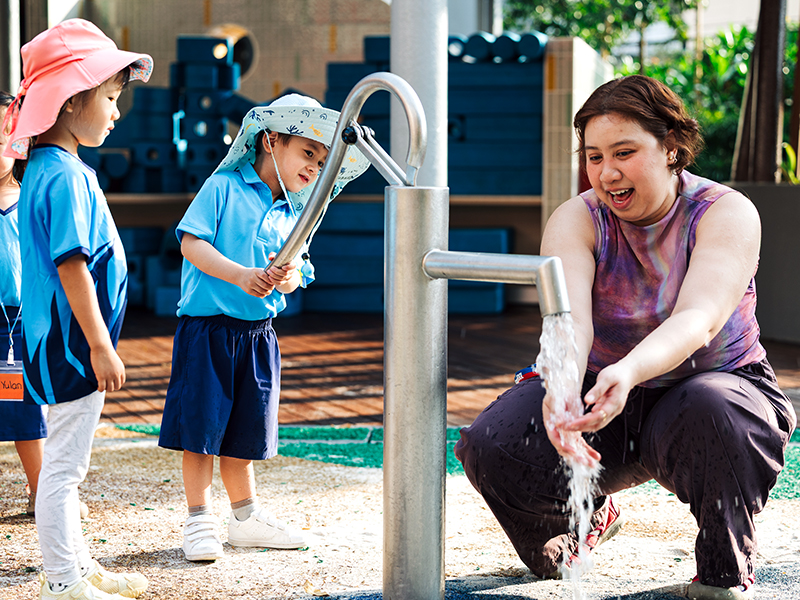
The preschool and pre-kindergarten programme at Singapore American School (SAS) is inspired by the Reggio Emilia philosophy and a deep respect for children as active co-constructors of knowledge.
Learning is shaped by children’s authentic questions, observations and interests. Inspired by Loris Malaguzzi’s concept of the “hundred languages of children”, this may take shape through clay, paint, construction, dramatic play, movement, conversation, light and shadow or natural materials. Atelier and creative studio spaces give children rich opportunities to explore these forms of expression while developing communication, creativity, literacy, numeracy and problem-solving skills.
Indoor and outdoor spaces at SAS are intentionally designed to invite curiosity, experimentation and connection. Natural and open-ended materials, light, texture and thoughtfully arranged spaces act as provocations, encouraging children to ask questions, test ideas, collaborate and create.
According to the school, its educators work as partners and co-researchers, listening closely, noticing patterns in children’s thinking, and introducing new possibilities that help an inquiry deepen. Learning can also extend beyond the classroom through field trips, outdoor exploration, and experiences across the wider SAS campus.
Documentation is an important part of this process – educators capture conversations, photographs, work samples and moments of discovery, sharing these through Toddle. This helps make children’s thinking visible, allowing them to revisit ideas, while also supporting educators in planning next steps, and giving families meaningful insight into how learning is unfolding.
At its heart, SAS says its early years experience is built on relationships, curiosity and respect for each child’s potential; by giving children time, space, materials and multiple ways to express their ideas, children feel known, valued and empowered to shape their own learning.
40 Woodlands Street 41
6363 3403 | sas.edu.sg
Dulwich College Kindergarten School (DUCKS) – nurturing early years learning
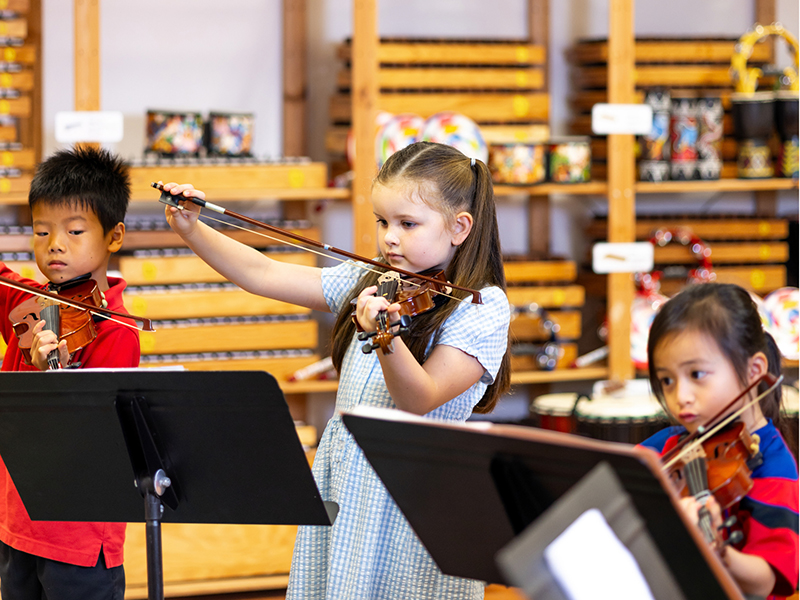
At DUCKS, children from age two through to Year 2 enjoy a nurturing start to their educational journey. The international preschool combines a specialist early years environment with a seamless pathway into the wider College. The team says this gives children continuity in learning and relationships, and a strong sense of belonging.
Based on the British EYFS and progressing into the National Curriculum for England, learning balances strong academic foundations with purposeful play, exploration and discovery. In mathematics, children build conceptual understanding through storytelling and hands-on experiences. This approach earned DUCKS recognition as a White Rose Education Champion School for 2025/26, for excellence in mathematics teaching and learning.
A defining feature of DUCKS its award-winning dual-language programme. From age two, children learn alongside an English-speaking class teacher and Mandarin-speaking
co-teacher, making both languages a natural part of the school day. Stories, role play, songs and everyday interactions build confidence in Mandarin through meaningful immersion. The school received a Silver award for Best Bilingual Programme and was named the Gold winner for Singapore Preschool of the Year at the 2025 HoneyKids Education Awards.
The campus is an extension of the classroom. Children enjoy specialist swimming, music and PE, alongside regular on-campus Forest School sessions in exploring nature, solving problems and taking age-appropriate risks. Dulwich was the first school in Singapore to achieve the UK’s Forest School Learning Initiative accreditation, reflecting its commitment to purposeful outdoor learning.
Global citizenship begins early through child-friendly DUCKS Learning Bugs; children explore inclusion, wellbeing, sustainability and social responsibility, laying foundations for Dulwich’s Live Worldwise philosophy.
Online learning journals connect home and school, while close relationships with teachers ensure every child can be known, understood and supported, helping to build the confidence, curiosity and sense of belonging to flourish.
71 Bukit Batok West Avenue 8
6890 1003 | singapore.dulwich.org
Canadian International School – IB inquiry-based approach in Early Years curriculum
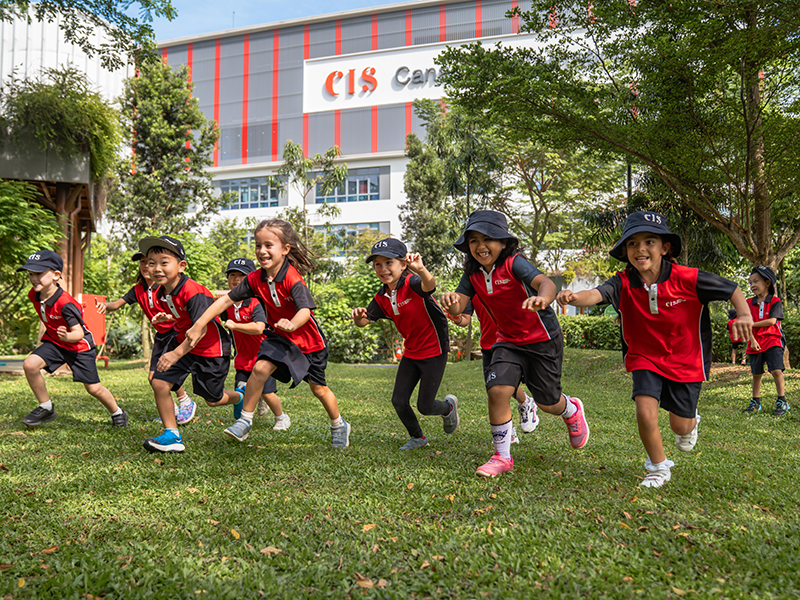
Early Years education at Canadian International School (CIS) combines the strengths of internationally recognised curriculums to create what the school describes as a rich and rigorous foundation. Built around the IB Primary Years Programme (PYP), Nursery through Junior Kindergarten follows EYFS Development Matters, while Senior Kindergarten develops literacy through the American Common Core and builds mathematical foundations through the Ontario curriculum. Families can choose from three language pathways: English, Chinese-English bilingual or French-English bilingual.
Every morning, Kindergarten students venture into the school’s 2,400-square-metre garden to explore purpose-built environments and the natural world. Daily leadership roles, from zookeeper and gardener to line leader, give students meaningful opportunities to practise responsibility, independence and collaboration. Teachers observe closely, using children’s questions, interests and interactions to shape experiences that challenge their thinking and support individual development.
The school’s specialist learning environments turn concepts into experiences. For example, children experiment, create, collaborate and explore different perspectives in the STEAM Room, Role Play Room and Global Culture Room. The Mini City Urban Planner Lab takes this further, inviting children to think like designers, planners and problem-solvers as they engage with real-world concepts and the communities around them. The rooftop garden, instructional lab and learning kitchen provide further opportunities for connecting ideas across science, mathematics, language, culture and the arts. Beyond the curriculum, cultural celebrations and school-wide experiences broaden children’s perspectives.
Families, meanwhile, gain an ongoing view of their child’s experiences, progress and development through digital portfolios. The Parent Academy extends this partnership, equipping parents with practical strategies to support their child’s learning at home and stay actively connected to their journey.
7 Jurong West Street 41
6467 1732 | cis.edu.sg
Tanglin Nursery and Infant School – carefully considered Early Years learning
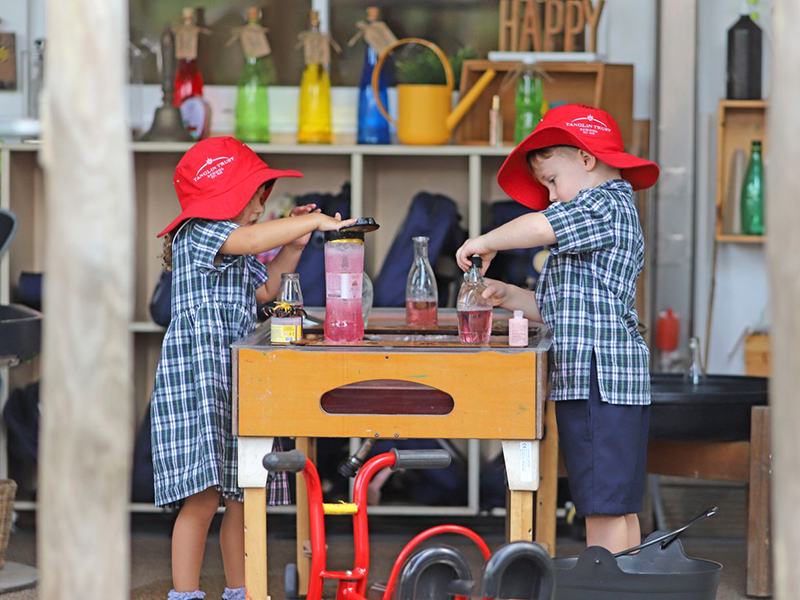
The Tanglin Nursery and Infant School provides a nurturing environment that encourages curiosity and creativity. The team strive to ensure that every child’s early learning journey is filled with discovery and wonder. Following the English National Curriculum, the Early Years curriculum blends teacher-led and child-initiated learning, offering a balance of structure and play each day.
Tanglin was the first school in Asia to achieve the Curiosity Approach Accreditation back in 2019, gaining reaccreditation in 2025. This certification recognises a continued commitment to curiosity, awe and purposeful, child-led learning, and reflects the international preschool’s use of natural materials and beautifully designed spaces to inspire imaginative play. Classrooms are calm, natural environments where children collaborate, explore and develop independence.
Learning also extends beyond the classroom. Forest School, introduced in Nursery and continuing through the four years of Infant School, is a nature-based learning moment complemented with local field trips, and there’s also a rich music and art programme. All these activities encourage children to connect with the world around them. Physical development is integral, too: children learn to swim in the Infant pool, ride bicycles as part of the PE curriculum, and enjoy the climbing wall and expansive outdoor playground.
Tanglin Infant School is led by highly experienced educators who understand the needs of both children and parents. Paula Craigie, Head of Infant School, and Victoria Thomas, Head of Tanglin Nursery, work closely together and have each taught at Tanglin for more than 20 years. They say that their experience and close understanding of the Early Years is reflected in the confidence and independence of the children. As one Infant parent shared, “I’m most excited to see the confidence and carefreeness that has blossomed in my child”.
95 Portsdown Road
6778 0771 | tts.edu.sg
Chatsworth International School – holistic preschool curriculum inspired by Reggio Emilia

The early years programme at Chatsworth introduces learners to a formal school setting starting at age three. Inspired by Reggio Emilia and guided by the IB PYP framework, the curriculum connects literacy, numeracy, arts and social-emotional development through inquiry units exploring culture, nature and community. Central to this experience are play-based spaces where students play an active role in co-building these spaces, sharing ideas
The environment is a powerful resource for providing different types of experiential learning. Often linked to the programmes of inquiry, teachers bring students out for field trips to enrich their learning experiences. For example, through a field trip to the Singapore Oceanarium, kindergarteners enriched their learning about sharing the planet with animals responsibly. On a guided discovery tour of the aquarium, they observed diverse marine animals, exploring their habitats and learning about the importance of conserving the oceans.
On the school’s annual Sports Day, kindergarteners participate in various activities with their friends and parents, demonstrating their running, jumping and throwing skills. In CCAs and ECAs, K2 students are welcome to participate in activities from Session 3 onwards, thereby allowing them to enrich life at school.
Teachers communicate with parents regularly via email. Electronic newsletters share important information relating to school and programmes. Primary school leverages a Digital Portfolio where teachers showcase student work and connect their class and student learning with home. Twice a year, the school issues detailed reports and holds parent-teacher-student conferences.
72 Bukit Tinggi Road
6463 3201 | chatsworth.com.sg
One World International School – inquiry-led IB early years curriculum
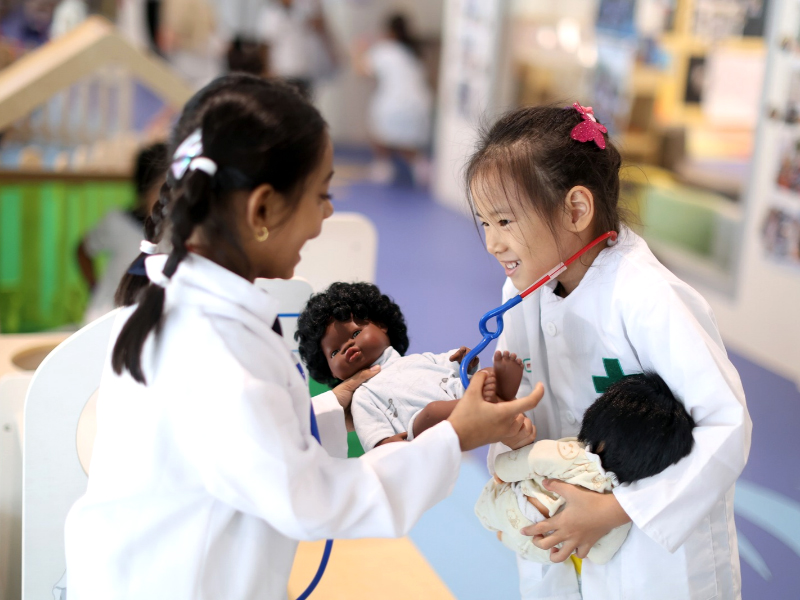
OWIS sparks curiosity in their youngest learners (ages three to six) through a well-rounded, inquiry-led curriculum built on the IB PYP framework. By integrating play into the inquiry-led approach, it aligns with age-appropriate learning outcomes from the National Curriculum of England.
While the Nanyang and Digital campuses offer the accredited IB PYP for both Early Years and Primary students, OWIS Newton uses a play-based approach for the youngest learners and an inquiry-based model for Primary. The Newton campus is currently a Candidate School for the IB PYP, working toward full authorisation as an IB World School. This will ensure a smooth, consistent learning approach across all three locations.
Classrooms and outdoor spaces at OWIS are full of life – children dive into hands-on lessons with sensory play, pretend-play centres and interactive activities. The team says that through daily storytelling, role-play, reading and group projects, children build creativity, critical thinking, social-emotional strength and communication skills, alongside foundational reading and math skills.
Learning goes beyond the basics at OWIS. Dedicated teachers lead specialist classes in Art, Music and PE, and children can also learn Chinese, French or Japanese – the
offering varies by campus. Beyond the classroom, regular outdoor play and field trips bring learning to life. Throughout it all, small class sizes and caring, experienced educators ensure every child gets the personal attention they need to
succeed and grow.
The school believes that parents are true partners in education. You’ll always know how your child is growing, thanks to clear, regular updates, parent-teacher meetings, emails, and newsletters.
- Nanyang campus: 21 Jurong West Street 81
- Digital campus: 27A Punggol Field Walk
- Newton campus: Alfa Centre, 99 Bukit Timah Road
Dover Court International School NEST – play-based preschool curriculum inspired by Reggio Emilia
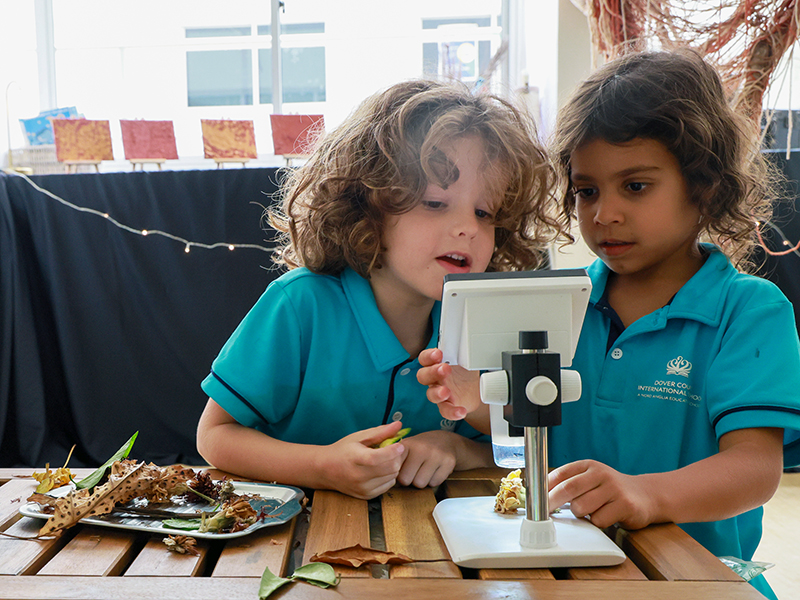
At Dover Court International School, young children begin their learning journey in NEST (Nurturing Early Success Together), a dedicated Early Childhood Education programme for Nursery to Year 2. In a warm, nurturing environment, children learn through play, inquiry and hands-on experiences that build confidence, curiosity and a love of learning. The programme is guided by the British EYFS and inspired by the Reggio Emilia approach.
Unlike a standalone preschool, NEST forms the first stage of a continuous educational journey. Children remain in the same nurturing environment as they progress into Years 1 and 2; the school says this helps them to develop a strong sense of belonging while growing in independence and responsibility.
Teachers carefully balance child-led exploration with structured learning to develop literacy, numeracy and communication skills. Alongside classroom experiences, children enjoy specialist lessons in Music, Mandarin, PE and Swimming. Learning also extends beyond the classroom through outdoor exploration, hands-on projects and the Discovery & Play Cove, a purpose-designed playground environment that sparks imagination, collaboration and creativity.
The Dover Court team says that strong partnerships with families are at the heart of the NEST experience. Through Seesaw, workshops and learning celebrations, parents gain meaningful insight into their child’s development while working closely with educators to support every stage of the journey. As children move through NEST and into Primary, they benefit from a seamless educational journey, supported by familiar approaches to learning, wellbeing and relationships.
301 Dover Road
6775 7664 | dovercourt.edu.sg
North London Collegiate School (Singapore) – strong head start from early years

The First School at North London Collegiate School (Singapore) combines individual care and an academically ambitious programme to give children from Pre-Kindergarten to Grade 1 a strong start to their learning journey. Much of the learning in the early years takes place through play, practical activities and exploration. Children are encouraged to ask questions, try new things and make sense of the world around them. They also begin building important academic foundations from age three, with a focus on English and Mathematics. Through a structured approach to phonics, children develop their early reading and writing skills at a pace suited to their stage of development.
The school day includes specialist lessons in Mandarin, Music, Physical and Health Education, and Life Skills. Each class teacher is supported by a Mandarin-speaking assistant teacher and a teaching assistant. This helps teachers give children the attention and encouragement to grow in confidence and independence.
Children also take part in trips around Singapore, visiting places of cultural interest and enjoy opportunities to experience the arts. Through transdisciplinary learning, they begin to see connections between different subjects and explore ideas that interest them.
The First School’s warm and stimulating environment has dedicated spaces for reading, art, music and play, both indoors and outdoors. The teachers take time to get to know each child, build strong relationships with families, and understand how best to support learning and development. Parents are informed about their child’s progress through a family app, helping home and schoolwork together to support development.
130 Depot Road
6989 3000 | nlcssingapore.sg
SJI International Preschool – inquiry-based preschool curriculum grounded in The Virtues Project
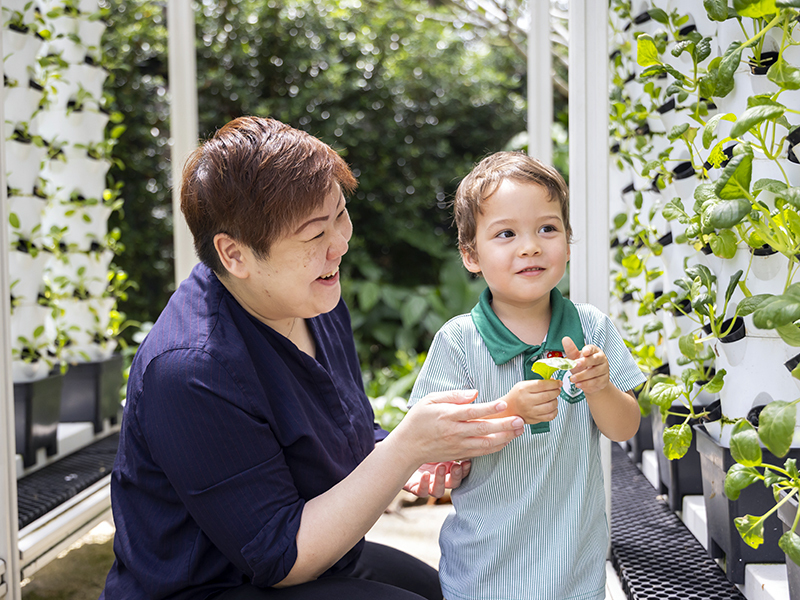
The holistic, inquiry-based curriculum at SJI International Preschool spans eight transdisciplinary domains, from Literacy and Numeracy to Science and The Arts. Structured teaching builds strong foundations in English, Mandarin and Numeracy, and there’s also an emphasis on nurturing children’s character, curiosity and stewardship, grounded in the Virtues Project. In this way, they develop empathy, resilience and respect. The inclusive and flexible environments on campus allow every child to participate and contribute as a valued member of the community.
The full-day programme from 7am to 7pm (core curriculum hours are 9am to 5pm) balances structured teaching with rich child-led experiences. Children engage in music, movement, storytelling, outdoor play, urban farming and collaborative bilingual inquiry daily. Across the year, children engage in shared transdisciplinary units of inquiry that connect learning across different domains. While the broad inquiries are experienced across the preschool, they’re adapted to different age groups and to children’s developmental needs, interests and capabilities.
Learning extends beyond the classroom – grounded in the school’s Outdoor Learning Programme, children spend at least one hour outdoors each day. Experiences include open-ended outdoor play, physical and gross motor development, nature walks, and taking part in hands-on sustainable farming in the aquaponics garden. There’s also a dedicated 45-to-75-minute nap period in the afternoon for children to rest and recharge.
Parents receive regular digital updates, photos and stories that offer insights into their child’s learning. There are also formal parent-teacher meetings three times a year to share observations and collaborate on future learning goals. School-wide events throughout the year provide meaningful opportunities for families to participate in and contribute to their child’s learning, connect with the school community, and strengthen the partnership between home and school.
49A Holland Road
6908 4520 | sji-internationalpreschool.com.sg
Holland International School – multilingual Early Years and Preschool curriculum

Located next to the forests of Bukit Timah, HIS offers a learning environment that nurtures young explorers who grow into confident, caring global citizens. The school’s connection with nature extends into its learning spaces. Natural materials and elements of nature are incorporated into the classrooms, creating calm and welcoming environments that support children’s learning and wellbeing.
The preschool curriculum for Preschool and Early Years follows the International Early Years Curriculum (IEYC). The play-based approach blends thoughtful teacher guidance with joyful, child-led exploration. Children can join from as early as 18 months, and they learn in a multilingual English, Dutch and Mandarin setting that nurtures the whole child.
Each month, children focus on a personal goal such as communication, collaboration or resilience. These values come to life through engaging play corners and hands-on experiences indoors as well as outdoors, from treasure hunts to nature walks. Teachers help children make meaningful connections. For example, a child who listens carefully and shares ideas during group play demonstrates strong communication skills, while a child who keeps trying to rebuild a tall block tower after it falls shows resilience.
A distinctive feature of HIS is the dedicated Transition Group. It’s designed to provide children with a smooth and purposeful progression from preschool into Reception and the Dutch Group 1 primary classes.
Thanks to small class sizes and a high teacher-to-child ratio, the school says that every learner’s voice is heard and valued. Parents also stay closely connected through learning showcases and regular family events that celebrate each child’s journey of discovery.
65 Bukit Tinggi Road
6466 0662 | hollandinternationalschool.sg
Stamford American International School – inquiry-based preschool curriculum
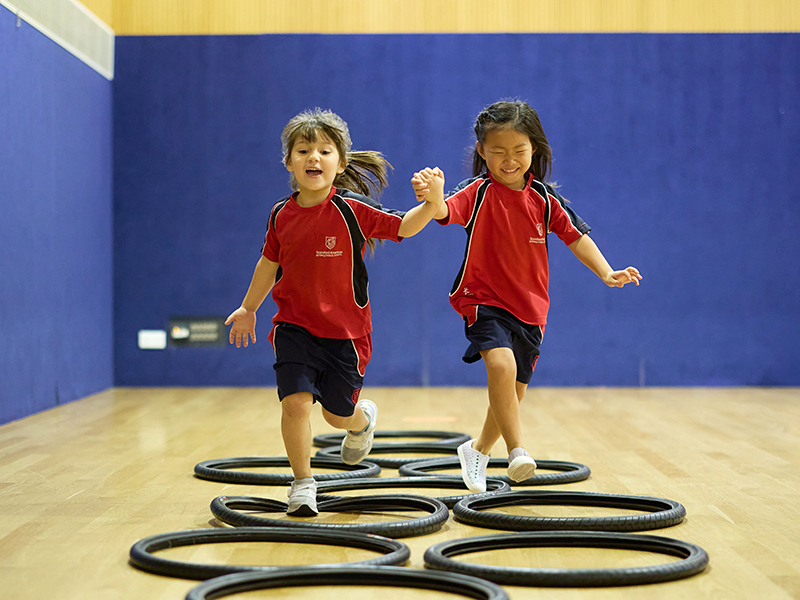
The Early Years programme for Pre-Nursery through Kindergarten 2 at Stamford American International School gives children the confidence to ask questions, try new things and follow their curiosity.
Teachers use a Reggio-inspired, inquiry-based approach built on play and hands-on experiences. They follow American educational standards, including The Creative Curriculum and AERO, and shape each day around the interests of the children in front of them. In Pre-Nursery and Nursery, children move between classrooms and attached Discovery Spaces for sand, water, music and art. From Pre-Kindergarten, they begin the IB Primary Years Programme, while Kindergarten 1 and 2 add Units of Inquiry and dedicated makerspaces.
Every child learns Mandarin or Spanish daily with specialist teachers. Families who want deeper immersion can choose the optional English-Mandarin bilingual programme that’s offered from Pre-Kindergarten.
Movement matters at Stamford American. Children play across six dedicated outdoor and specialist spaces, including The Shipyard pirate ship playground, an undercover 20-metre swimming pool and The Hive indoor gymnasium. Children can also choose from more than 30 co-curricular activities ranging from robotics and coding to ballet, story writing and Suzuki-inspired music.
Smaller classes mean teachers can get to know each child well. The school uses Teaching Strategies GOLD for tracking progress in literacy, numeracy and social-emotional learning, and parents receive weekly updates. An on-site parent café gives families a place to connect.
The school says the results show: 97 percent of its Elementary School children meet or exceed literacy expectations. Children leave Kindergarten 2 ready for Grade 1 at the Woodleigh Campus, with transition portfolios and classroom visits to make the move familiar.
3 Chuan Lane, Gate 4
6653 2947 | sais.edu.sg
Liked this article about international preschool curriculums and early years curriculums? Here are the best preschools and kindergartens in Singapore reviewed by parents! We also have a list of the best things to do in Singapore with the family. Planning to live in Singapore or new to our sunny island? Read the digital edition of our latest City Guide.
Frequently Asked Questions (FAQs) – click for the answers!
There’s a wide range of early years programmes offered by international preschools in Singapore, including IB Primary Years Programme (PYP), Reggio Emilia-inspired learning, Early Years Foundation Stage (EYFS), International Early Years Curriculum (IEYC) and curriculums based on the English National Curriculum. Different schools blend these with play-based, inquiry-led or bilingual approaches to suit varied learning philosophies.
Each curriculum emphasises different learning frameworks:
- IB PYP & inquiry-based programmes focus on curiosity, exploration, and concept-driven learning.
- Reggio Emilia-inspired approaches nurture self-expression and child-led exploration.
- EYFS emphasises structured development through play and foundational skills.
- International Early Years Curriculum (IEYC) blends social, physical, emotional, and cognitive skills in a holistic, play-based way.
Most international preschools in Singapore accept children from around 18 months onwards, with programmes structured from Pre-Nursery up to Kindergarten levels. Entry age may vary by school and curriculum.
Yes — some schools offer bilingual programmes (e.g., English-Mandarin or English-Dutch), where instruction and activities are conducted in both languages to support language development from an early age.
International curriculum programmes typically use a mix of:
- Play-based learning — encourages exploration and social skills.
- Inquiry-led activities — builds curiosity and critical thinking.
- Structured lessons within frameworks like EYFS for foundational literacy and numeracy.
Many international preschools share learning updates through digital platforms (e.g., Storypark, Seesaw), regular parent-teacher meetings, and portfolios showcasing children’s work and milestones.
Yes — the programmes aim to develop early literacy, communication, thinking skills, social-emotional confidence, and curiosity, all of which form a strong foundation for primary education in international and local contexts.
Absolutely — many offer specialist lessons (like music, art, sports) and after-school activities to nurture interests, physical development, and social engagement beyond classroom learning.
Yes. Approaches like Reggio Emilia and IB, as well as other programmes, often integrate outdoor learning and nature play to enrich exploration, motor development, and experiential learning.
Consider:
- Your child’s learning personality (play-focused vs structured).
- Language goals (bilingual vs monolingual).
- Your family’s values and priorities for early childhood development. You may also visit schools or attend open houses to get a feel for the environment and teaching style.
Don't miss out on the latest events, news and
competitions by signing up to our newsletter!
"*" indicates required fields