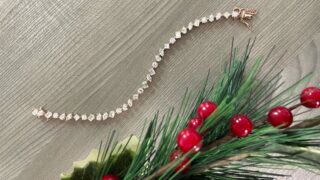
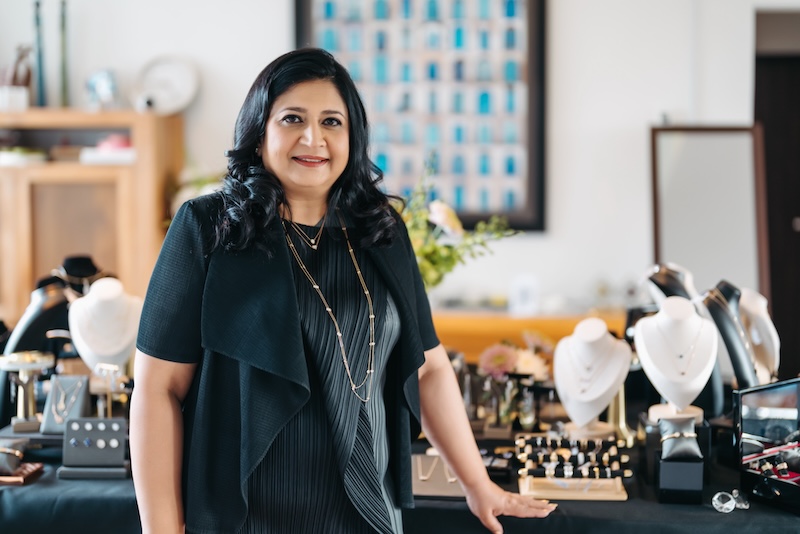
… but that’s about to change! AARTI SONAWALA, GIA-certified gemologist and founder of ART N ASH, lets us in on a few insider secrets about fine jewellery. From why some gemstones cost more than others to the real differences between lab-grown vs natural diamonds, she shares her insights!
10 facts about fine jewellery you didn’t know!
Whether you’re into fine jewellery, custom pieces or gemstone collecting, there’s always something new to learn. And as a diamond specialist and jeweller in Singapore, I’ve seen too many clients left confused by half-truths, buzzwords and glittery marketing. That changes now. Here are 10 honest, must-know facts that your average jeweller might not tell you – but I will.
#1 Not all of the 4C’s matter every time
You’ve likely heard of the famous 4Cs of diamonds: cut, colour, clarity carat. While all four affect a diamond’s beauty and value, context is everything. For example, if you’re buying a pair of solitaire earrings, focus on carat and colour. They need to match and make an impact from a distance. But for a solitaire engagement ring, the cut is king – it’s what gives the diamond its sparkle. A well-cut stone will outshine a larger, poorly cut one every time. Always match the C’s to the purpose.
#2 Why round diamonds are more expensive
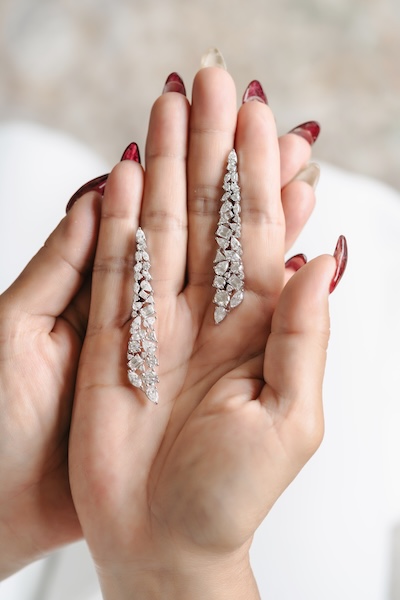
A round brilliant diamond is the most expensive shape in natural diamonds for good reason. It’s cut with perfect symmetry to maximise brilliance and sparkle – and it also means more rough diamond is wasted in the process, making it more costly. Interestingly, in lab-grown diamonds, the pricing flips: rounds are often cheaper than fancy shapes like pear or oval due to supply trends and manufacturing differences. So, shape can impact both budget and brilliance – always ask why.
#3 The real difference between yellow, white and rose gold
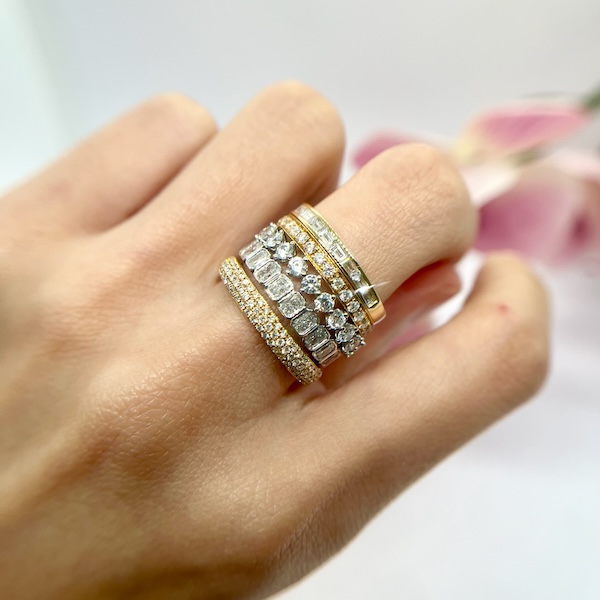
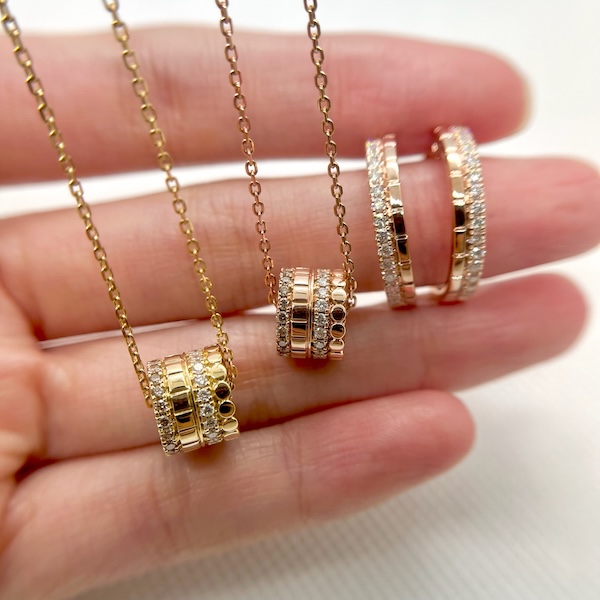
All gold starts out the same colour – yellow. What makes gold appear white or rose is the alloys it’s mixed with. Yellow gold is mixed with silver and copper. White gold is mixed with palladium and is often rhodium-plated for brightness. Meanwhile, rose gold gets its blush from higher copper content. The colour doesn’t affect gold’s purity – that’s measured in karats (like 14K or 18K). Which leads us to…
#4 14K vs 18K gold in fine jewellery
14K gold contains about 58 percent pure gold, while 18K gold contains 75 percent. So which is better? It depends. 18K has a richer colour and higher gold content. 14K is more durable for everyday wear (especially in rings) and now much more affordable.
#5 Which gemstones are fragile?
Not all gemstones are created equal in terms of hardness. On the Mohs scale (the measure of a mineral’s scratch resistance), diamonds are a 10 – the hardest. But emeralds, rubies, opals and moonstones are much softer and can scratch or crack easily. This affects how you wear and care for them. A daily-wear emerald ring? Maybe not the best idea. Choose durable gemstones for everyday wear and save the delicate beauties for fine jewellery for special occasions.
#6 Why Colombian emeralds cost more than others
Emeralds from Colombia are considered the “gold standard” thanks to their vivid green hue, high clarity and historical prestige. Their colour comes from high levels of chromium and vanadium, giving them a look that’s hard to replicate. Compared to emeralds from Zambia or Brazil, Colombian stones are rarer, more vibrant – and naturally, more valuable. It’s not just about origin; it’s about the beauty and rarity that origin brings.

#7 The truth about lab-grown vs natural diamonds
Curious about the lab-grown vs natural diamonds debate? Here’s the deal: lab-grown diamonds and natural diamonds are chemically and physically identical. Both score a 10 on the Mohs scale and offer the same sparkle, brilliance and durability. The main difference? Origin and price. Natural diamonds are mined and take billions of years to form. They’re rarer and usually more expensive. Lab-grown diamonds are made in a lab, are eco-friendlier and cost significantly less. To the naked eye, you can’t tell them apart. Whether you go natural or lab-grown for your fine jewellery, you’re still getting a diamond. Just make an informed choice.
#8 Almost all rubies in fine jewellery are heat-treated – and that’s okay!
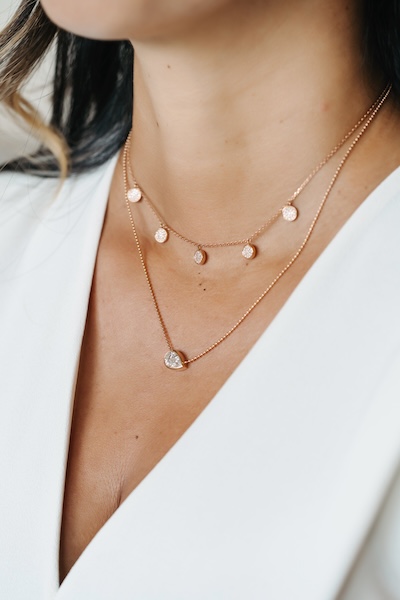
If someone claims their ruby is “untreated”, be cautious – over 95 percent of rubies are heat-treated. Why? It enhances their colour, making them richer, improving clarity and making lower-quality rubies usable for fine jewellery. This is a standard accepted industry practice, and the results are permanent. Untreated rubies do exist, but they’re extremely rare and valuable – and priced accordingly. My tip would be to always ask for certification to confirm either way.

#9 Looking for a blue gemstone? Sapphire isn’t your only option
Yes, blue sapphires are stunning, but they’re not the only gorgeous blue gemstones out there. You might fall in love with the violet-blue of tanzanite, the electric hues of blue tourmaline or the rare charm of blue spinel. Each offers a unique tone and story. Ask your jeweller to show you the full blue spectrum – you might discover a new favourite! Or book an appointment with ART N ASH to get a full rundown (at a wholesale price)!
#10 How to take care of your fine jewellery
Jewellery may last forever – but only if you take care of it. Here’s how:
- Remove it before swimming, exercising, cleaning or applying lotions or perfume
- Handle delicately, especially with softer stones
- Check settings regularly; loose stones are common and easily fixed
- Use a polishing cloth to gently restore shine at home
- See a professional once a year for cleaning, re-polishing setting inspection
At ART N ASH, we believe that knowledge is just as precious as the jewels you wear. Whether you’re buying your first piece of fine jewellery or curating a personal collection, being informed means being empowered. If you’re curious about custom fine jewellery, diamonds or unique gemstones, follow us on Instagram or reach out directly – we’re here to help you shine smartly!
Get in touch with Aarti at ART N ASH for a consultation at [email protected].
IG @artnashsg
Like this article about ART N ASH, fine jewellery, gemstones and lab-grown vs natural diamonds? Find more inspiration in our Style & Beauty section.
To make the most of living in Singapore, you can also read our latest City Guide here for free!
Don't miss out on the latest events, news and
competitions by signing up to our newsletter!
"*" indicates required fields