
Many students who want to apply to colleges or universities in America will need to sit the SAT, ACT or AP test. Beyond using test prep books, how else can you level up your SAT preparation in Singapore? The Princeton Review Singapore team shares some studying tips that could help you get successful results.
Tell us a bit about The Princeton Review.
Aditya Jain, Head of Operations: That SAT prep book that you bought? It’s most probably one by The Princeton Review (TPR). The Princeton Review is one of the oldest and leading SAT prep test institutes in the US, which boasts of the highest number of test takers. There are around 2 million students in the US taking the test annually.
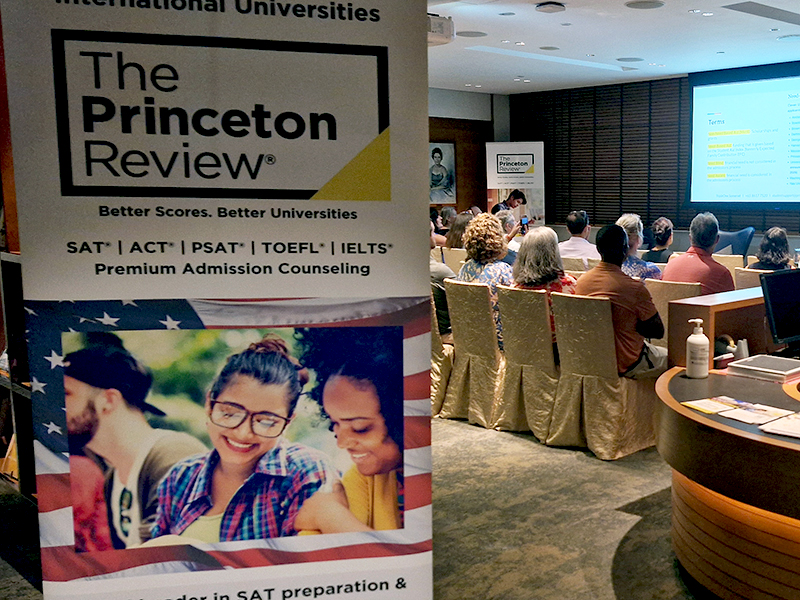
TPR has been present in Singapore for more than 20 years. The number of students in Singapore who take the SAT is estimated to be around 20,000 annually. Being exposed to so many students doing SAT prep helps the institute in analysing its course content and practice material, ensuring that it’s accurate and highly effective.
In Singapore, TPR sees 85 percent of its students scoring 1450 or higher. The institute also records an average score improvement of 200+ points from a student’s pre-assessment test to the final SAT test score.
Are SAT prep books on their own enough to prepare for the SAT test?
Benjamin Eqbal, Director of TPR and English teacher: Our SAT prep books are considered the gold standard in SAT test preparation – they’re regularly rated as best-choice material on Google, in online discussion forums and by popular bookstores like Amazon and Kinokuniya.
Our books are written by our US master trainers with at least 10 years’ experience in researching all tests – SAT, ACT, AP – and training other trainers. They also maintain their own knowledge about the tests by attempting them regularly. These same master trainers are responsible for training and certifying the SAT teachers across the world, including our teachers in Singapore.
For this reason, students can trust our study material for improvement on the tests. For a self-driven and disciplined student, books by The Princeton Review are more than enough to ace the SAT.
However, many students are often busy with extracurricular activities, on top of school curriculum. They find it tough to develop their own structure and maintain a disciplined approach to studying for the SAT.
For these students, instructor-led courses may turn out to be a better solution. The expert trainer supports them by clearing their doubts and helping them score better through a study plan that works best for them plus tips to study for the test.
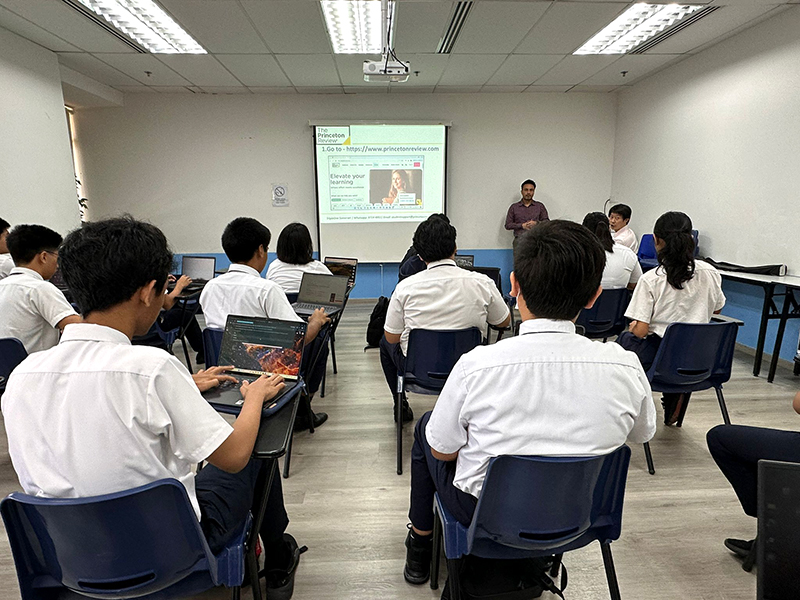
How does The Princeton Review create a study plan for students?
Benjamin: We start our interaction with each student by getting them to take a pre-assessment test created by our US head office that replicates the actual SAT. You can correlate this with a doctor asking for a blood test or x-ray report before making a diagnosis. This helps our teachers understand and record each student’s inherent weaknesses across 40 different components of the SAT.
We maintain small group sizes of maximum seven students for our in-person or online group classes. This allows our teachers to provide individual attention to each student’s weak areas. Students can also choose one-on-one private tutoring sessions. In this case, the teachers customise the course plan for each student, focusing on selective weak topics analysed through the pre-assessment test.
Our students take progressive assessment tests to check for improvement. These also help the teachers stay updated on each student’s learning requirements and provide relevant studying tips.
This continuous evaluation and improvement cycle by The Princeton Review is quite scientific in approach, and forms the benchmark of our students’ strong score improvement on the SAT.
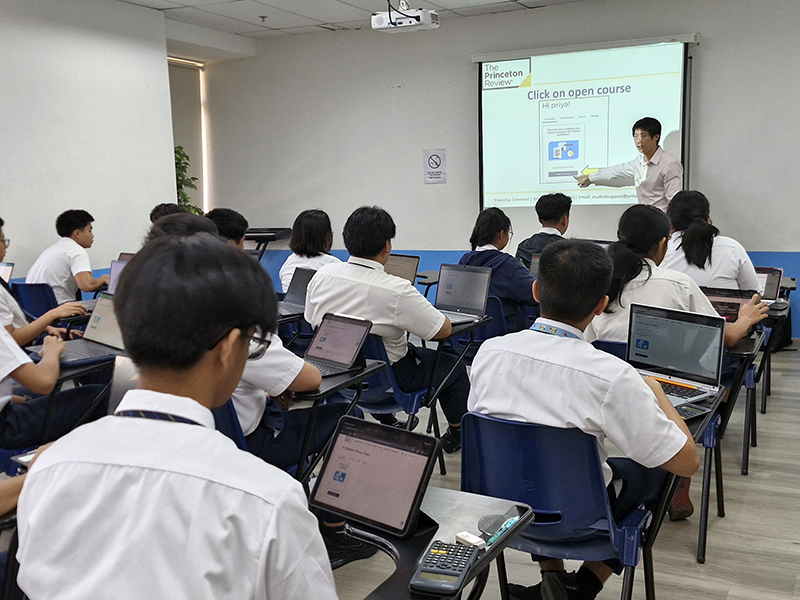
How do teachers help students who are stuck in their SAT preparation?
Bandy, Master Trainer for Maths: We believe in working with analytics instead of just a subjective viewpoint of students regarding where and when they are stuck in their SAT preparation.
The Princeton Review’s proprietary study tips, techniques and strategies also help students overcome blocks, which might hamper their improvement on the SAT.
Our Master Trainers have developed techniques to solve questions faster while maintaining accuracy. We also believe clear and regular communication between our teachers and students helps overcome barriers to learning. Thus, we have WhatsApp group chats for direct communication between students and teachers. This enables our teachers and operations team members to regularly update students about their progress and their next steps; students can also clarify their doubts in real time while practicing.
What if a student wants to study for the SAT test by themselves, but still wants some support from The Princeton Review?
Benjamin: A recommendation for such a student is the self-study package, which our test prep centre in Singapore offers. It provides books that are quite detailed, along with 12 full-length tests (most books you’d buy online have only four). This package also provides topic-wise tests across 37 different components of the SAT.
Students can learn through the course manual and analyse their improvement through their practice tests. They can then take focused topic-wise tests to improve performance on each topic. For example, if a student notices errors in coordinate geometry while taking the full-length test, they can practice 50 questions from easy through to hard levels for only coordinate geometry through the drills.
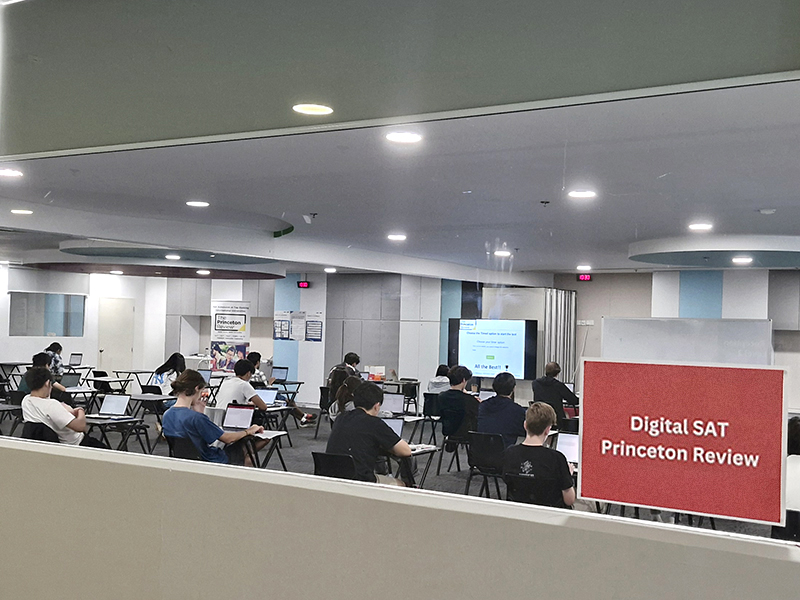
Are there other aspects of university applications that The Princeton Review helps with?
Aditya: Our College Admissions Counseling (CAC) service provides expert support throughout the application process, helping students secure admission to top universities. We support profile-building, university selection, essay editing and interview preparation to strengthen applications.
Our admission counsellors are ex-admission officers at top-ranking universities like Cornell, Harvard, Berkeley and more. They evaluate academic performance, extracurriculars and career goals to create a shortlist of universities categorised as Reach, Target and Safety.
With personalised essay guidance and interview training, we refine a student’s applications to maximise success. This ensures they stand out in a competitive admissions landscape – our students have been placed in their top-choice universities over the years.
What’s your top study tip for someone preparing to take their SAT test soon?
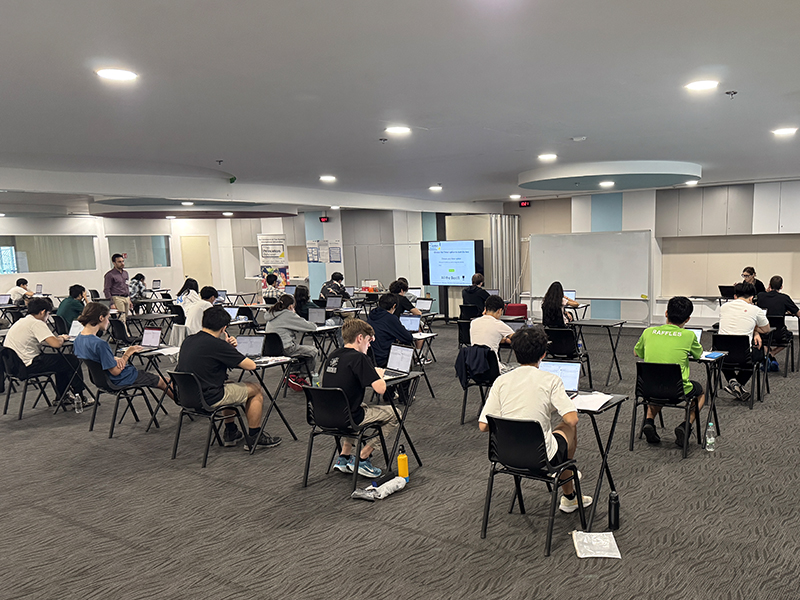
Bandy: At The Princeton Review, we believe that preparing for the SAT is like a marathon, not a sprint. So, a consistent, steady effort of learning and practice, followed by regular full-length tests gives great results.
However, we understand that there are students who find it challenging to follow this process due to a busy schedule. We understand their anxiety at a late stage and recommend they take an assessment test to identify their weak areas. This can help them understand where they stand and prioritise key topics to focus on for maximum improvement over the shortest time.
Students can choose to self-study these topics or get help from our experienced teachers, while using the question bank and full-length tests to build stamina for test day. We recommend practicing under strict, timed conditions, with no distractions like a phone or notes – this builds comfort with pacing and help students overcome anxiety on test day. The questions on the SAT are designed to “punish” students who are unable to overcome anxiety or fear. One misread word or a miscalculation drives you to pick a wrong answer – these are the dreaded “SAT trap questions”.
We also recommend you prioritise at least eight hours of sleep before test day. This will help your mind overcome fatigue and increase focus, processing speed and recall, all of which will be strong advantages on test day.
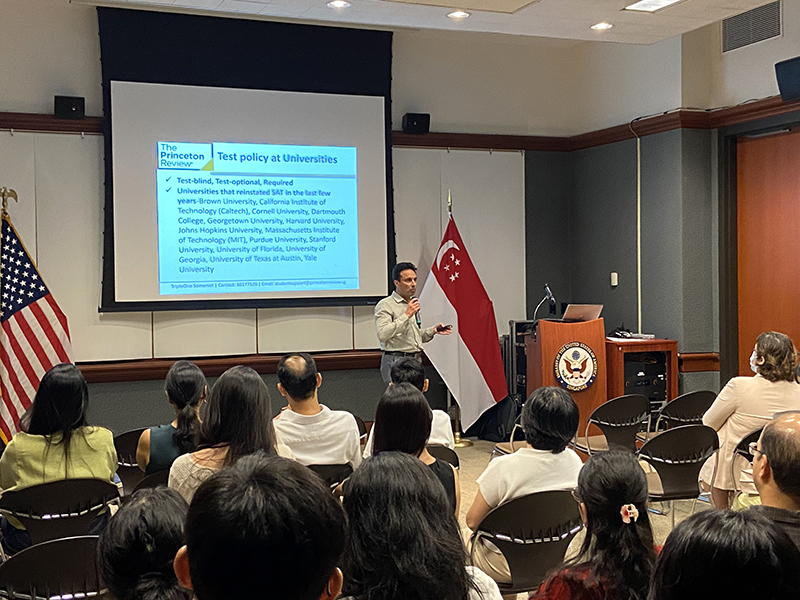
Hear from students…
“The Princeton Review has been an incredible experience. A big part of that is the warmth of the teachers and staff. From day one, they made me feel genuinely welcomed. Their friendliness and care made every interaction enjoyable and memorable.” – Emad Gokal; starting total score of 1,260 (610 for RW, 650 for Maths) to 1,490 (730 for RW, 760 for Maths)
“It has been a great experience with The Princeton Review. I was taught by Mr Benjamin and he helped me significantly from 1,380 in my first SAT practice test to a 1,550 SAT score.” – Mark Sim; starting total score of 1,380 (670 for RW, 710 for Maths) to 1,550 (760 for RW, 790 for Maths)
Get SAT prep support from The Princeton Review
Scan the QR code to enquire how TPR can support you in your preparation for the SAT test.
The Princeton Review Singapore is at #03-09 TripleOne Somerset, 111 Somerset Road.
Call/WhatsApp 9724 4951 | [email protected]
princetonreview.sg
Liked this article on studying tips for SAT prep and tests by The Princeton Review Singapore? Visit our Living in Singapore section for more ideas and inspiration.
Don't miss out on the latest events, news and
competitions by signing up to our newsletter!
"*" indicates required fields