How do inquiry-based student learning, outdoor learning and daily classroom activities look in an early years (Nursery to Year 2) classroom? BEN COLES, a NEST (Nurturing Early Success Together) teacher at Dover Court International School (DCIS), gives us a closer look at the daily activities for kids aged three to seven years. Plus, a student from Reception class (for four-year-olds) also shares what he likes best. Find out more about the school’s Early Childhood Education programme at its upcoming Open House on 26 September.
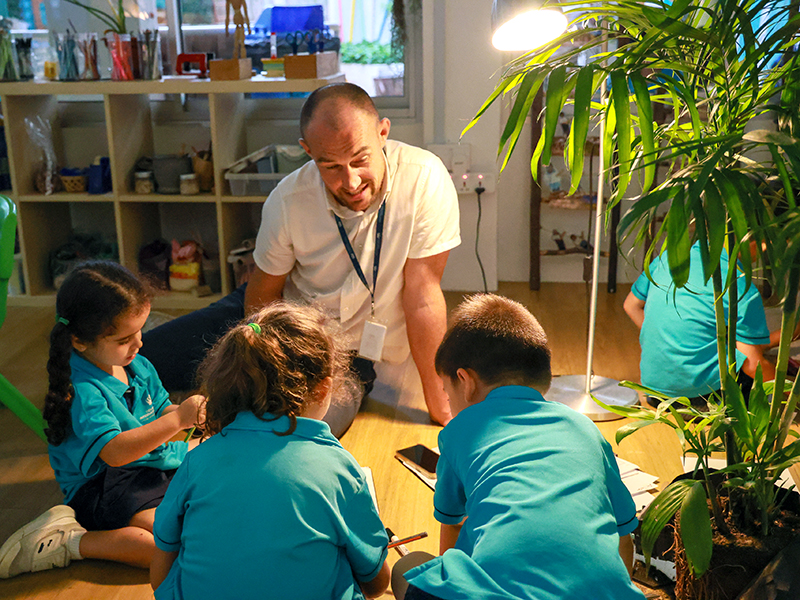
How does student learning look at Dover Court’s NEST?
#1 Inquiry-based learning: what do students learn?
During the first six weeks of school, we focus on building our class community, developing relationships, and giving the children a real sense of ownership over their classroom. As part of this, I ask the children how they would like their classroom to look, feel and sound.
These conversations unfold over several days and weeks. They eventually form the basis of our Essential Class Agreement, a piece of work the children co-create through the ideas and discussions that emerge during our morning meetings.
This process involves a huge amount of learning. The children develop a sense of responsibility and ownership over their space, while understanding that their voices and ideas are valued. They learn to listen to their friends’ thoughts, consider different perspectives, and respond to one another’s ideas.
Most importantly, we encourage them to think deeply rather than look for a single “right” answer.
“Do our feelings have colours?” “What does it mean to feel safe?” “What does the word ‘calm’ mean to you?”
These are all questions the children have explored over the past five weeks, and their ideas continue to evolve as they listen to and learn from one another.
Hear from a student: Which is your favourite activity in class?
“I liked painting my favourite colours because it made me feel calm. I liked glueing the cotton because it was messy and sticky.”
#2 Outdoor learning: How do early years students explore?
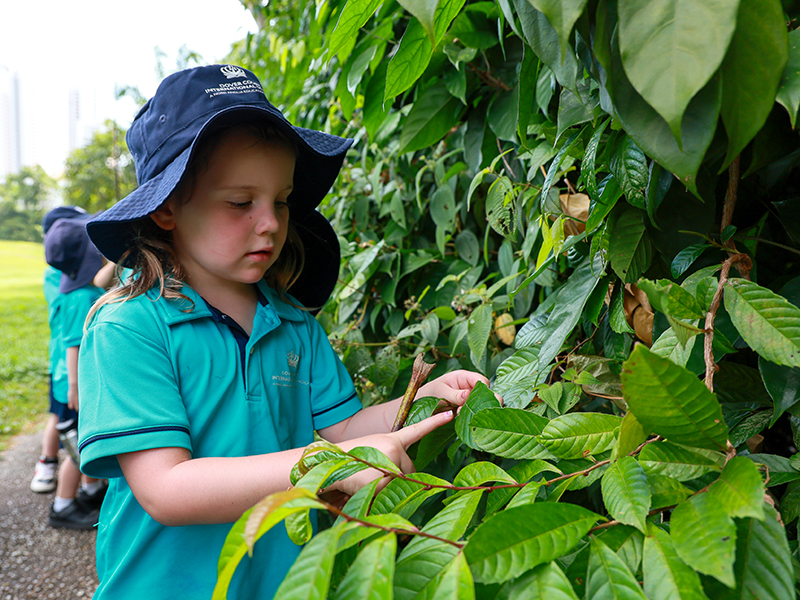
We’re very lucky to have Medway Park right next to Dover Court International School, and I try to take the children there for a nature walk at least once a week. It gives us an opportunity to step outside the classroom and experience student learning in a completely different environment.
Being in nature encourages the children to slow down, observe and notice things they might otherwise pass by. We learn how to move through and respect a shared natural space, but we also use it as a place for curiosity, conversation and discovery. A fallen leaf, an unusual insect or a change in the trees can become the starting point for a question or an investigation that we bring back into the classroom.
This reflects an idea that’s central to the Reggio Emilia approach in Dover Court’s early childhood education: the environment acts as a third educator. When we change the space we are learning in, we often change the way we look at things too.
Hear from a student: Why do you like being outdoors?
“I like exploring the outdoor atelier with my friends, and finding interesting bits of nature like sticks and inventing a new game together.”
#3 Classroom activity: How does allowing independent exploration help with student learning?
Research consistently shows us that young children learn best when they are deeply engaged in play. Play is absolutely the vehicle for learning in early childhood education.
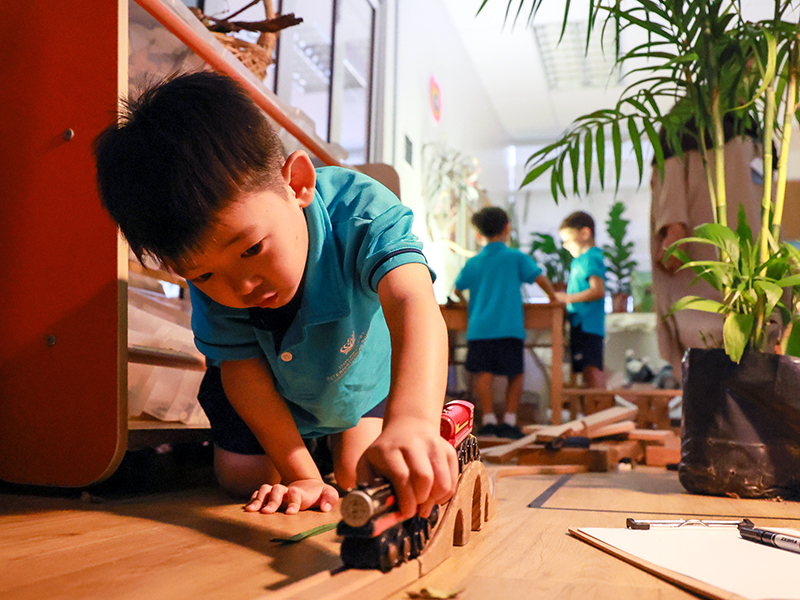
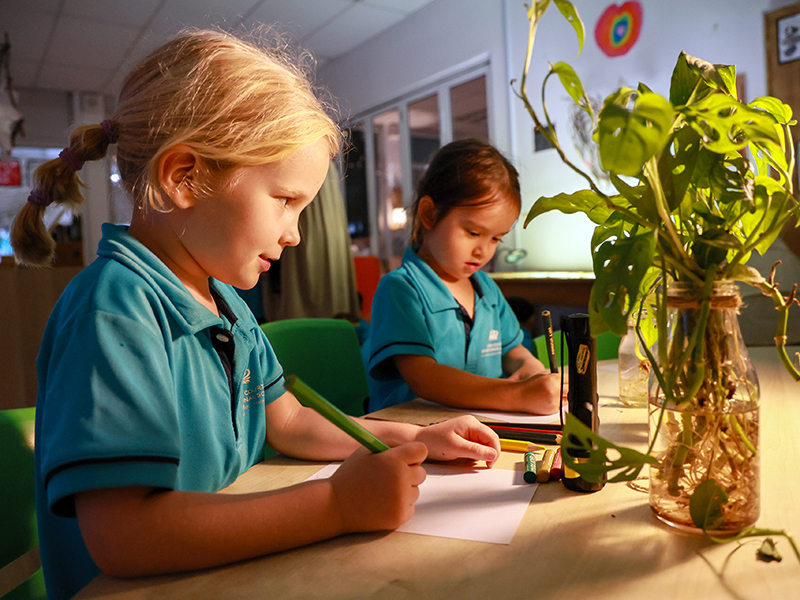
During Learning Choice, the children can explore the classroom independently. This gives them autonomy and ownership over what they choose to work and play with. It also gives us, as teachers, the opportunity to watch, listen and gain a deep understanding of what the children enjoy, what they are curious about and what motivates them.
Once we understand this, we can bring learning into their play, rather than removing them from their play to learn. This allows student learning to happen naturally within a topic or project the child is already deeply engaged in and motivated by.
Hear from a student: What’s your favourite classroom activity?
“Playing in Learning Choice because I can make lots of things with my friends.”
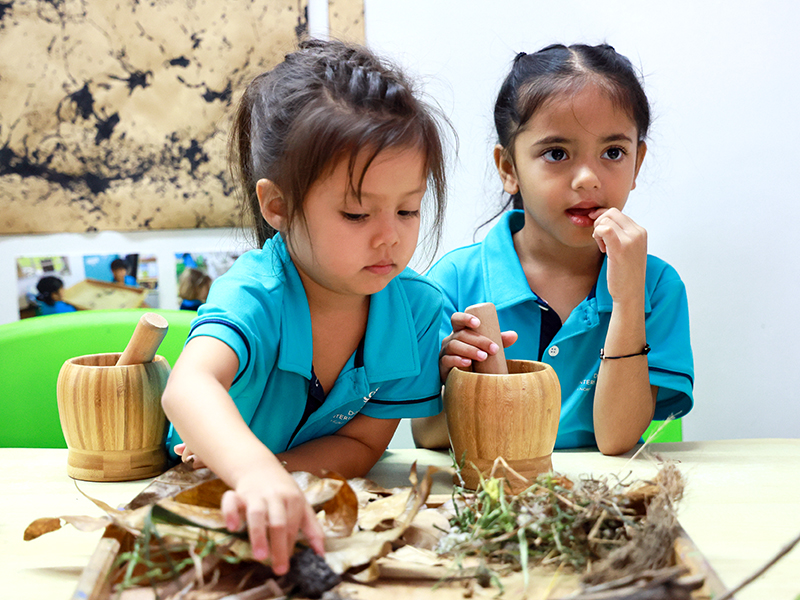
#4 How are foundational skills in English, Maths and Science taught at Dover Court?
Play is the vehicle for learning at Dover Court’s NEST – English, Maths and Science live within the children’s play and exploration throughout the day.
Rather than these subjects existing only as separate lessons, we look for opportunities for children to use and develop these foundational skills in meaningful ways across the curriculum.
For example, children might mark or write a label on something they have created, write their name on a piece of artwork, count out the number of blocks they need to build a house, compare the height of two structures, or work out how many more pieces they need. Science is approached in much the same way, through curiosity, observation, questioning and investigation. Children are naturally interested in how the world around them works, and we use their questions and discoveries as opportunities to explore ideas together.
Alongside learning through play, we also have more focused teaching. The children have four phonics sessions each week to support them on their journey towards becoming confident readers and writers. We also introduce Maths provocations throughout the week and work with children in small groups, guided by the EYFS outcomes and by our observations of where each child is in their learning.
For Dover Court’s Early Childhood Education Programme, the important thing is that these foundational skills have a purpose and a context. Wherever possible, we want children to see English, Maths and Science as embedded in their everyday lives, rather than something that only happens when they sit down for a lesson.
Hear from a student: Which is your favourite subject?
“Building things in the construction area is my favourite thing to do because I like working with my friends and using all the different types of materials and bricks.”
Experience Dover Court’s NEST in person
Learn more about Dover Court’s NEST child-led, play-based learning at their upcoming Open House on 26 September. See details about the event here.
Dover Court International School is at 301 Dover Road.
6775 7664 | [email protected] | dovercourt.edu.sg
Liked this article about the Early Childhood Education programme at Dover Court International School? Read more about NEST here and head to our Kids section for more articles on Schools.
Don't miss out on the latest events, news and
competitions by signing up to our newsletter!
"*" indicates required fields