
On a visit to the Changi Chapel and Museum, NICK AGGS, Head of Whole School Music Performance of Australian International School Singapore (AIS), came across the Changi Souvenir Song Album. It would lead to a performance of the songs – for the first time in Singapore since the country’s liberation – by 12 AIS student vocalists. Nick shares highlights from the collaboration with HeritageSG.
About Heritage in Harmony at Changi Chapel and Museum
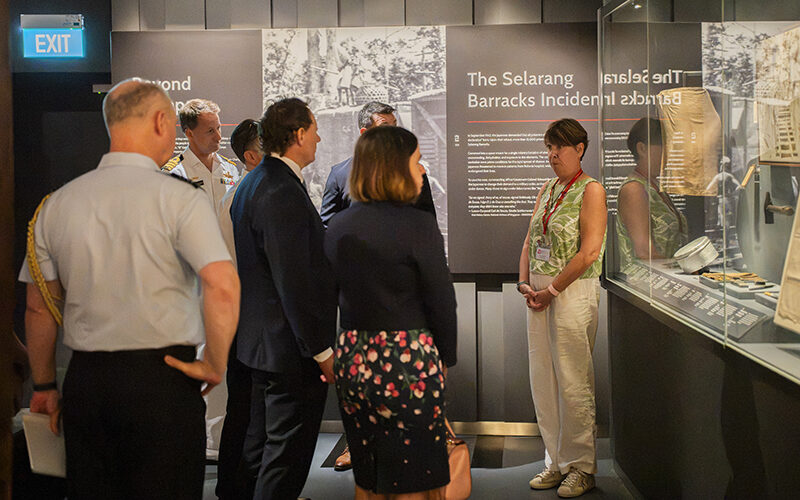 Heritage in Harmony was held on 11 September. The event commemorated the liberation of Singapore from Japanese occupation, which happened between 5 and 12 September 1945.
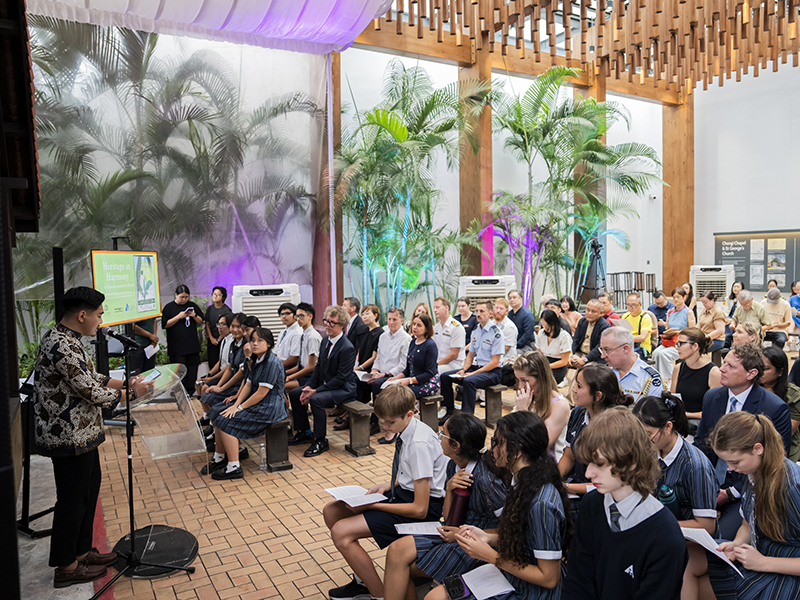
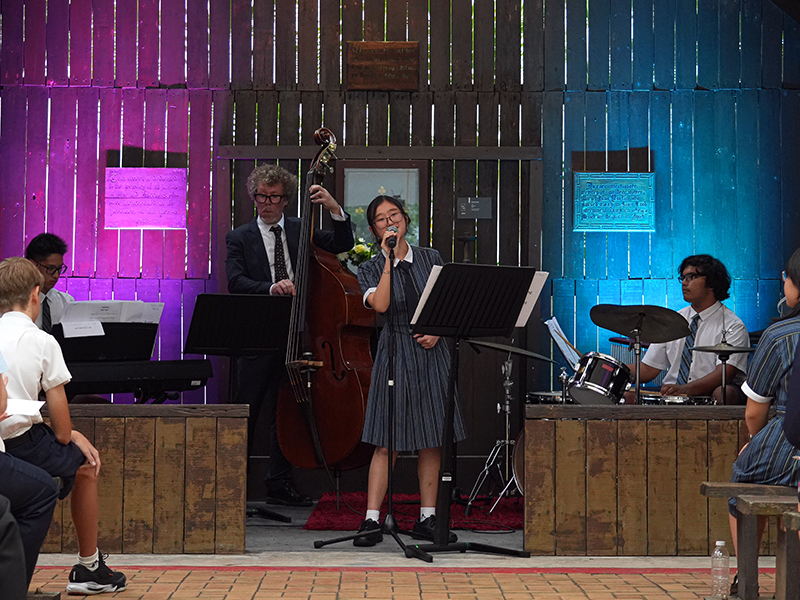
Twelve AIS student vocalists, together with AIS student musicians on piano and drums and Nick on bass, performed 16 songs from the Changi Souvenir Song Album to 120 guests. Ray Tullipan and Slim de Grey wrote the songs during their internment at Changi in the 1940s. Ray and Slim were part of the Australian Imperial Force (AIF) Concert Party consisting of about 30 musicians, actors and comedians.
The students embodied the message of each song and gave a genuinely swinging rendition of the music. The band held a groove that supported the singers with ease, and the arrangements gave the tunes vitality and relevance. Needless to say, the response was rousing!
Following this was a talk, “What Liberation Asks Us to Remember”, by Associate Professor Hamzah Muzaini from the National University of Singapore. Professor Hamzah was previously the curator of Changi Chapel Museum.
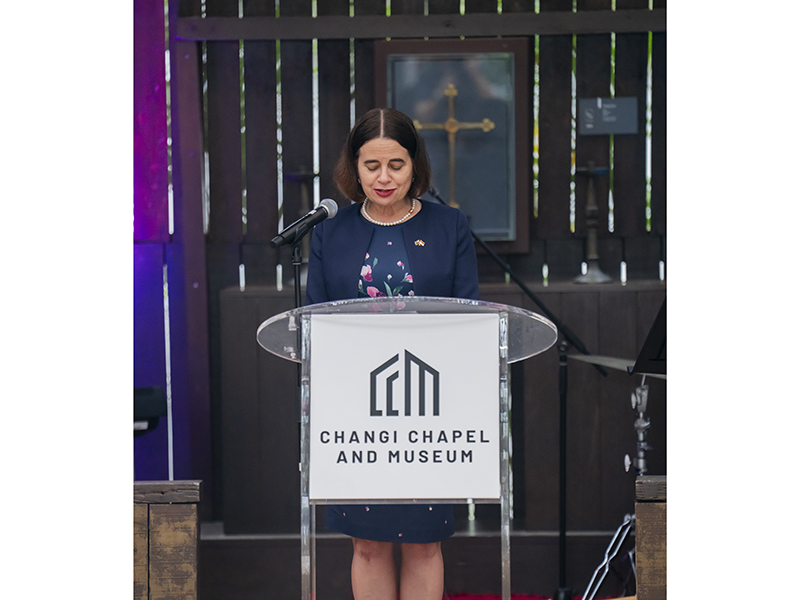
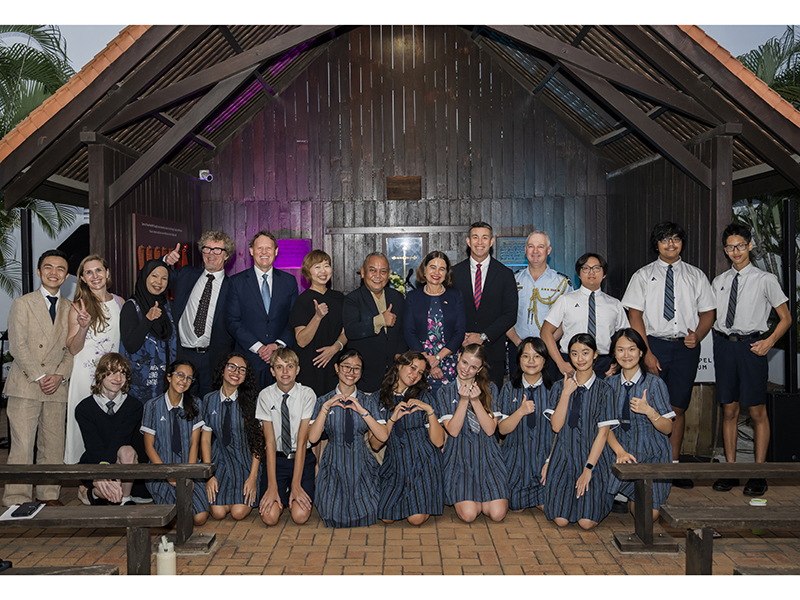
Guests at the event included Her Excellency Robyn Mudie, Australian High Commissioner to Singapore; Group Captain Sean Unwin, Australian Defence Adviser, with senior officers of the Australian Defence Force; Ong Chiew Yen, Chief Executive Officer of HeritageSG; Alvin Ting, Chief Operating Officer of HeritageSG; Asmah Alias, Director of Galleries, Exhibitions and Museums of HeritageSG; Steven Lupton, Head of School at Australian International School Singapore; PJ Roberts, Australian International School Singapore Managing Director, Operations; members of the wider Australian and Singaporean diplomatic, defence and heritage communities; and the parents of the AIS Changi Songbook Singers.
Nick tells us more about how Australian International School Singapore become involved in the HeritageSG project
 What drew you to the songs?
Honestly, how unexpected they were. You go to Changi expecting sorrow, and these are not songs of sorrow. They’re funny, they’re romantic. There’s a song about being too tired to get out from under a shady tree. Another about a moon over a desert that none of the men had ever seen. And one about a dance craze the prisoners invented and named themselves, Swingaroo. Of the 16 songs we performed, only two were melancholy.
These songs are the sound of optimism, literally. It’s in the way the tunes are actually built – you could take the words away entirely and they will still sound hopeful.
These were men writing in captivity who decided to be cheerful – not because they felt cheerful, but because a thousand others were sitting in front of them waiting to be lifted.
The other thing that drew me was the craft. Proper tunes, clever lyrics written in the swing idiom of the day by men with no instruments, no manuscript paper, and no reason to believe anyone would ever hear them again.
What gave you the idea of performing these songs?
In August 2025, Australian International School Singapore vocal students performed for the state visit of the Governor-General of Australia, Sam Mostyn, at the Changi Chapel and Museum.
At the museum ahead of that visit, I asked to examine the Changi Souvenir Song Album more closely. With the museum team’s help, I examined each carefully documented page. After the war, a country newspaper office in Narromine, western New South Wales reproduced the manuscripts directly. I was looking at Ray Tullipan’s own handwriting.
As far as anyone could tell me, the songs hadn’t been performed in Singapore since the war ended. There was a complete body of music written here, never sung here since – and a school with young musicians who could sing it.
Tell us about some of the challenges faced when rehearsing the songs?
#1 Getting the music off the page
Every song had to be transcribed by hand, from images of an 80-year-old printed album. They were then set into notation and arranged from scratch for voice, piano, bass and drums.
#2 Voices of student singers from AIS
These songs were written by men, for men, in a prison camp. The singers from Australian International School Singapore are teenagers and mixed. So every key had to be moved. We chose songs to suit the particular voices we had, rather than forcing anyone into someone else’s range.
The melodies are unusually wide – leaps of sevenths and ninths, which are difficult intervals for any singer, let alone a teenager. But those same leaps are exactly what give the songs their optimistic sound. You can’t smooth them out without losing the thing that makes them work.
#3 The idiom
Swing is not a style most 15-year-olds have in their ears. It can’t be read off the page – it has to be felt. That takes rehearsal time, before anything sounds like music.
#4 Tone
This is the hardest one. The AIS students had to understand what these songs are actually about, without letting that weight flatten the performance.
Slim de Grey wrote “They’ve Taken My Old Pal Away” after his closest friend was sent to Sandakan and didn’t come back. You can’t sing that casually, but you also can’t sing 14 cheerful numbers as though you’re at a funeral. Finding that balance took longer than any of the notes did.
#5 The entire process
Obviously when the student receives the music for the first time, there’s a sense of awkwardness and learning going on. But as they become confident with the song, they begin to be able to put their own sense of expression into it. That’s an incredible thing to witness.
What was HeritageSG’s involvement in this performance?
The Changi Chapel and Museum, as part of HeritageSG, presented Heritage in Harmony as part of Liberation of Singapore 2026, alongside a talk by Associate Professor Hamzah, and the role of museums in shaping collective memory.
That framing means that the music wasn’t presented as an Australian story being told in Singapore, but as something that happened on this island that both countries carry.
What do you hope AIS vocal singers take away from this experience?
That they were custodians of the music they performed. For an hour, they were doing the same job as the AIF Concert Party did on that same ground: standing in front of a room of people and lifting it.
I hope they take away how ordinary the men who wrote these songs were. Slim de Grey couldn’t read or write a note of music; he sang his tunes to a fellow prisoner who wrote them down for him. Ray Tullipan built himself a string bass out of whatever he could find in the camp – and there was a double bass on our stage that night.
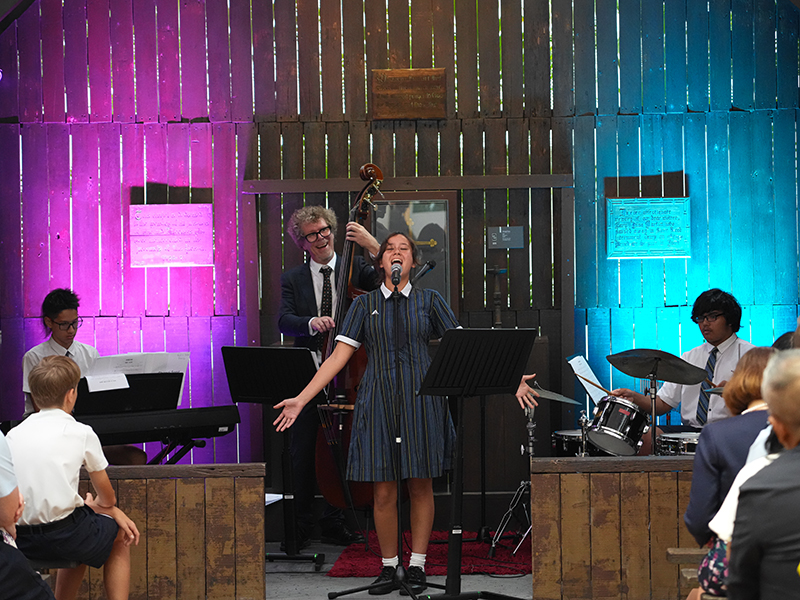
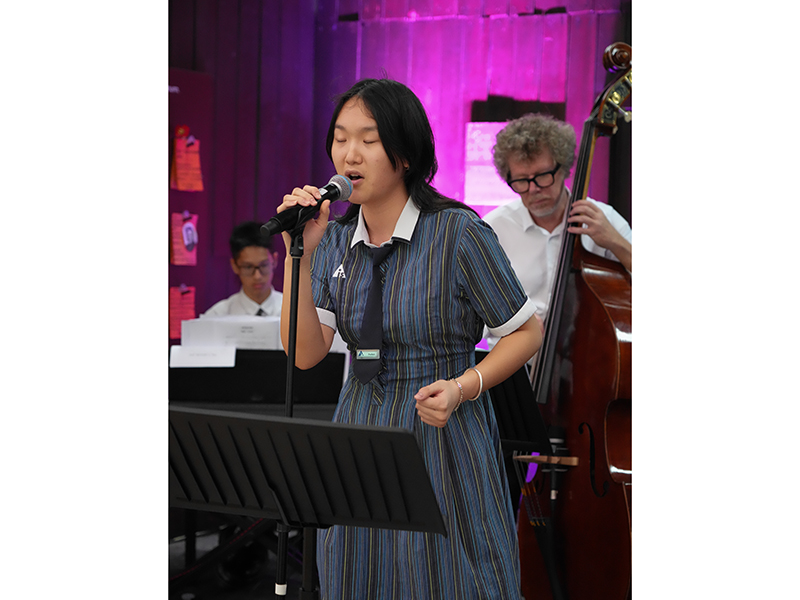
Hear from three AIS student singers about their experience of this HeritageSG event
Aurelia Ree, Year 10
Songs: “Waiting and Praying”, “Desert Moon”, “Keep Smiling”
“Although some of the songs are a little melancholy, most of them are surprisingly hopeful and positive. This is despite everything that was happening during the time, making me realise how much the composers were going through then. I think it’s extremely admirable of them to still look at the more positive side. I’m very grateful for this experience. I think having context for the songs you sing creates a deeper meaning and emotion.”
Mika Sauco, Year 10
Songs: “Swingaroo”, “Feelin’ tired”
“The songs were written way before I was born so I barely understood what they were about. Some time before the event, the other AIS singers and I went on an excursion to Changi Chapel and Museum to better understand what the songs were about. As the tour progressed, the stories of these men came alive and the music began to make sense.
Taking home the new knowledge behind the music, I found the performance as my opportunity to do my part to commemorate those that we lost during the war. During the performance, I not only felt a stronger connection to those we were commemorating, but also a connection to the audience who were feeling the old stories through the music.”
Moxuan Sun Evelyn, Year 11
Song: “Keep Singing”
“During weekly vocal lessons with my singing teacher at Australian International School Singapore, we explored different ways of expressing the emotions and storytelling behind the songs. What impressed me most about the composers of the Changi Souvenir Song Album was their resilience and optimism. Despite living through incredibly difficult circumstances, they never lost their sense of hope. Instead of writing music filled with despair, they created songs that brought comfort, humour, friendship and encouragement to one another. I found that incredibly inspiring.
It’s worth noting that none of the songs are written in a minor key, reinforcing the message of hope and positivity. I realised that the songs aren’t just historical documents. They’re also powerful examples of how music can preserve hope and community, even during the darkest times.”
About Nick Aggs
Nick Aggs is an Australian saxophonist, composer and music educator. He has been Head of Whole School Music Performance at Australian International School Singapore since 2024.
Brisbane-raised and trained at the Queensland Conservatorium – which he left with the inaugural Sid Bromley Jazz Prize – he has contributed to more than 20 studio albums. He has also performed at festivals across Australia, Nepal, India, China, Singapore and the UAE.
He’s a founding member of the Brisbane world-fusion band Afro Dizzi Act, which in 2003 became the first Western band to tour Northeast India. The band has returned to Nepal’s Kathmandu Jazz Festival almost every year for two decades.
Nick has worked in music education for more than 15 years in China, Australia and Singapore.
The Australian International School Singapore is at 1 Lorong Chuan.
6319 3760 | ais.com.sg
Like this article about the HeritageSG collaboration with Australian International School Singapore? For more reading, get to know Steve Lupton, the Head of School at AIS here and find some things to do with your kids. To make the most of living in Singapore, read our latest City Guide here for free!
Don't miss out on the latest events, news and
competitions by signing up to our newsletter!
"*" indicates required fields