Want to stay strong and active for as long as possible? DR KEVIN KOO OON THIEN, Director and Senior Consultant Orthopaedic Surgeon at The Bone & Joint Centre, shares his insights on the condition known as sarcopenia – and what you can do to help prevent muscle loss and preserve your mobility as you age.
What is sarcopenia? Is it officially classified as a disease or is it just a normal part of ageing?
Sarcopenia is the progressive loss of muscle strength and mass. It is most commonly age-related but can also occur secondary to chronic disease, malnutrition and inactivity. It was recognised as an official medical disease in 2016.

What causes it? Is there a single cause?
The cause of sarcopenia is multi-factorial, meaning it is rarely down to one thing but rather a combination of converging factors. Primary sarcopenia is due to ageing alone, while secondary sarcopenia can be due to chronic illness, malnutrition or prolonged inactivity.
What are the signs and symptoms of sarcopenia? Do they differ at different stages of the disease?
The most common symptom is muscle weakness. Others include loss of stamina, difficulty performing activities of daily living, walking slowly, difficulty climbing stairs, a decrease in muscle size, poor balance and falls. The condition progresses in stages:
- Probable sarcopenia is identified by low muscle strength alone.
- Confirmed sarcopenia is diagnosed when there is low muscle strength together with low muscle quantity or quality.
- Severe sarcopenia is defined by low muscle strength, low muscle quantity or quality, and poor physical performance.

At what point should someone see a doctor?
One should see a doctor when there is noticeable weakness, for example difficulty lifting groceries or opening jars; mobility issues like difficulty standing from a sitting position or getting out of bed; a noticeable decrease in walking speed; frequent falls or poor balance; unintentional weight loss or muscle shrinking; and early fatigue. Recognising the early warning signs is key because sarcopenia is much easier to manage when detected sooner.
Who is most at risk, and at what age does sarcopenia typically begin?
Risk factors include ageing, physical inactivity, obesity, chronic conditions such as diabetes, cancer or kidney disease, rheumatoid arthritis, malnutrition and inadequate protein intake. Although it is commonly associated with older adults, muscle loss begins as early as our 30s and tends to accelerate rapidly from around the age of 60.
How is sarcopenia diagnosed in clinical practice in Singapore?
Diagnosis involves a combination of tools, including a self-directed questionnaire such as the SARC-F, which looks at strength, assistance with walking and rising from a chair. This is usually followed by muscle strength tests, such as hand grip strength, chair stand tests and walking speed tests. There is also the measurement of muscle mass using dual-energy X-ray absorptiometry (DXA or DEXA) or bioelectrical impedance analysis (BIA).
Is sarcopenia preventable? And is it reversible?
Sarcopenia is preventable by maintaining a physically active lifestyle that includes resistance training. Maintaining a healthy diet with adequate protein intake also goes a long way. It’s also advisable to seek medical help early if there are any symptoms or signs suggestive of illness or disease.
Supplements such as whey protein, amino acids and creatine have minimal effects on their own, but when used alongside regular resistance training, can help prevent or mitigate sarcopenia. To date, there are no approved medications for the treatment of sarcopenia.
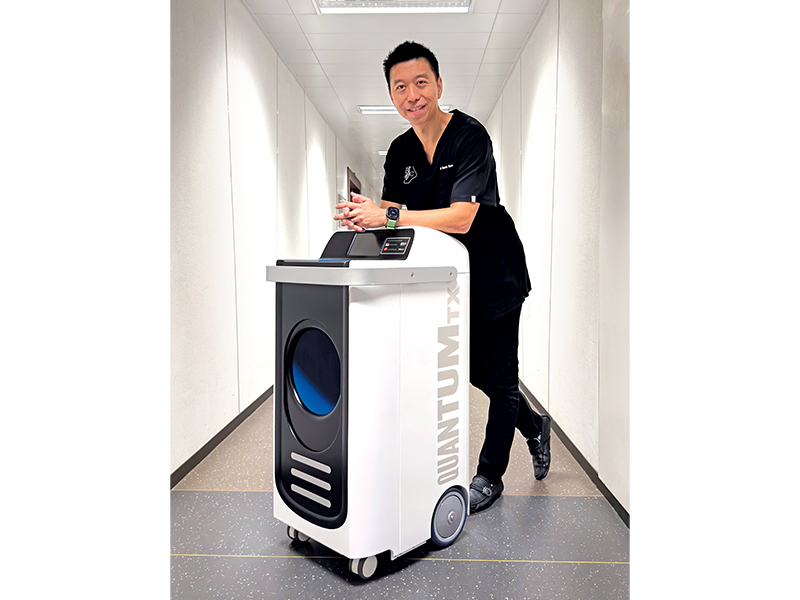
Sarcopenia is reversible if it’s detected early and the appropriate steps are taken. An innovative treatment option is the patented MitoCharge technology, developed from years of research at ETH Zurich in Switzerland and the National University of Singapore, which works by activating muscle cells without physical strain. It has been shown to increase muscle strength, improve sports recovery and decrease joint pain. Although this is available in many public institutions, The Bone & Joint Centre is one of the only private specialist clinics to offer this treatment.
Can sarcopenia be life-threatening?
While sarcopenia doesn’t directly lead to death, some of its complications can be life-threatening, such as falls and fractures, and decreased immunity leading to infections.
What are the most common misconceptions you encounter among patients in Singapore?
Many are not even aware sarcopenia exists, and accept muscle loss and decreased strength as an essential part of ageing.
Can you share any patient experiences that illustrate how sarcopenia affects daily life?
I have patients, friends and relatives who hardly exercise or do resistance training and now suffer from sarcopenia. Common complaints include decreased mobility, unsteady gait, falls, fractures and general functional decline. I have prescribed MitoCharge treatment, along with physiotherapy combined with strength training. Those who are compliant have improved functionally and mentally.
About the doctor
Dr Kevin Koo is a fellowship-trained Senior Consultant Orthopaedic Surgeon with more than 20 years of experience and a previous director at the Singapore General Hospital. He is a strong advocate of longevity medicine and performance health. He also has a special interest in minimally invasive surgery, foot and ankle surgery, joint replacements and sports surgery.
The Bone & Joint Centre
#14-15 Mount Elizabeth Medical Centre, 3 Mount Elizabeth
6970 5905 | [email protected] | [email protected] | bjc.sg
This article featuring Dr Kevin Koo’s insights on sarcopenia and muscle loss first appeared in the September 2026 issue of Expat Living magazine. You can buy the latest issue or an annual subscription, or read the digital version for free now.
Don't miss out on the latest events, news and
competitions by signing up to our newsletter!
"*" indicates required fields