XCL World Academy (XWA) is rethinking primary education by preparing students for careers that don’t even exist yet! Its flagship XCLerate Future Skills Programme integrates “future skills” directly into the IB PYP (Primary Years Programme) from KG2 to Grade 5. Here, the team shares how this helps students gain future-ready skills while maintaining strong academic rigour and global citizenship.
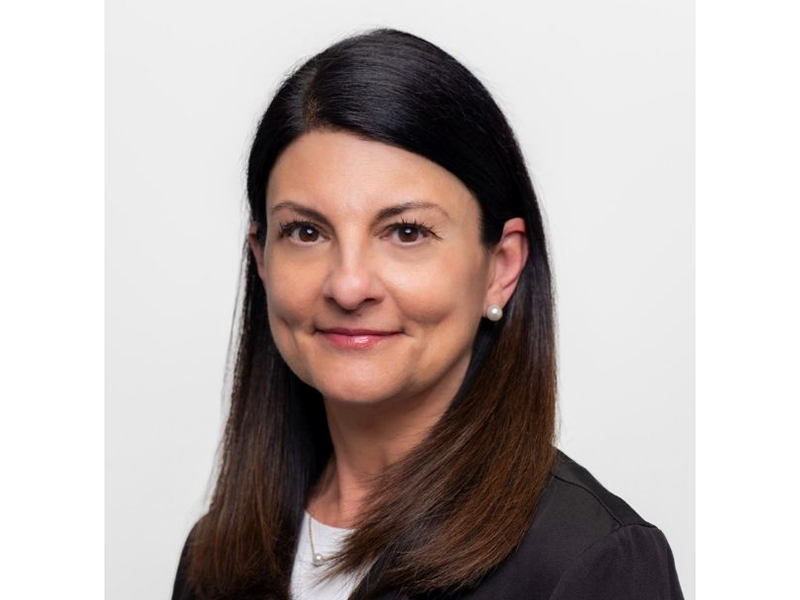
Maria Sweeney, the Early Years and Primary Years Principal of XWA, discusses the XCLerate Future Skills Programme.
This sounds like an exciting programme! Tell us a bit about it.
XCLerate is XWA’s flagship future skills programme that focuses on preparing primary school children for an AI-driven, rapidly changing world while maintaining strong academic foundations.
Through weekly sessions embedded into the existing primary education curriculum, students develop essential skills across these pillars:
- creative arts
- community action
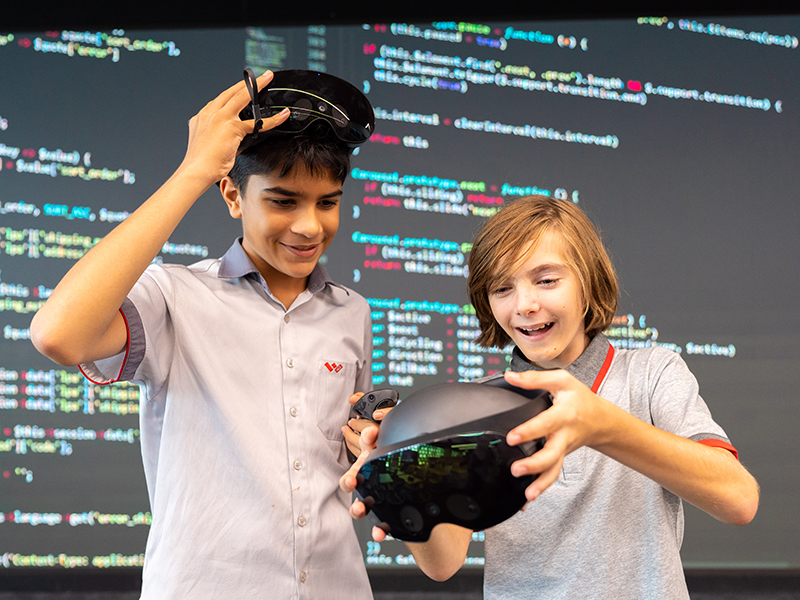
- AI and technology
- entrepreneurship and financial literacy
- design thinking
- student leadership
These skills help students become confident, capable and future-ready learners from as early as age four.
Why did XWA decide to create this primary education programme for primary school?
We identified a growing gap between traditional education models and the skills students will need in future workplaces shaped by artificial intelligence, global interconnectedness and rapid technological change.
Parents increasingly seek education that “future-proofs” their children. However, most schools treat innovation and technology as add-ons rather than core learning foundations. XCLerate closes this gap by making future skills an integral part of learning in primary education, rather than something introduced later or outside the curriculum.
How were these pillars identified as “future skills”?
These were identified in response to global workforce trends, research showing rapid growth in demand for AI-related skills, and the increasing importance of adaptability, creativity, ethical decision-making and leadership in modern careers.
Together, these areas reflect the competencies students will need to:
- collaborate with technology
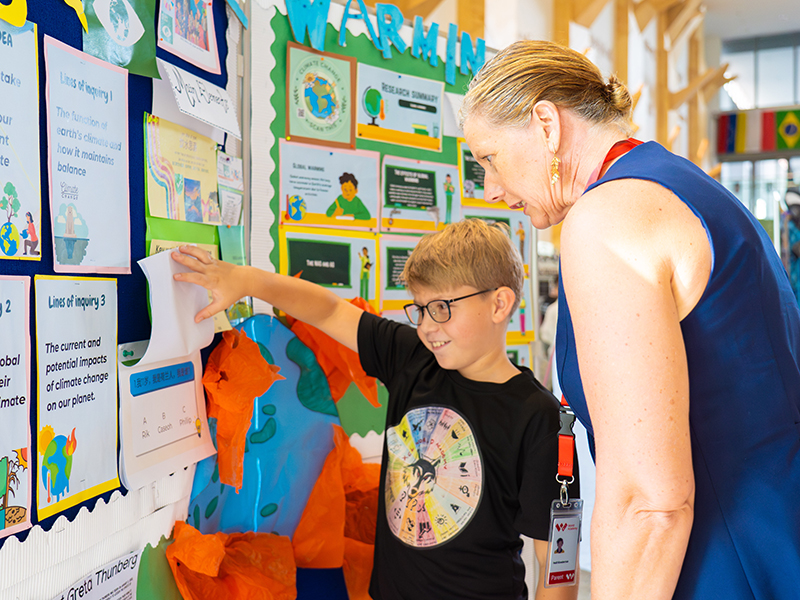
- respond to global challenges such as sustainability and climate change
- think entrepreneurially, communicate across cultures
- lead with empathy and responsibility in an interconnected world
How will these future skills support students as they transition into secondary school?
By developing future skills alongside academic learning in primary education, XCLerate ensures students enter secondary school with strong agency, confidence, and adaptability. Students learn how to think critically, apply knowledge in real-world contexts, collaborate effectively and take ownership of their learning. All of these support success in more complex academic environments.
The programme also aligns with principles of the IB PYP. This ensures students are well prepared for the expectations of secondary education while standing out through innovation, leadership and problem-solving skills.
JADE ACKERS, the XCLerate Programme Lead, provides insight into the activities that students will experience.

What are some of the activities that students will experience in the programme?
The XCLerate Programme develops future-ready skills by giving students real problems to solve, not worksheets to complete. The programme weaves the six core themes throughout every grade level with learning experiences where these skills intersect naturally.
From the earliest years, children tackle challenges that matter beyond the classroom. In kindergarten, students partner with local wildlife rescue organisations to create digital posters and videos about animal conservation. Older students address Singapore’s transition to renewable energy or design and manufacture products they pitch to investors.
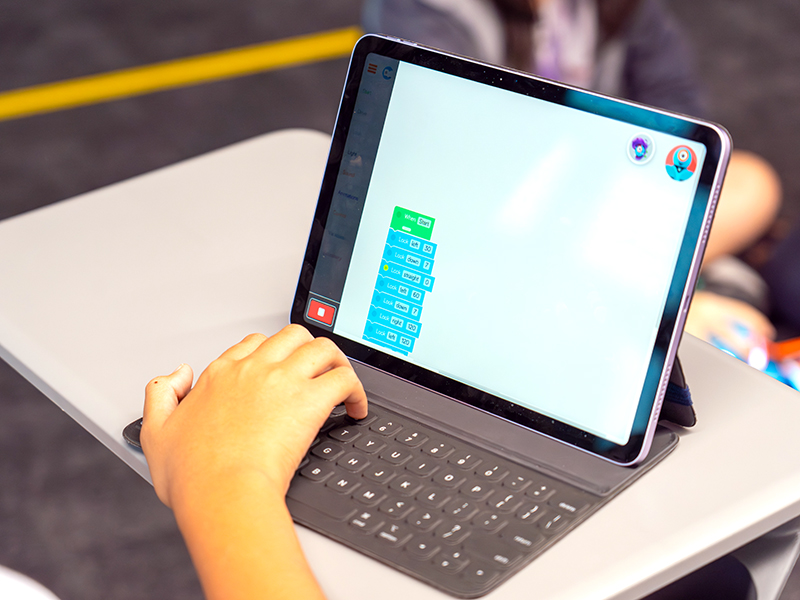
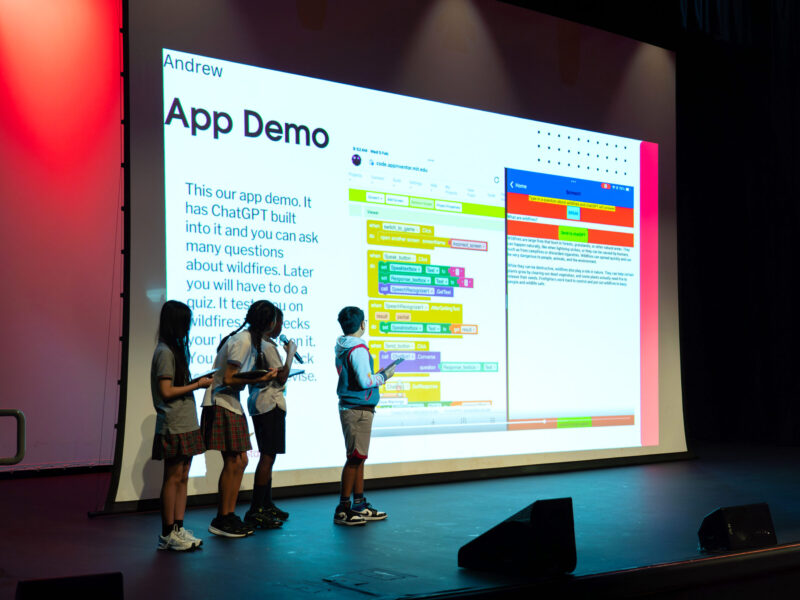
Students use safe AI tools like Microsoft Copilot to research historical events and transform their findings into podcasts or digital timelines, code their own games from scratch, and apply design thinking to invention projects where they calculate production costs, set prices, and understand profit margins.
Technology isn’t taught in isolation. Instead, children learn to code by programming environmental sensors that monitor change over time, develop AI literacy by creating community campaigns with measurable impact, and build entrepreneurial skills through projects that move from concept to physical prototype using 3D printing.
Every activity thoughtfully connects multiple skills while addressing authentic challenges that develop both technical capability and the uniquely human qualities of empathy, critical thinking and resilience.
How are these activities integrated into the school’s IB PYP?
XCLerate is woven directly into the IB PYP. Each 45-minute weekly session connects to students’ current Unit of Inquiry. This ensures technology and innovation serve as tools for deeper learning, rather than isolated subjects.
When Grade 4 students explore energy and environmental impact, they don’t just learn about renewable resources. The primary students use design thinking to prototype sustainable solutions aligned with Singapore’s Green Plan, apply coding to create energy simulations, and entrepreneurial skills to present viable proposals.
When Grade 5 investigates historical events within the Where We Are in Place and Time theme of the IB Primary Years Programme, they leverage AI research tools and digital creation platforms to produce authentic historical narratives.
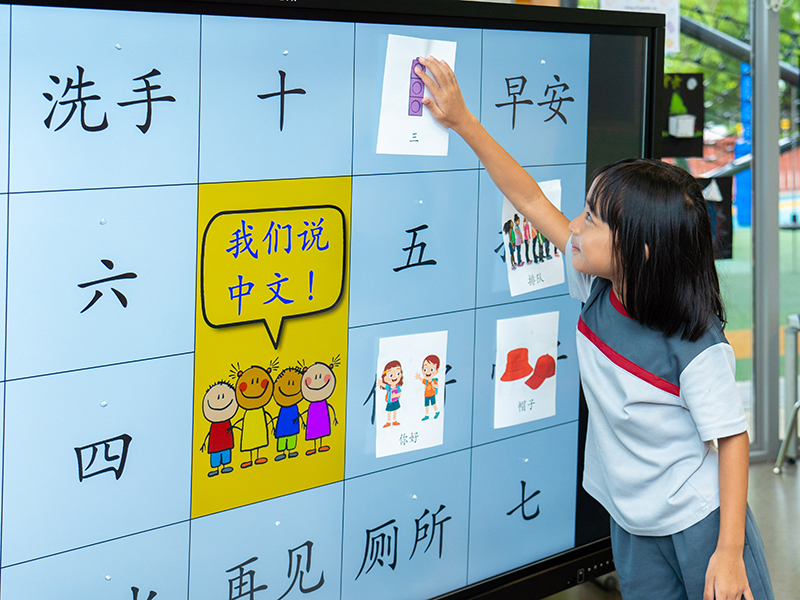
The programme deliberately builds on IB’s Approaches to Learning (ATL) Skills framework. In this way, students develop thinking skills, communication skills, social skills, self-management skills and research skills that the IB curriculum already emphasises.
Rather than teaching technology for technology’s sake, XCLerate positions these tools as essential methods for students to inquire, take action and reflect. This is the very heart of IB’s inquiry-based philosophy.
How does XCLerate progress from IB PYP in the early years, through to upper primary school?
The effectiveness of our programme lies in its developmental scaffolding, as each year systematically builds the foundational skills students need to excel.
In the early years, children develop digital literacy basics, learn to follow multi-step processes and begin to understand cause-and-effect relationships in technology. By Grades 1-2, they’re applying simple design thinking frameworks, making choices between different tools and methods, and building problem-solving resilience when initial attempts don’t work.
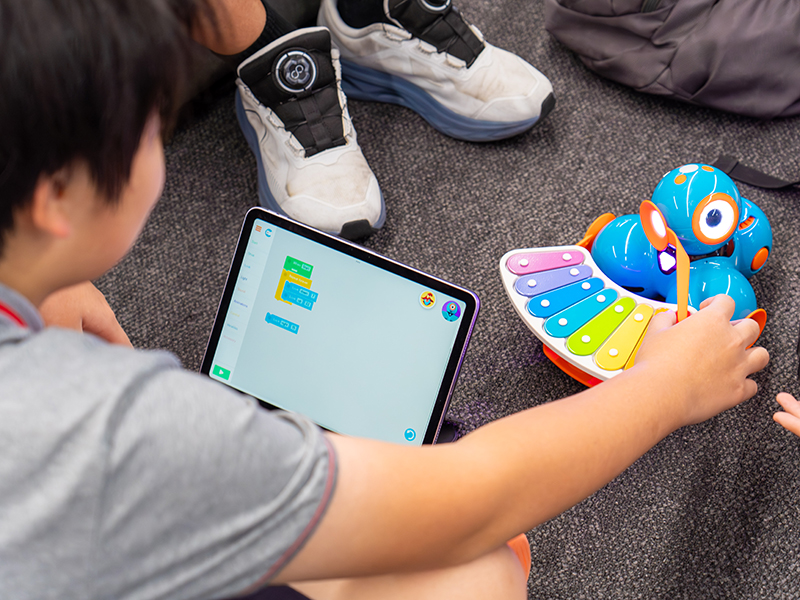
The middle years bring significant growth in technical capability. Students learn computational thinking through actual coding, develop spatial reasoning through 3D design work, and master the iterative design process – fail, refine, test, improve.
Upper primary students synthesise these skills independently. They conduct research using AI tools appropriately, managing complex projects from concept to completion, and demonstrating the self-direction and metacognitive awareness essential for advanced study.
This carefully sequenced progression means students enter secondary school as confident creators who understand design methodology, computational thinking, and systematic problem-solving. They’re ready to immediately engage with advanced specialist coursework and apply their skills to increasingly complex real-world challenges.
XCL World Academy is at 2 Yishun Street 42.
6230 4230 | xwa.edu.sg
Found this interesting? Read about the comprehensive AI course at XWA Singapore and how the school raises tech savvy kids with digital learning tools. Plus, here are ideas on what to do in Singapore with your family.
Planning to live in Singapore or new to our sunny island? Make sure to read the digital edition of our latest City Guide.
Don't miss out on the latest events, news and
competitions by signing up to our newsletter!
"*" indicates required fields