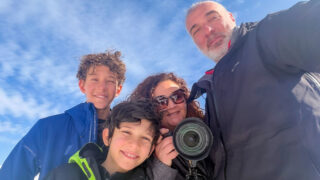
The mountain gorillas in Rwanda are rare, and seeing them is on many people’s bucket list. Here, Expat Living’s LARA SAGE shares an eye-opening account of her recent trip to this small, landlocked country in East Africa, including an animal encounter she’ll never forget. (Also, find out why Rwanda is sometimes called the “Singapore of Africa”!)
Setting the scene
The plight of primates was brought to the world’s attention in the second half of the 20th century by three pioneering female scientists, Dian Fossey, Jane Goodall and Birutė Galdikas – humorously nicknamed the “Trimates”. These intrepid women lived in various remote parts of Africa and studied wild apes, mentored by Kenyan-British paleoanthropologist Louis Leakey.
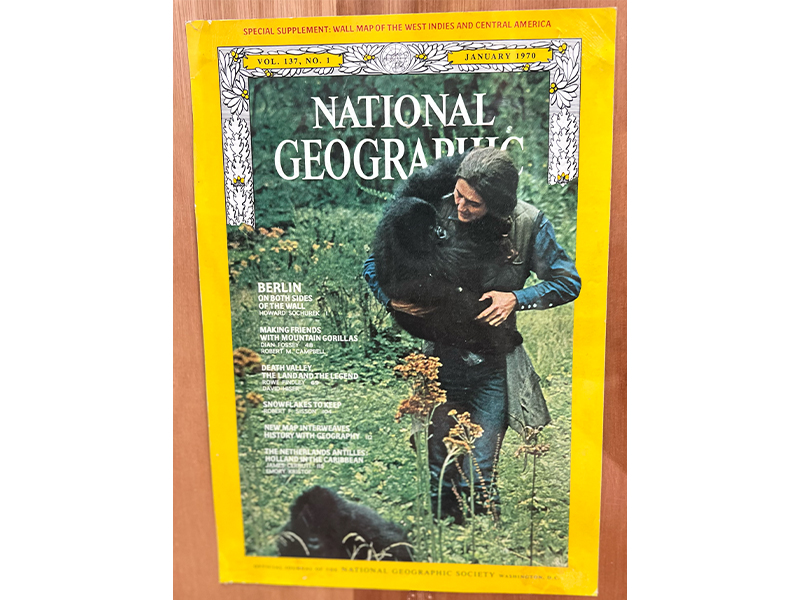
Dian Fossey undertook an extensive study of mountain gorillas in the forests of Rwanda from 1966 until her murder in 1985. You may recall Gorillas in the Mist, both the novel and the film, and her much-loved gorilla, Digit, who met an untimely death at the hands of poachers, sadly like Fossey herself.
There is a museum dedicated to the scientist’s life and work, located near the end of the three-hour drive from the capital city Kigali to Volcanoes National Park, home to Rwanda’s gorillas. It’s a worthwhile stop, with superbly curated exhibits full of artefacts and images.
Landscape, culture & people of Rwanda
The journey from Kigali took us through hilly terrain, past rural subsistence farms on small plots and co-operative community allotments. Vibrant printed fabrics adorned even the poorest people.
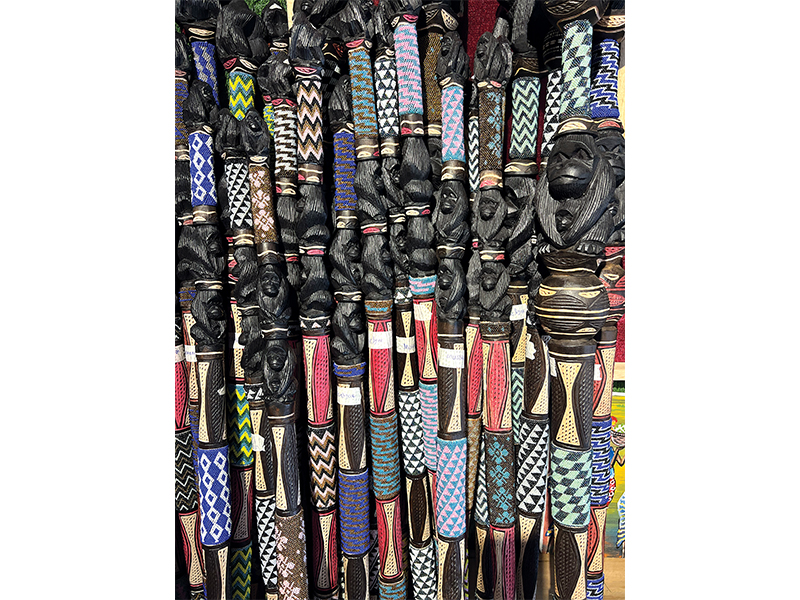
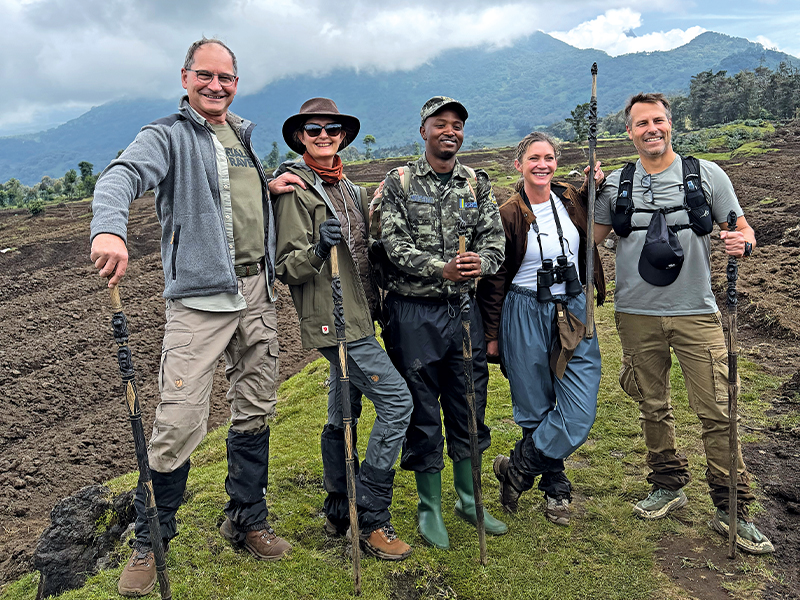
Another stop en route was a women’s craft centre showcasing community weaving and carving. I bought two wooden walking sticks decorated with carved gorillas and beaded in pretty pastel colours, so I could remember and reflect on the hardworking mothers I had seen hoeing the fields – often with their babies on their backs – and carving mementoes for tourists. There’s much to be said about the value of women in this society. It’s perhaps no surprise that they hold the majority of seats in the Rwandan parliament (the highest representation in the world, in fact).
In these rural areas, people live in simple houses without running water, and daily life involves collecting water from dispensing stations. They work hard on farmed terraces of verdant green; many ride bicycles up the extremely steep hills, and then come careering down to market, laden with potatoes, pineapples, bananas, vegetables and corn – in bags weighing as much as 200kg.
The gorilla trekking experience
Visiting Rwanda’s gorillas is a formal and well-co-ordinated process, with limited permits available. They are pricey yet priceless, with the US$1,500 fee per foreigner helping to enable the protection of this endangered species.
I noticed an entertaining assortment of dress codes among the people collecting permits on our morning – from fashionable safari outfits to exercise gear and yoga pants, and the obvious YouTuber in squeaky-clean branded trainers. (Things didn’t bode well for his sponsors considering the muddy hike that lay ahead…)
There are just over 1,000 wild mountain gorillas left in the world. Around 600 individuals live across the volcanic mountain range spanning Mgahinga (Uganda), Volcanoes (Rwanda) and Virunga National Parks (Democratic Republic of Congo).
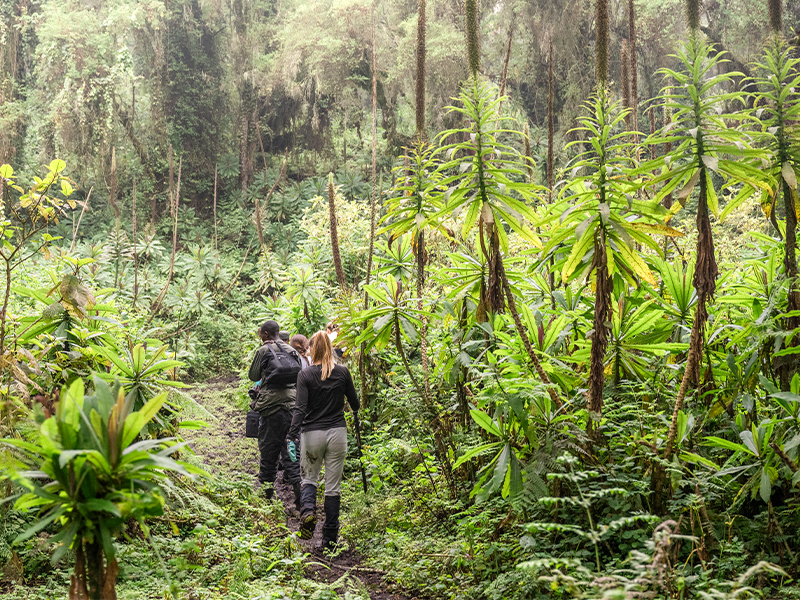
On the Rwandan side, fewer than 30 gorilla families may be viewed by groups of 10 visitors per day. Another 30 families are left to live uninterrupted and only studied for research. The trek to reach your allocated family can take as little as an hour; trackers head out to locate them beforehand in the early morning, armed with rifles on the off chance of bumping into buffalo in the dense forest. But it can also take up to five hours of hiking through the rainforest – albeit thick and beautiful.
Meeting the Kwisanga family
Ours was a shorter trek, and when we reached the Kwisanga family of 17 gorillas, we hushed our chatter and immersed ourselves among them. They went about their lives undeterred by us passing through their jungle terrain of bamboo and trees. This family comprised one dominant 25-year-old male and two young blackbacks, both aged 10 (their coats mature to silver at around 14). The rest were females and youngsters, including a comical three-month-old baby still being carried by its mother.
Much research has been done on their complex social behaviours and the building of alliances, empathy and a network of relationships between group members. They share 98 percent of our DNA, so it’s not surprising that they seem so humanlike in many ways.
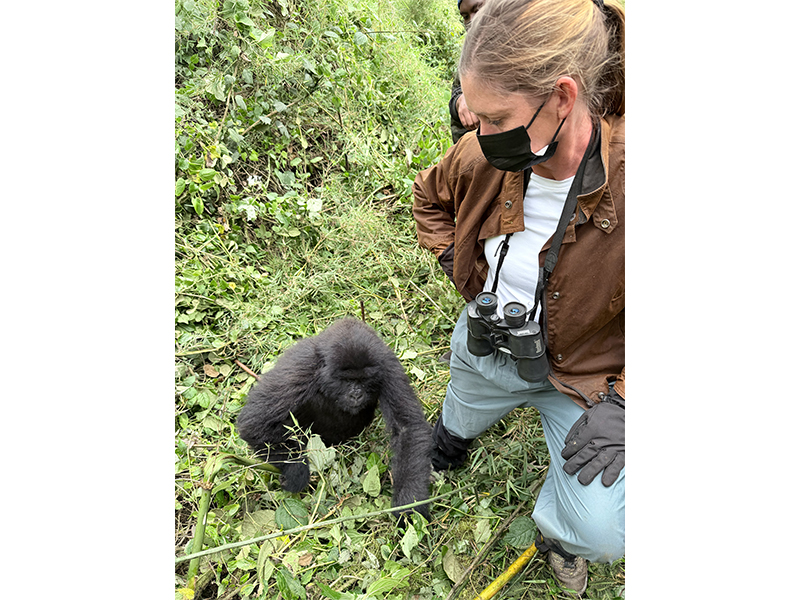
You can spend a maximum of one hour with the gorillas. As a safeguard for their wellbeing, all visitors wear masks to prevent passing germs. We climbed and clambered over and under creeping vegetation to move through the forest with the animals as they foraged for new shoots.
Time stood still in that hour, as we watched them lounge on the forest floor, and hang from vines with no consideration for which way was up and which way was down. At times the curiosity and playfulness of the youngsters overcame them and they tried to interact. Then the guide would caution us to disengage and step back.
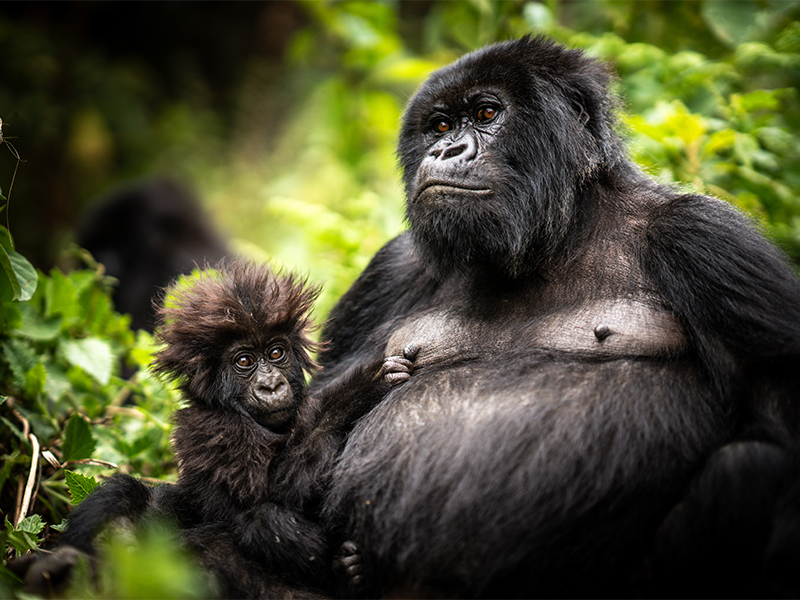
A close encounter
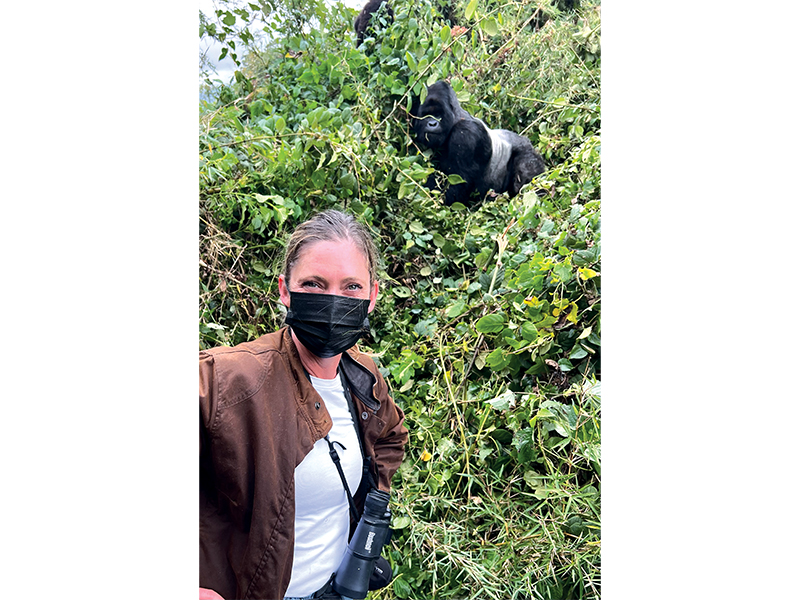
The dominant silverback was impressive in his solid form, but even more so when he was taken by surprise by something in the forest and hastily ushered his family out of harm’s way. He became oblivious of the humans around him. His raw instinct was evident in his priority to ensure the safety of his family.
As he stood his ground surveying the forest, defying all rules of engagement, he was only a hair’s breadth away from me! I stood frozen still as instructed, my gaze averted, not making eye contact, and waiting for this exhilarating moment to pass. When it did, my legs were shaking and I felt a flutter of delirious excitement at this thrilling encounter with such an iconic and powerful animal – one with the strength of 30 men.
Where to stay in Rwanda
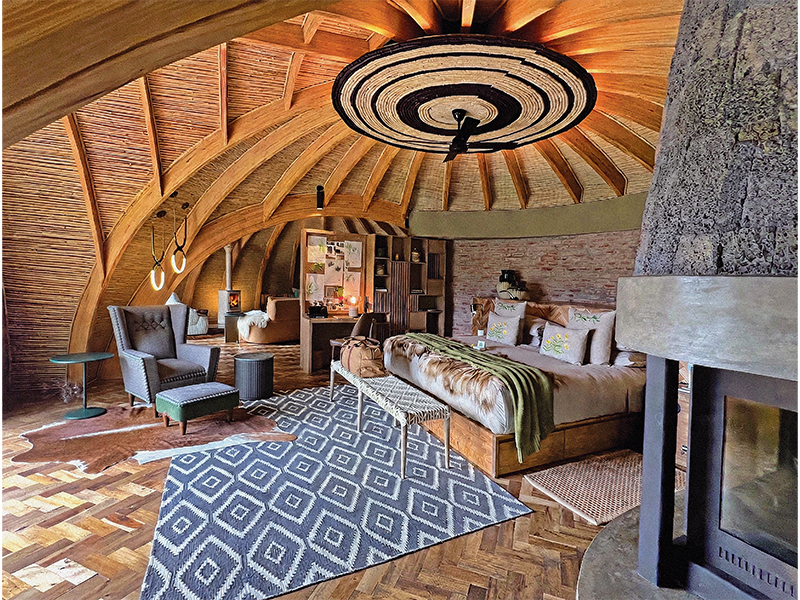
Wilderness Bisate Reserve opened in 2024 in Volcanoes National Park as a companion to the original Wilderness Bisate Lodge. Around a three-hour drive from Kigali International Airport (or 30-minute helicopter flight), the Reserve offers four expansive spherical, thatched forest villas styled after Rwandan royal heritage. The spacious suites appear to sit like nests in an eroded volcanic amphitheatre, with views of the mist-shrouded Bisoke, Karisimbi, and Mikeno volcanoes.
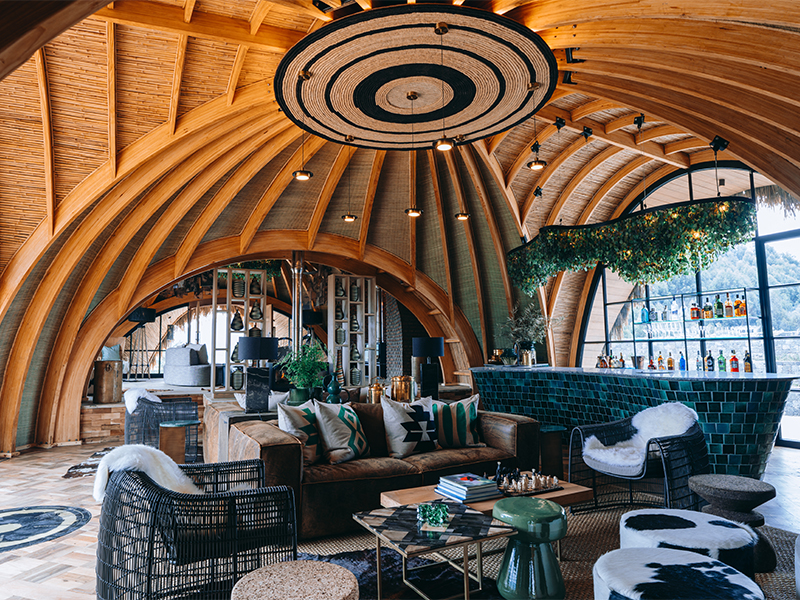
This is an exceptional place to stay, with décor to marvel at, scrumptious food and wine, and a notable whisky collection. The suites include central fireplaces and soaking tubs, with a heated outdoor plunge pool and oversized bath, as well as a conical-shaped shower designed like the flue of a volcano. Everywhere the furnishings reflect nature and celebrate it.
Two of the suites are artfully linked by a discreet 12-metre passage. It was almost Narnia-like – a secret door in the cupboard! – and brilliant for those travelling with friends or family.
Along with offering a new level of luxury in Rwandan tourism, Wilderness Bisate runs groundbreaking reforestation and rehabilitation initiatives. Its projects permeate into the community, with guests given the opportunity to engage with and support local empowerment initiatives – for example, the planting of nearly 100,000 indigenous trees has transformed a former agricultural site into a thriving forest.
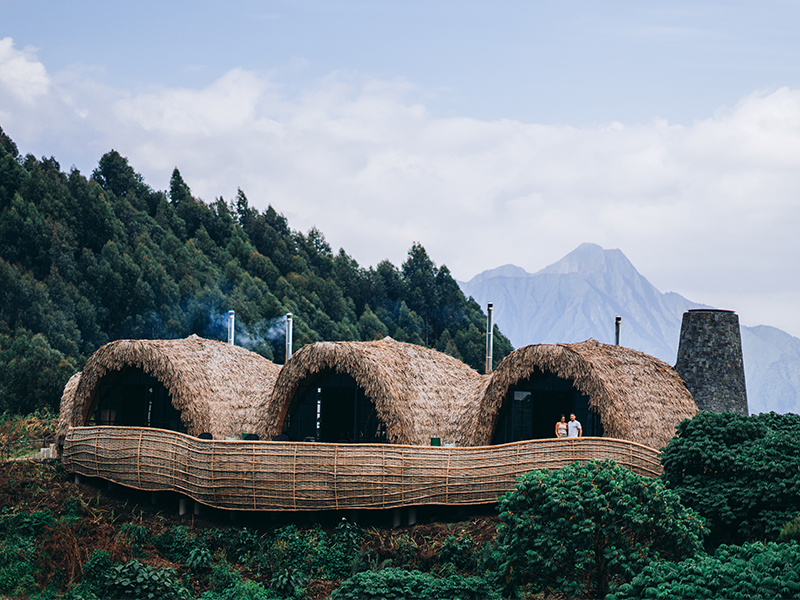
What else?
Wilderness Bisate offers essential gear including rain jackets, waterproof pants, gaiters and suitable hiking boots; or bring your own kit and the staff will miraculously clean and return it to you before you depart!
On entry or exit you should overnight in Kigali. We found Hemingways Retreat so comfortable – a haven in the city. It also gave us the chance to try our hand at making banana wine – grinding grain and pulping bananas with surprisingly yummy results!
The Kigali Genocide Memorial is a must-see in the capital, as a place of remembrance and learning dedicated to the Tutsi victims of the 1994 events. It’s estimated that up to a million people were killed in this civil war, including 300,000 children, with another 100,000 orphaned. Tragically, over 70 percent of children witnessed the death of a family member. Despite this, across all generations vengeance wasn’t tolerated, and this is now a society focused on recovery and reflection.
Seeing this on arrival put the whole landscape and community into perspective for the rest of our journey – after all, our guides were much the same age as we are now, so they had been teens who’d experienced this trauma first-hand. Yet they were so admirable and conscientious – and so informative about their country. The same goes for our drivers, who were so steady on those twisty roads through the country of a thousand hills!
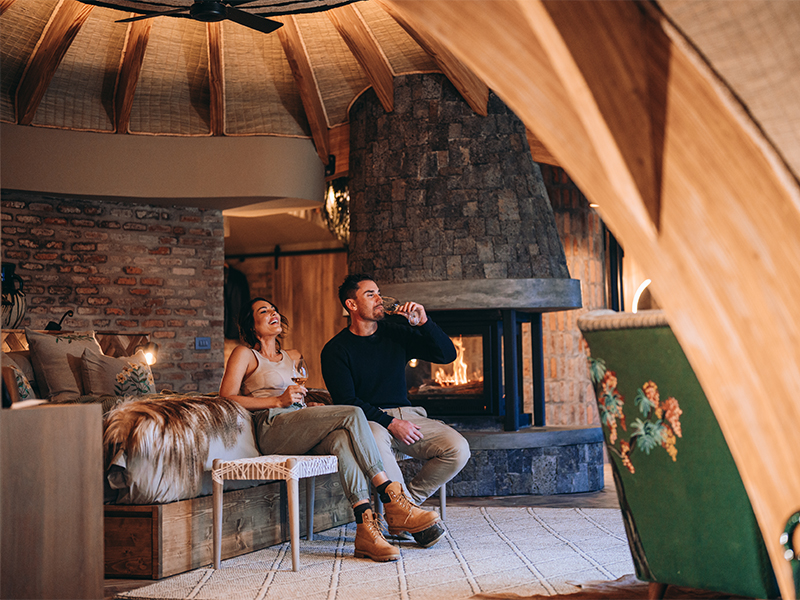
Best time to visit Rwanda
You can stay at Wilderness Bisate Reserve and Wilderness Bisate Lodge throughout the year. However, the dry seasons of June to September and December to early February are typically the best times for gorilla trekking excursions in the Volcanoes, as well as other safaris in Rwanda.
If you’re planning well in advance, one date to keep in mind is the Kwita Izina Gorilla Naming Ceremony. This takes place in September each year. Organised by the Rwanda Development Board, the world-famous conservation event is held in the foothills of the National Park.
I felt enriched and enlightened by my trip to Rwanda. Throughout my time, I kept thinking “When was the last time I did something for the first time?!” And this was definitely a novel experience: a new country to visit, a history to ponder, and an incredible animal species to observe.
Fact File: Africa’s Singapore
Rwanda’s capital city of Kigali is exceptionally clean and well organised, partly due to a nationwide ban on single-use plastic bags, and Umuganda, a mandatory monthly community cleaning day. Following the 1994 genocide, the government pursued aggressive economic reforms, low corruption rates and business-friendly policies that mirrored Singapore’s fast-paced rise. In fact, Rwanda is sometimes called the “Singapore of Africa”. Leaders have heavily prioritised turning the nation into a tech, innovation and financial hub for East Africa.
For more information, visit wildernessdestinations.com. You can also email [email protected] for guidance on booking your own trip to see the gorillas in Rwanda.
Liked this? Our story on trekking with gorillas first appeared in the September 2026 issue of Expat Living magazine. You can buy the latest issue or an annual subscription, or read the digital version free now.
Interested in knowing about editorial options? Email us at [email protected].
Don't miss out on the latest events, news and
competitions by signing up to our newsletter!
"*" indicates required fields