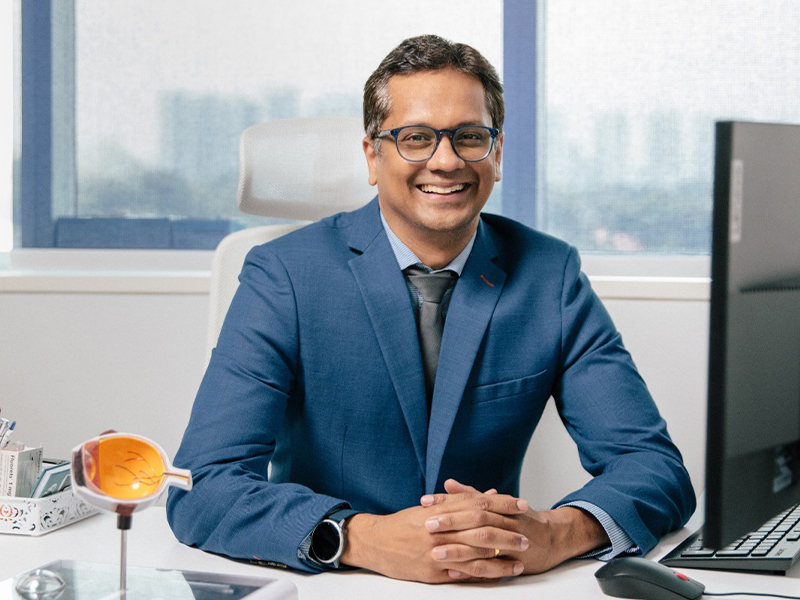
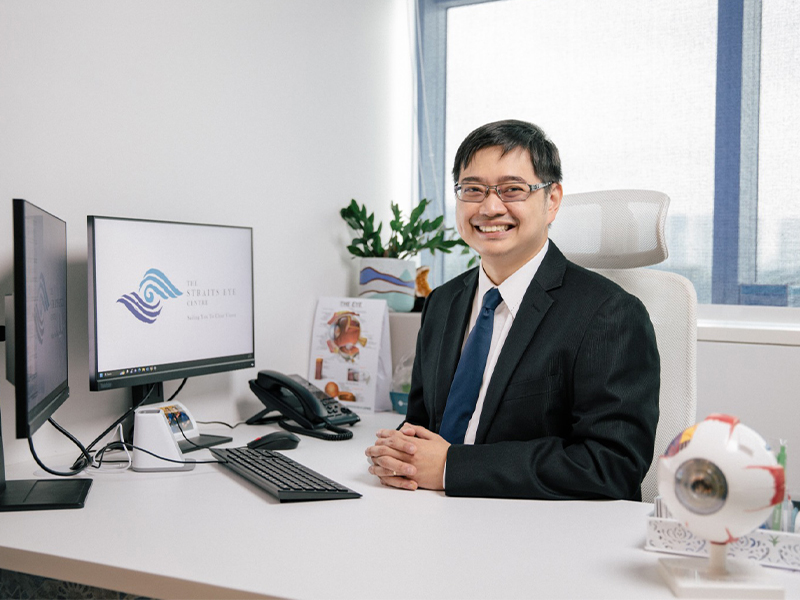
It’s easy to brush off blurry vision after a long day or your child squinting at screens as no big deal. But DR JAYANT V IYER, DR JASON LEE and DR AUDREY PANG from The Straits Eye Centre say certain symptoms may be worth scheduling in an eye screening in Singapore for. Read on for their insights on common eye concerns like myopia and more.
Why standard eye screenings may not be enough: two patients’ stories
Eye concerns often begin subtly. Eight year-old Lucas’s teachers and parents noticed that he was squinting at the classroom board and holding books unusually close. By the time he was formally assessed, his myopia had already progressed significantly, increasing his risk of long-term eye complications. Had there been regular, comprehensive eye screenings including checks for myopia progression and amblyopia, his condition might have been detected much earlier.
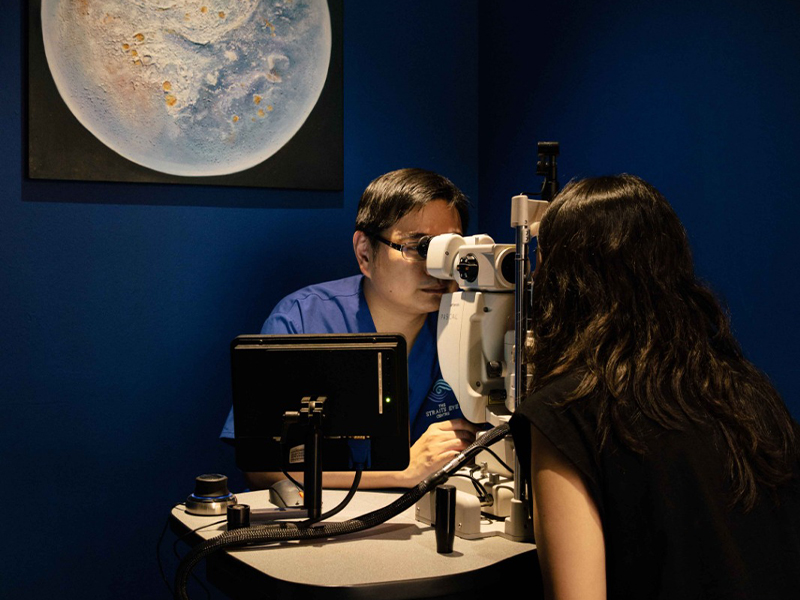
Then there’s 52-year-old Mr Tan, who diligently attended annual corporate health screenings and was confident about his overall wellness. These check-ups included basic vision tests, but never a thorough eye examination. It wasn’t until he began noticing subtle changes in his vision that he sought specialist care. By then, he was diagnosed with glaucoma at a late stage. Mr Tan’s experience highlights how silent eye diseases can remain undetected when routine health screenings do not include comprehensive eye assessments.
*Names and identifying details have been changed to protect patient privacy.
The problem with standard eye screenings in Singapore
Stories like Lucas’s and Mr Tan’s aren’t uncommon. We’ve seen at our clinics how often early warning signs of serious eye conditions are missed in standard screenings. Here’s where the gaps usually appear:
Children: Many routine eye screenings in Singapore focus mainly on whether a child can see clearly during the test, rather than assessing deeper issues such as myopia progression or lazy eye. Without comprehensive checks, children may go undiagnosed until symptoms become more noticeable.
Adults: Corporate health screenings typically include only basic vision tests. Yet silent conditions like glaucoma, cataracts, AMD and diabetic retinopathy can develop without obvious symptoms. Clear vision doesn’t always mean healthy eyes as many diseases progress quietly in the early stages.
Older people and mobility-limited individuals: For those older or with mobility challenges, regular clinic visits may not always be practical. As a result, opportunities for early detection and intervention may be missed.
What’s the answer?
In our opinion, the solution to these gaps lies in proper, structured and comprehensive eye care tailored to different life stages and circumstances, such as:
Children: Early and consistent monitoring can make a significant difference in protecting long-term vision. Care typically begins with personalised monitoring based on a child’s age, lifestyle and individual risk profile. Comprehensive eye health assessments allow doctors to screen for conditions like myopia, amblyopia (lazy eye) and strabismus (squint), while also tracking how eyesight changes over time. Parents are also guided on practical ways to support healthy visual development as children grow.
Adults: Preventive eye care helps detect silent conditions before symptoms appear. Adults may undergo assessments tailored to their personal risk factors and medical history. These examinations allow specialists to evaluate the structure of the optic nerve and retina, as well as check for conditions such as cataracts or diabetic retinal changes. Establishing a clear clinical baseline makes it easier to monitor eye health over time and identify subtle changes early.
Older people and mobility-limited individuals: For families caring for older relatives, travelling to a clinic can be difficult. Portable diagnostic equipment now allows eye screenings to be performed at home in Singapore. Essential assessments can be done in the comfort of home, with coordinated follow-up arranged where further evaluation or treatment is required.

Common eye conditions to know
Understanding some common eye conditions can help families recognise when it may be time to arrange an eye screening in Singapore. Here are a few conditions that people commonly experience:
Eye strain and dry eyes: Often associated with prolonged digital device use, symptoms may include discomfort, redness and blurred vision.
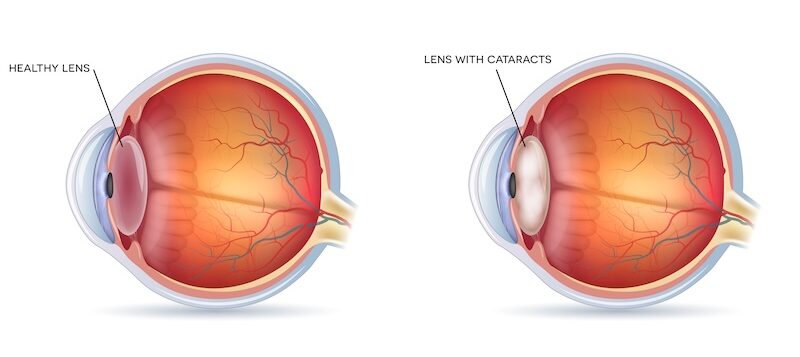
Cataracts: They occur when the eye’s natural lens becomes cloudy over time. This can cause glare, difficulty seeing clearly at night, and reduced contrast. Cataracts are common with age and can be treated with surgery.
Glaucoma: This is a condition that damages the optic nerve. It often develops slowly and may not cause noticeable symptoms in the early stages, which is why regular eye checks are important for early detection.
Refractive errors: Myopia (shortsightedness) is common in children and teenagers. Early detection can help slow its progression and reduce the risk of high myopia later in life. Meanwhile, presbyopia is a natural age-related change in vision that makes it harder to see things up close, usually starting after the age of 40.
Age-related macular degeneration (AMD): A condition that affects the centre of vision and is more common in older adults. Regular eye checks can help detect early signs.
Diabetic retinopathy: Damage to the retina caused by diabetes. People living with diabetes are usually advised to have retinal imaging at least once a year to monitor eye health.
Eye screenings in Singapore – take action to protect your family’s vision
Lucas and Mr Tan’s stories remind us that eye health can be quietly compromised when regular screening is overlooked. Proactive eye assessments and coordinated care can make a meaningful difference for children, adults and older people alike.
About The Straits Eye Centre
The Straits Eye Centre is guided by a commitment to continuity of care, careful decision-making and personalised assessment. Its goal is to support families at every stage of eye health, from early screening to medical or surgical treatment with consistent specialist oversight. Services include:
• Paediatric and adult ophthalmology within hospital based settings at Parkway East Medical Centre and Camden Medical Centre
• Home eye screening for older or mobility-limited relatives
• Refractive surgery evaluations (SMILE, LASIK, ICL)
• Diabetic retinal screening
• Comprehensive assessments for glaucoma, cataracts, AMD and other eye conditions
About the team
The Straits Eye Centre is led by Medical Directors Dr Jayant V Iyer and Dr Jason Lee, with Senior Consultant Dr Audrey Pang heading paediatric ophthalmology. The group’s main eye care suite is located at Camden Medical Centre (6/F), with a dedicated children’s eye suite at Camden Medical Centre (12/F) and Parkway East Medical Centre. To ensure more people have access to eye care, the group also operates community clinics in Bedok, Clementi and Toa Payoh, run by Primary Eye Care Physicians and optometry teams.
The Straits Eye Centre
#06-07/08 Camden Medical Centre, 1 Orchard Boulevard
6235 4522 | straitseye.com.sg
This article on eye screenings in Singapore with The Straits Eye Centre first appeared in The April 2026 Expat Living magazine. You can buy the latest issue or an annual subscription or read the digital version free now.
Interested in knowing about editorial options? Email us at sales@expatliving.sg.
Don't miss out on the latest events, news and
competitions by signing up to our newsletter!
By signing up, you'll receive our weekly newsletter and offers which you can update or unsubscribe to anytime.