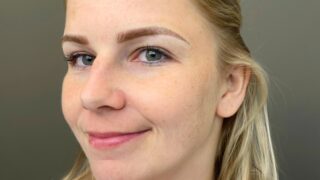
Gone are the days of tight, overdone facelifts! We speak to the team from AZATACA Plastic Surgery about what patients are asking for these days – including why deep plane facelifts are continuing to grow in popularity.
Have you noticed changes in attitudes or demand for facelifts recently?
There has been a noticeable shift in how patients think about facelifts. Increasingly, they’re not asking just to look younger, but to look more like themselves again. The sentiment that “the best facelift is the one nobody can tell you’ve had” resonates strongly with patients today.
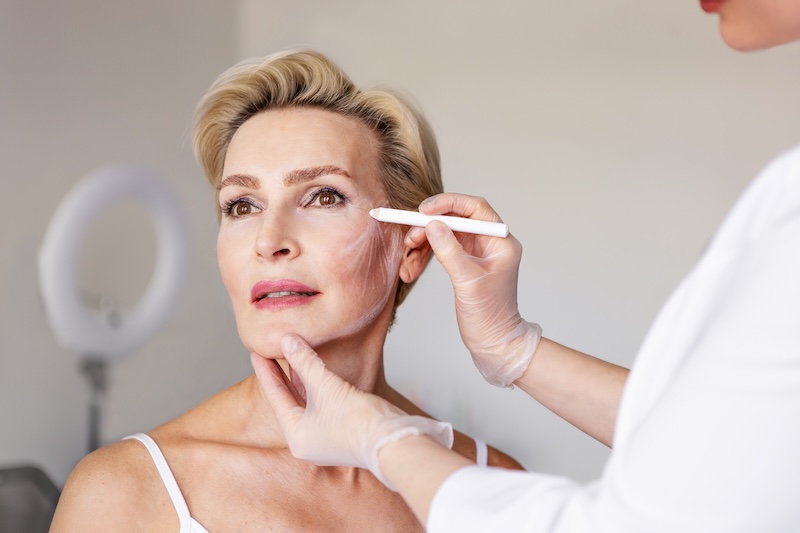
Most are asking for natural results – softening jowls, restoring jawline definition and improving facial fatigue – without looking tight or overdone. Patients are more informed now and often go on social media, so they frequently ask about technique, longevity of results, and how the face will age over time after surgery.
We’ve noticed more people talking about deep plane facelifts lately. How are they different from traditional treatments?
This growing interest reflects a better understanding of how ageing in the face happens in layers, so the correction needs to happen in layers too. Traditional facelifts focus on tightening skin and superficial tissues, whereas the deep plane technique repositions deeper facial structures as a unit. This allows for more effective rejuvenation of the mid-face, jawline and nasolabial folds, with results that look more natural and last longer. The face moves naturally without the stretched appearance sometimes associated with older techniques.
Who is a good candidate?
Someone with realistic expectations who understands that the goal is restoration rather than reinvention. Candidates should be in good overall health. Non-smokers are ideal, as smoking significantly increases complications and impairs healing. Patients who benefit most are those with true skin laxity and tissue descent. While fillers and minimally invasive treatments such as energy based skin tightening can help with early ageing changes, they cannot correct significant sagging. In these cases, the skin and underlying tissues need to be surgically lifted and excess skin excised to achieve a meaningful and lasting improvement.
What are the risks of a deep plane facelift?
The risks include bleeding, infection, scarring, asymmetry and nerve-related issues such as temporary weakness or numbness. Because the dissection is deeper, the surgeon’s experience and understanding of facial anatomy are critical. With proper technique and patient selection, outcomes can be very safe and predictable.
Neck lifts are sometimes done together with facelifts. When would someone need one?
This is recommended when there is significant neck ageing, such as loose skin, visible platysmal bands or loss of jawline definition that a facelift alone cannot correct. The neck doesn’t age separately from the face, it ages with it. Treating one without the other can lead to imbalance, which is why combined face and neck rejuvenation is common and often produces the most harmonious results.

How much do facelifts and neck lifts cost?
In Singapore, facelifts generally fall in the mid to high five-figure range, with neck lifts priced slightly lower or incorporated into a combined procedure. This reflects not just the operation, but also the surgeon’s expertise, anaesthesia, facility standards and post-operative care.
What do you want patients to understand about facelifts today?
Modern facelift surgery is about respecting facial identity. The best outcomes come from a personalised approach, sometimes combining surgery with non-surgical treatments, guided by sound anatomical principles. When done well, the result should prompt comments like “You look well” or “You look rested”, never “What did you do?”
Final thoughts?
We truly believe that modern facial rejuvenation should be a quiet enhancement that honours the way you age. Our shared philosophy is rooted in a deep respect for facial identity. To us, the most successful surgery is one that remains invisible, where our collective experience is used to restore your natural features so you simply look like a more rested, vibrant version of yourself.
More about AZATACA Plastic Surgery
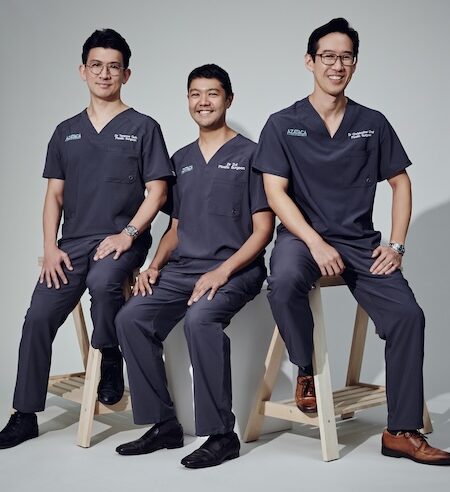
Dr Terence Goh, Dr Christopher Chui and Dr Mohamed Zulfikar Rasheed are three surgeons and longtime university friends who established AZATACA in 2017. Between them, they have over 60 years of experience in cosmetic and reconstructive surgery.
• AZATACA Plastic Surgery Centre, #14-09 Royal Square Medical Centre
• AZATACA Plastic Surgery, #03-17 Gleneagles Medical Centre
6778 8648 | azataca.com
Found this article on deep plane facelifts and neck lifts interesting? Read more beauty and style articles here!
To make the most of living in Singapore, read our latest City Guide here for free.
Don't miss out on the latest events, news and
competitions by signing up to our newsletter!
"*" indicates required fields