
One of the biggest decisions – among many – that a breast cancer patient has to make is choosing the right treatment, whether that’s a lumpectomy, mastectomy or a newer, less invasive option. Here, DR JERRY GOO from Alliance Specialist Group (Breast and General Surgery) shares his insights on a few different treatment options available, as well as what patients can expect both physically and emotionally during recovery from breast cancer surgery.

Is surgery commonly required for breast cancer patients?
Yes, surgery is generally the primary and most common treatment for breast cancer for most non-invasive, early-stage and locally advanced cases to remove the tumour.
Lumpectomy and mastectomy are two surgical options we often hear about. Can you tell us more? Who might each option be suitable for?
Lumpectomy is a breast-conserving surgery performed for early-stage breast cancer of small size. The surgery removes the cancer while leaving as much normal breast tissue as possible to try to maintain the appearance of the breast. The cancerous part of the breast is removed along with a margin of normal breast tissue (approximately 1 cm). Lumpectomy is done under general anaesthesia.
Mastectomy is the surgical removal of the entire breast and may be necessary if:
- Cancer is found in multiple areas within the breast
- The cancerous areas are large, leaving little normal breast tissue
- A lumpectomy would result in an unsatisfactory cosmetic outcome
- The patient prefers to avoid radiation therapy after surgery
- It is the patient’s choice for breast cancer treatment
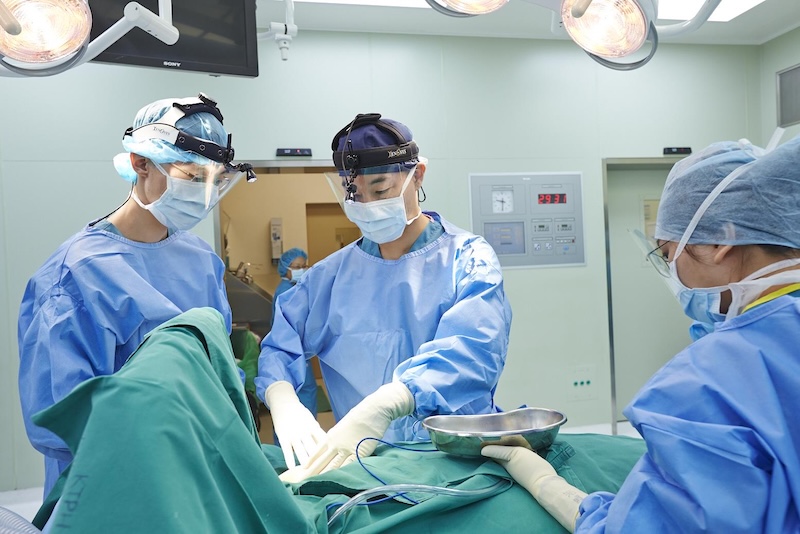
There’s a new minimally invasive technique called Endoscopic Nipple-Sparing Mastectomy. It removes breast tissue while preserving the skin and nipple-areola complex through a small (around 3 to 4 cm) incision hidden in the axilla or lateral chest wall. By avoiding visible breast incisions, it offers excellent cosmetic outcomes with minimal scarring and a lower risk of post-surgical complications, while maintaining comparable oncological safety to conventional approaches.
This mastectomy procedure, available at our clinic, is well suited for selected patients with early-stage breast cancer and small-to-moderate breast size. It is often combined with immediate implant-based reconstruction.
I’ve also heard about cryoablation treatment for breast cancer. How does that work?
Non-surgical procedures such as cryoablation for breast cancer is still considered emerging and it is not yet the standard care. Cryoablation, or ‘freezing’, is a minimally invasive technique that uses a probe to deliver extreme cold temperatures (around -170 degrees Celsius) to destroy cancer cells. It is only restricted to tumours less than 1.5cm (as larger tumours are not as reliably destroyed) and individuals with multiple existing severe conditions who cannot tolerate general anaesthesia and surgery.
What does recovery after breast cancer surgery look like?
It’s normal to feel sick or to have pain in the area after the surgery. Medication can be provided to prevent vomiting and relieve pain.
After surgery, the wounds will be covered by a waterproof dressing on top of steristrips (paper tapes). Most surgeons use dissolving stitches that do not need to be removed. These dressings should remain in place until the patient’s postoperative appointment five to seven days after surgery. It is possible to shower with the waterproof dressing in place but avoid soaking the wound in a bath.
If a drainage tube (drain) is placed in the breast wound, it may stay in for a week or more, and patient will need to go home with it. Patients will be shown how to care for the drain and keep a record of the fluid volume. The drain will be removed by the breast care nurse or surgeon during the postoperative appointment.
The timeline for resuming day-to-day activities varies depending on the type of surgery. After a lumpectomy, a patient can usually return to normal activities within a few days. For more extensive operations, like a mastectomy or a breast cancer surgery involving the removal of lymph nodes, recovery may take longer. Patients can generally start gentle activities within a week and return to vigorous activities or driving within two to four weeks.
Beyond the physical recovery, what are some of the common emotional challenges you’ve seen your patients face?
Breast cancer patients often face significant emotional and psychological strain. Up to 70 percent experience intense distress during diagnosis and treatment, and 20 to 45 percent continue to struggle even after treatment ends.
Common challenges include:
- Anxiety and fear: especially fear of recurrence around scan and follow-up period and uncertainty about the future.
- Depression and distress: including shock, anger, hopelessness, and sometimes PTSD symptoms.
- Body image and identity issues: distress over scars, hair loss, and changes in femininity or sense of self.
- Social strain: feelings of isolation, relationship tension, and pressure to “return to normal”.
- Cognitive and physical effects: “chemo-brain” (memory and focus issues) and persistent fatigue.
Some helpful strategies include:
- Joining support groups
- Professional counselling
- Regular physical activity
- Mindfulness and relaxation techniques
- Open communication with loved ones and the medical team
Emotional recovery after breast cancer surgery is just as important as physical healing and often requires ongoing support.
What about breast reconstruction? Do you have any advice for those worried about how they’ll look or feel after?
Breast reconstruction is a procedure to recreate a similar shape and form of the breast after mastectomy. Breast reconstruction helps to restore the shape of a breast on the chest without the need for any external prosthesis or padding.
In general, there are two broad categories of options:
Autologous Reconstruction: Using your own skin, tissue, fat, and/or muscle from another region of the body and transferring it to the chest to create a new breast.
Implant-based Reconstruction: Using a breast implant to recreate and restore shape to the breast.

After surgery, it is completely normal to feel worried. Understanding that it may take time to adjust to the body’s ‘new normal’ and taking it one day at time is key to recovery. Patients can consider reconnecting with their body through gentle activities. These include yoga, deep breathing exercises, or sensory experiences like a warm bath.
For care in the long-term,
- exercise regularly (e.g., walking or swimming);
- maintain a balanced, nutritious diet; and
- monitor for side effects like lymphedema and manage them early.
Is there anything you’d like more people to know about breast cancer surgery?
Navigating the overwhelming information and multitude of surgical options after receiving a breast cancer diagnosis can be challenging.
The surgery to choose depends on the cancer characteristics and also on personal preferences such as lifestyle and existing health conditions. All these should be extensively discussed with your breast surgeon to make a personalised choice. It’s important to remember that all patients are different and may require a different approach to their cancer treatment.
Treatment for breast cancer and breast surgery can be a very unsettling experience. At Alliance Specialist Group (Breast and General Surgery), we stay with you every step of the way. Our surgeons, nurses and supporting health practitioners are here to help and support you at every stage of the process so you can navigate this challenging time with ease and confidence.
About the surgeon
Dr Jerry Goo is an accredited breast and general surgeon specialising in minimally invasive oncoplastic and reconstructive breast surgery. With over two decades of medical experience and a strong foundation in public healthcare, his practice provides a full range of surgical interventions for both benign breast conditions and breast cancer.
Alliance Specialist Group (Breast and General Surgery)
#03-10 Gleneagles Medical Centre, 6 Napier Road
6298 0913 | WhatsApp 8860 2891
BGS.info@alliancespecialistgroup.com
alliancespecialistgroup.com/clinics/asg-breast-general-surgery
If you found this article on breast cancer surgery options like lumpectomy and mastectomy useful, you can read more in our Health & Fitness section.
Interested in knowing about editorial options? Email us at sales@expatliving.sg.
Don't miss out on the latest events, news and
competitions by signing up to our newsletter!
By signing up, you'll receive our weekly newsletter and offers which you can update or unsubscribe to anytime.