
Many International schools in Singapore offer a range of bilingual programmes in French, Spanish and Japanese, and Mandarin lessons for students to acquire Chinese as a second language. The focus is making language learning fun, relevant to the world and easy to master. Many also provide support for students taking English as an Additional Language (EAL). If you want your child to learn a second language to a high standard, read on to see what’s on offer at these Singapore schools!
Canadian International School
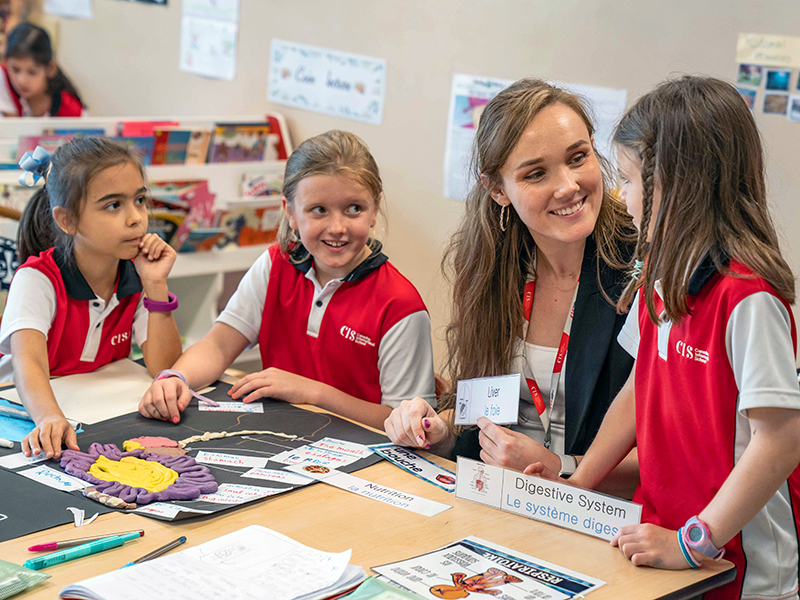
Learning in another language at CIS
Every student at Canadian International School (CIS) embarks on a journey to become multilingual as early as pre-kindergarten (three years old). From Kindergarten to Grade 6, families can choose one of three pathways: the English programme – where students learn French or Chinese – or the bilingual Chinese-English or French-English full immersion programme.
In secondary school, students build on their bilingual foundation and use language as a bridge to connect with the world through overseas exchange programmes, bilingual drama productions and international speech contests. The CIS Class of 2025 celebrated 35 bilingual diploma graduates, with even more expected in the Class of 2026.
An inside look – full bilingual programme for language learning
CIS’s approach to learning a language is research-driven. It’s also grounded in the understanding that language fluency is incomplete without cultural literacy. CIS students explore the customs, values, and context behind the language. This helps them grow into bilingual, bicultural and biliterate learners.
The school’s bilingual programmes are fully aligned with the IB. Each class is taught by two native-speaking educators in a 50:50 model. The languages rotate weekly or every other day so students experience both languages equally across various subjects. Academic records show how effective the school’s approach to language learning has been. These include a 100% pass rate in the DELF French proficiency tests, and consistent outperformance against peers in the Youth Chinese Test.
CIS was the first international school in Singapore to establish a full bilingual programme. The bilingual education hub on campus is aimed to drive the future of learning with innovative language programmes, partnerships with established universities and global collaboration.
Hear from a family:
“CIS stood out to us because of its bilingual programme, which we believe is one of the best. There aren’t many schools in the international environment that offer a strong bilingual curriculum, and Mandarin was a must for our children to learn. We have seen our children develop close to native proficiency in both English and Chinese. We are very happy with the strength of the programme at CIS.” – Atanasov family
7 Jurong West Street 41
6467 1732 | cis.edu.sg
Dulwich College (Singapore)
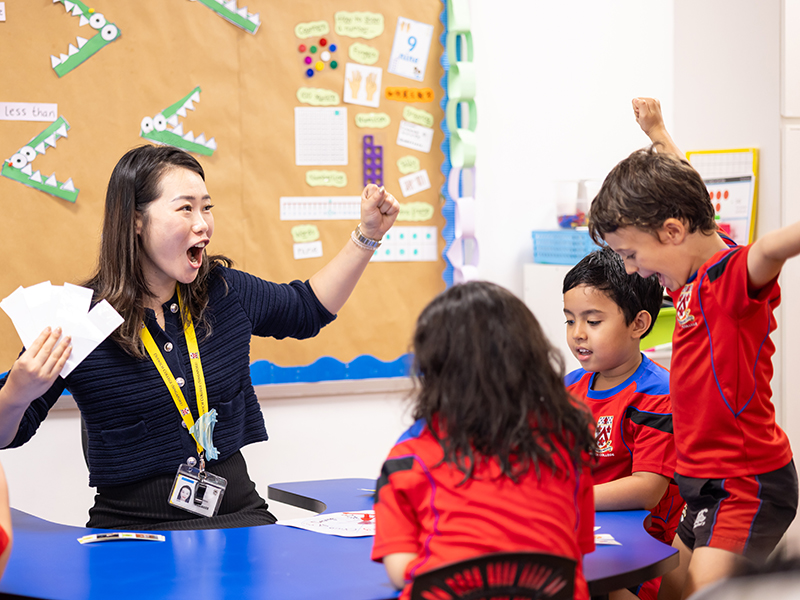
Building a bilingual foundation
One of Dulwich College (Singapore)’s core Guiding Statements is Intercultural Understanding: encouraging students to explore, understand and respect their own and others’ backgrounds and cultures. The school says that language learning plays an important role in bringing this to life.
From Nursery to Year 2, children in DUCKS are immersed in a Dual Language English–Mandarin environment. Classrooms are co-taught by a qualified English teacher and native Mandarin-speaking Laoshi, with both languages woven naturally throughout the day through play, stories, routines and interactions. Children also receive dedicated daily Mandarin lessons, grouped by proficiency to ensure they are appropriately supported and challenged. This strong bilingual foundation develops into a broader multilingual programme as students progress through the College.
An inside look
In Junior and Senior School, Mandarin remains a core subject, with differentiated pathways based on students’ proficiency, while the language offering expands to include Japanese, French, German and Spanish. Students whose first language is Japanese or French can further develop their proficiency through the school-based First Language Programme. Students with other home languages can continue their learning independently with the support of an online tutor.
At IBDP level, Dulwich actively encourages students to continue developing their first languages and supports them in working towards the IB Bilingual Diploma. From the 2026/27 academic year, the College is also expanding its home-language co-curricular offering including Italian, Hindi and Korean across DUCKS, Junior School and Senior School. This creates even more opportunities for students to maintain a connection with their language and culture throughout their education.
Hear from a parent:
“The kids enjoy learning a language their parents don’t know! But it’s really all about the teachers who transform learning a challenging language into an enjoyable and stimulating experience. They use creative methods to keep the kids engaged, making each lesson fun and interactive. As a result, the children are enthusiastic about their language classes and eagerly look forward to each session, fostering a love for learning.” – Mary N
1 Bukit Batok West Avenue 8
6890 1003 | singapore.dulwich.org
UWC South East Asia
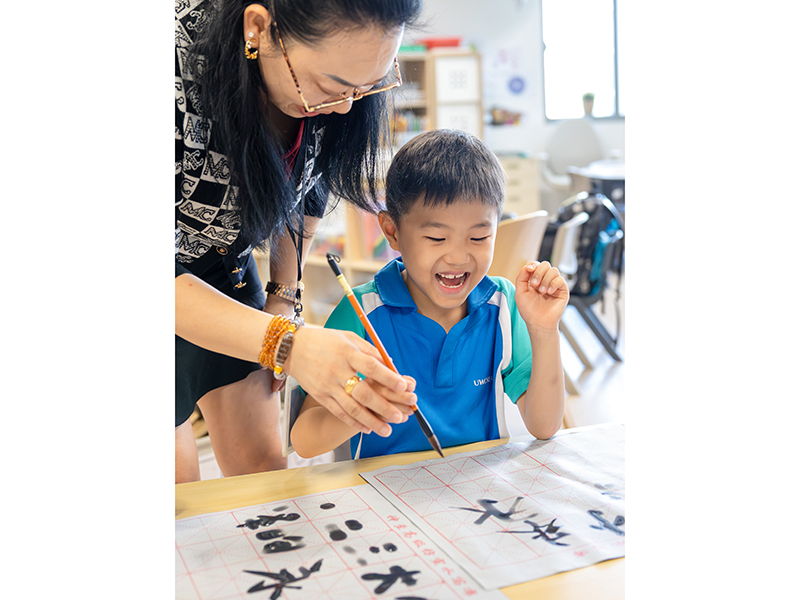
Language learning builds belonging and intercultural understanding
UWCSEA’s diverse community includes students from more than 118 countries and 84 languages spoken at home. Reflecting and supporting this diversity are opportunities for students to acquire proficiency in additional languages. This includes:
- English for EAL learners
- First Language
- Language Other Than English (LOTE)
- Home Languages Programme (HLP)
Through this approach, students are exposed to a wide range of languages, cultures and perspectives.
An inside look – three opportunities for learning a language at UWCSEA
- English as an Additional Language (EAL): For children whose first language is not English, UWCSEA’s EAL programme supports them in acquiring English language skills for academic learning and fluent communication across K1 to Grade 11. EAL students must meet minimum English language requirements during the Admissions process.
- First Languages Courses: To support bi- and multilingual students with prior academic study of a specific language, UWCSEA’s First Language courses can be integrated into the academic timetable. High School students may choose to take their first language as a School Supported Language (SSL). This pathway can prepare them for an IB-level Language A and also opens up the possibility of attaining a bilingual IB Diploma.
- Home Languages Programme: Home language and cultural identity is very important in creating a sense of belonging for all students at UWCSEA. Students whose language is not offered in the academic timetable have the option to develop their home language and cultural identity through the comprehensive Home Languages Programme which takes place outside the academic timetable.
Hear from a parent:
“We are very happy that UWCSEA offers such a wide range of language options. At this stage, because the children are still young, we have chosen to focus first on our home language, Chinese, and help them build a strong foundation. What we appreciate is that the programme feels lively and age-appropriate, not mechanical. The girls enjoy the lessons, and Chinese feels like something they can use, play with, and grow into, rather than just another subject to complete. As they get older, we hope they will also explore more languages based on their own interests. Ideally, during their time at UWCSEA, they may have the chance to learn two or three languages beyond English and Chinese — not only for communication, but as a way to understand different cultures more directly.
For our family, Chinese is the language of grandparents, family stories, festivals, poems, humour and everyday affection. It is not only something the girls learn; it is part of how they understand family and where they come from. What we appreciate is that UWCSEA makes room for this within an international education. It allows children to move between cultures without losing the emotional texture of their own.” – Zinan, parent of students aged 7 and 9, UWCSEA East
International French School (Singapore)
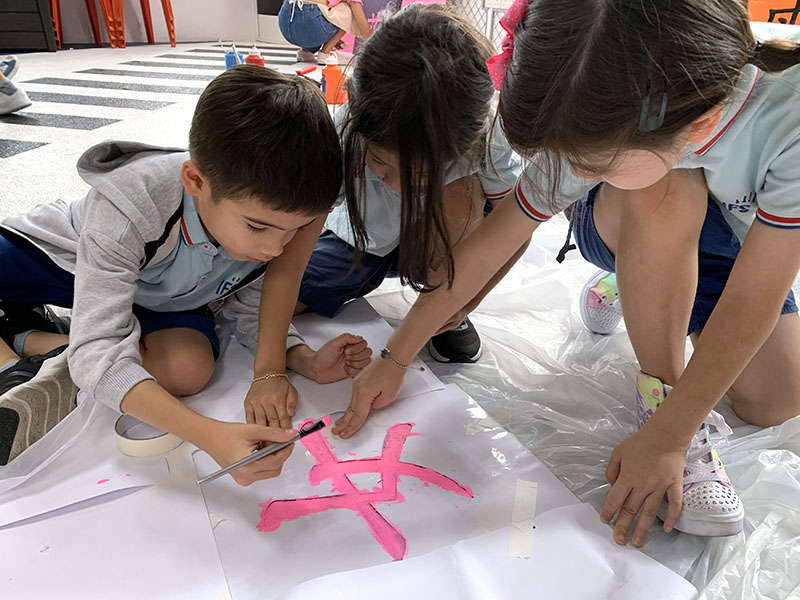
French, English and Mandarin lessons at IFS
Multilingual competence is woven into every aspect of student life from ages three to 18 at the International French School (Singapore) (IFS). The school has a bilingual French–English framework, support for Mandarin, and options in German, Spanish, and Latin.
Learners in Kindergarten begin their journey with immersive French, English and Mandarin exposure. They progress to Elementary streams tailored to their goals: the French-anchored Classic track or the balanced Anglais+ bilingual route.
From Middle and Upper School onwards, students can dive deeper via the Classic, International (British), Mandarin or European (SELO) pathways. Non-native learners benefit from tailored support including the school’s dedicated French integration programme (Passerelle for grades 6eme and 5eme). The journey culminates in globally recognised credentials such as the French DELF, German Goethe-Zertifikat and Chinese HSK proficiency certificates.
An inside look – language learning beyond the classroom
Language education at IFS extends far beyond textbook exercises. Real-world connection, creativity and collaborative energy shape the programme. This equips students to thrive in global settings with cultural empathy and communication confidence.
Languages are brought to life at the school through dynamic, student-led initiatives:
- Peer-led Spanish workshops: Grade 7 and 8 students become the teachers, crafting and delivering sessions to Grade 1 learners. This transforms teaching into powerful learning.
- Interlanguage karaoke: Mandarin, Spanish and German learners unite for musical showcases that boost confidence, cultural awareness and linguistic agility.
- Daily plurilingual immersion: Kindergarteners spend over 20 hours a week across three languages. This creates a natural, context-rich environment for language acquisition.
Hear from a student:
“If your child is under 10 years of age, you don’t have to worry about them learning and mastering French to a mother-tongue proficiency. After one year with IFS, Victoria passed her French test before joining the international section. The school’s French learning programme, FLSco, has been very effective and is provided at no extra charge. Victoria is now fluent in English, Mandarin, French and will soon pick up Spanish.” – parents of Victoria
3000 Ang Mo Kio Avenue 3
6805 0000 | ifs.edu.sg
Kinderland Academy & Preschool
Two bilingual pathways, one strong language foundation
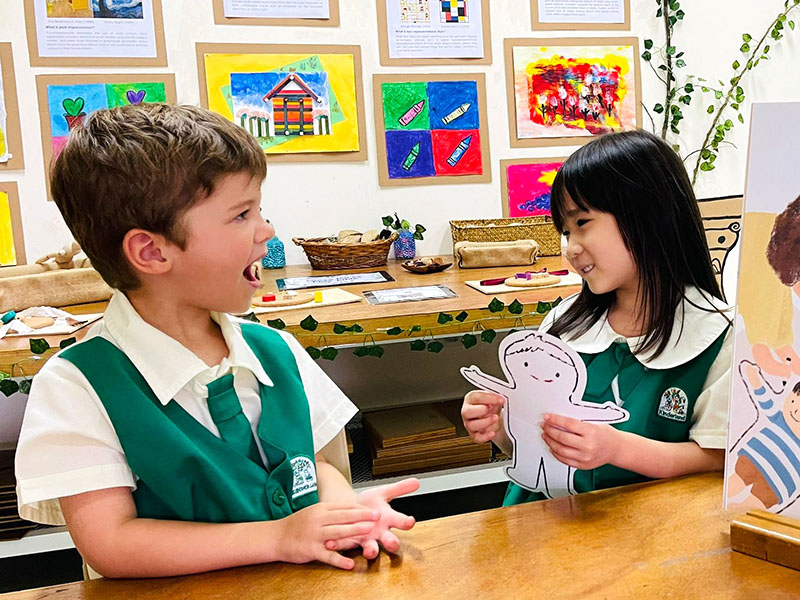
Kinderland Academy & Preschool gives children the confidence to understand, communicate and learn in two languages from their earliest years. This supports communication, participation and a sense of belonging in Singapore’s multilingual environment every day.
At every centre, children experience an immersive English-Mandarin programme. Qualified English and Chinese early childhood educators lead daily language learning, while both an English and Chinese homeroom teacher support each class. This dual-teacher model provides consistent, natural exposure to both languages throughout the day.
Kinderland Preschool @ Marine Parade and Pandan Valley also offer a dedicated Japanese-English programme for Japanese-speaking children. Daily bilingual classes build confidence in English and Japanese. Additionally, through engaging learning activities, children maintain a strong connection to Japanese language, traditions and cultural identity.
An inside look – learning languages through culture
Kinderland’s Chinese Language Programme draws on the expertise and resources of its China network, comprising 20 centres and academic affiliations including Beijing Normal University. The curriculum is benchmarked against the HSK International standards, and all Chinese educators are HSK-certified. Chinese and English themes are closely aligned, helping children encounter related ideas and vocabulary across both languages, and apply their learning with greater understanding and confidence.
The Japanese-English programme brings culture into everyday learning through traditional customs and seasonal events including Setsubun and Hinamatsuri alongside Singapore’s multicultural celebrations
Songs, rhymes, children’s literature and cross-curricular activities help to make language active and memorable. In K1 and K2, interest-driven mini projects encourage children to use Chinese while investigating ideas and solving authentic problems. Activities and field trips extend learning beyond the classroom, reinforcing vocabulary and concepts connected to each term’s themes. The school says that together these experiences deepen cultural understanding and help children use language with confidence, curiosity and enjoyment.
Hear from a parent
“Kinderland provides a truly multilingual environment where English, Mandarin and Japanese are a natural part of everyday life. Our child has become more confident in switching languages and expressing herself. It’s rewarding to see her enjoy learning languages and communicating comfortably with friends from different cultural backgrounds.” – Yudai Yokoyama, Japanese, parent of Chino (6)
14 locations island-wide
kinderland.com.sg
Tanglin Trust School
Nurturing a love of language learning at Tanglin
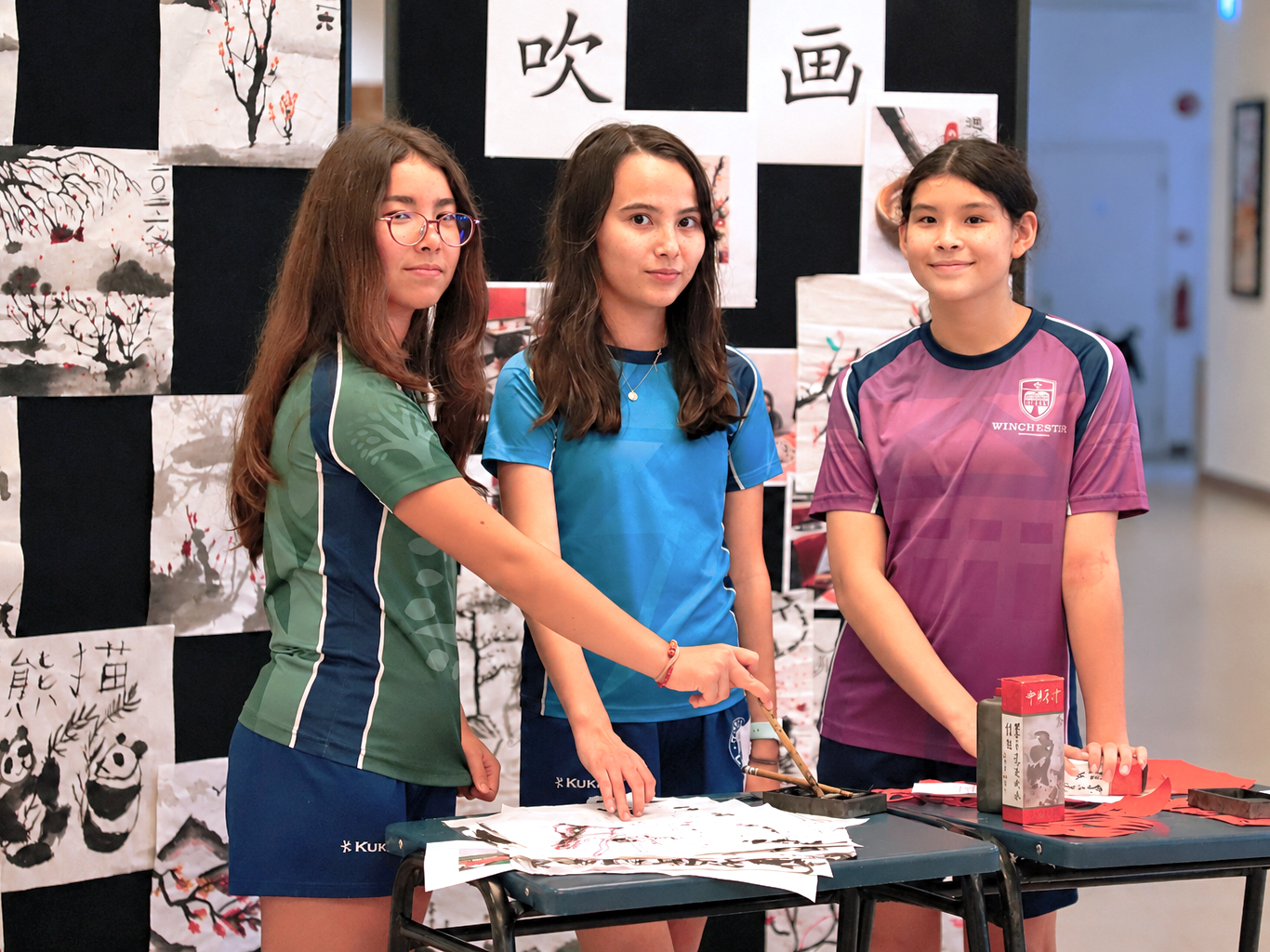
All students at Tanglin learn at least one language in addition to English. In the Infant and Junior schools, all children have Mandarin lessons twice a week. There’s a focus on nurturing a love of language learning and encouraging children to develop confidence when expressing themselves in Mandarin. The school also offers a variety of language CCAs, some at beginner level and others up to mother tongue level, including Japanese, Urdu, Sanskrit, Hindi, French, German, and Spanish.
In the Senior School, students can learn French, Spanish, Mandarin and Latin. All are popular, and many students choose to pursue them right up to IB and A-Levels. In Middle and Upper Schools, the emphasis is on language acquisition and enabling students to use the language confidently. In the Sixth Form, language becomes a vehicle for further study, covering literature, the arts, politics, history, and more. Tanglin students can also study French, Spanish and Mandarin at either the mother tongue or second language level during language lesson time. Other languages – for example Japanese, Dutch, Hindi, Urdu – can also be studied outside of curriculum time.
An inside look – learning languages in Singapore with cultural immersion
Cultural appreciation at Tanglin is fostered through trips abroad, a variety of exchange programmes, as well as Beyond Language projects and cross-curricular activities and events that bring language learning to life. The Languages department has a rich and varied calendar of events for students of all ages. These include the annual French debate and the Year 7 French school exchange, the Year 8 Chinese Speaking competition, Flamenco classes for Spanish students, a Classical Symposium and overseas trips to Chinese-, French- and Spanish-speaking countries and regions.
Hear from an educator:
“What I love about my role is bringing languages to life for students. I enjoy watching them gain confidence as communicators, develop cultural curiosity, shape their identities through learning languages, and make meaningful connections between languages, literature, and the wider world.” – Ting Ting Wang, Head of Languages and Classics at Tanglin
95 Portsdown Road
6778 0771 | tts.edu.sg
Stamford American International School
Easy start to learning world languages
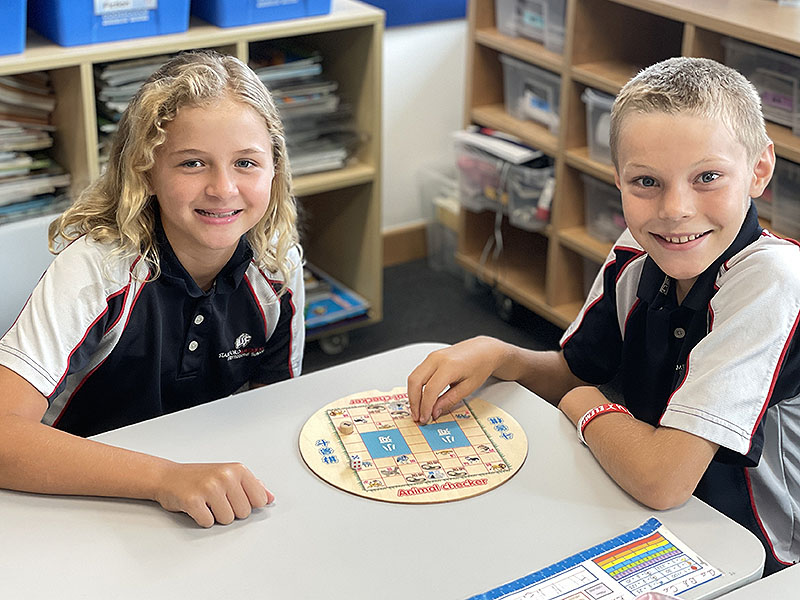
Stamford American makes world language learning possible for children as young as 18 months through their World Language Program. The school offers daily instruction in three of the world’s most widely spoken languages – Mandarin, Spanish and English.
Every child in the school’s Early Learning Village and Elementary School receives daily Mandarin or Spanish lessons as part of the language curriculum. In Middle School and High School, these classes become more intensive 80-minute sessions every other day. Students have the opportunity to learn at their own pace and are assessed regularly to track their progress and set learning goals.
An inside look – more languages for learning a language
The school expanded its language offerings by introducing Japanese and Korean courses for Middle and High School students. This provides opportunities for both students with Japanese or Korean as their home language and new learners to deepen their language skills, catering to a broader spectrum of linguistic interests and backgrounds.
The school also offers English Language Learning Pathways and English as an Additional Language programmes to students. Pathways include the innovative Preparatory Course for Secondary School programme as well as the Foundational Academic English Program.
Hear from a parent:
“I’m extremely pleased with the school’s bilingual programme. I’ve observed my kids having respect for different cultures. They’re thinking and comprehending in both languages. The programme is strong enough that my kids are able to manage within class teaching and without needing any additional teaching assistance outside school. The teachers are great and always encourage the children to try their best.” – parents of Vihaan, Grade 4
1 Woodleigh Lane
6653 2949 | sais.edu.sg
EtonHouse International School
Language learning from preschool to high school
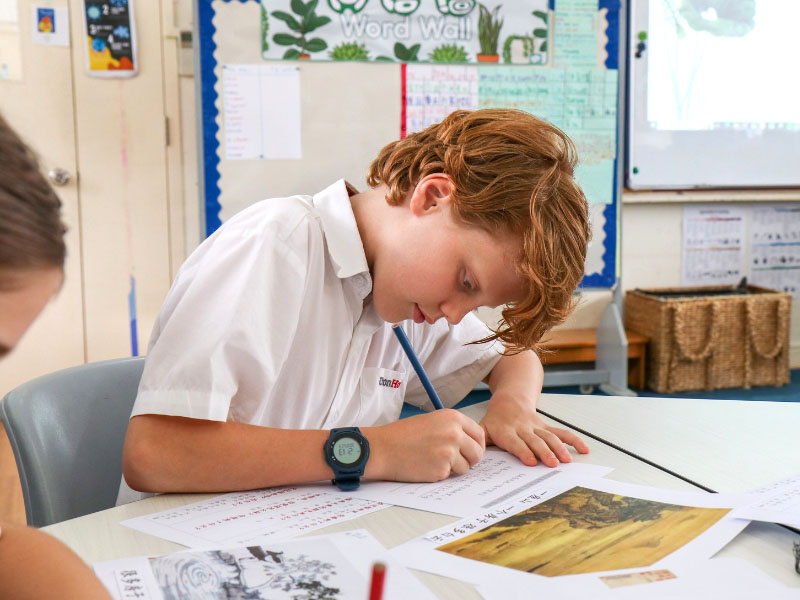
EtonHouse has nurtured fluent bilingual speakers, including non-native Mandarin speakers. It offers English-Mandarin pathways from preschool to high school to suit different learning styles and goals.
In preschool, families can choose bilingual or full Mandarin immersion programmes. English- and Mandarin-speaking educators co-teach the bilingual curriculum. For deeper exposure, the EtonHouse ZhongHua Full Mandarin Immersion Programme delivers the inquiry-based curriculum in Mandarin at selected preschools.
At the Broadrick campus, families can choose from the award-winning Mandarin Immersion Pathway, or the Integrated Curriculum Pathway offering Mandarin, Japanese or Hindi as additional languages. At the Orchard, campus primary students can learn Mandarin or Japanese. In secondary, students can study Mandarin or Spanish, with both available at IGCSE and International A-Level.
English-language support includes English as an Additional Language (EAL) and Intensive EAL. English Accelerator helps Nursery 2 and Kindergarten 1 children prepare for English-medium learning, while English for Academic Progress builds academic English and IGCSE readiness for Years 7 to 9.
An inside look – Mandarin immersion through connection with the world
At EtonHouse, language is used throughout the day to support learning, thinking and connection with the wider world.
The Mandarin Immersion Pathway at the Broadrick campus is aligned with the IB Primary Years Programme. Students use Mandarin across inquiry, science, social studies, wellbeing, culture and the arts to express ideas and make meaningful connections. The pathway was named Best Bilingual Programme at the HoneyKids Singapore Education Awards from 2022 to 2025, and recognised by the WhichSchoolAdvisor Singapore Best School Awards in 2022 and 2024.
In the 2026 Youth Chinese Test, students achieved a 100 percent pass rate, with average scores of 98 percent across Levels 1 to 3 and 93 percent at Level 4; the top scorer received full marks. Students also maintained English and Mathematics outcomes comparable to their peers.
Hear from a student:
“My daughter joined EtonHouse Broadrick’s Mandarin Immersion Programme and has been very happy there. Although she had already attended a bilingual preschool for two years, her Mandarin has progressed at a surprisingly fast pace since starting at EtonHouse. I also appreciate that it is a smaller school with a genuine sense of community.” – parent of Imogen
Two international schools and 10 preschools islandwide
6746 3333 | etonhouse.edu.sg
German European School Singapore (GESS)
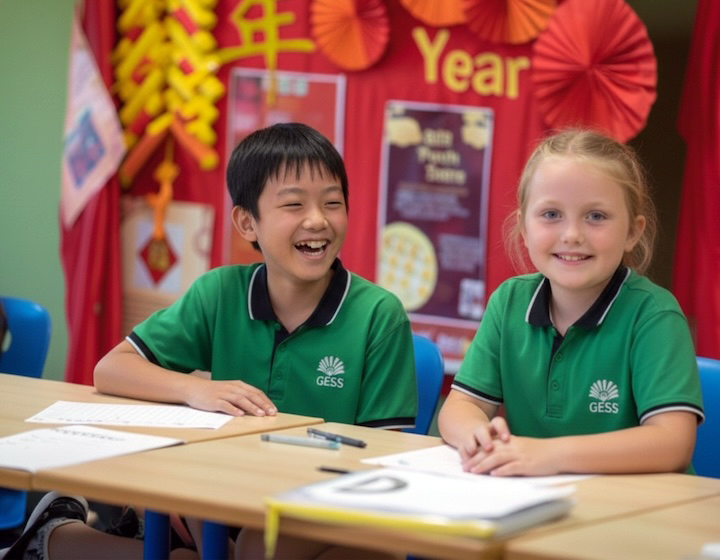
English, German, Danish, Dutch and more languages
GESS offers a multilingual environment where the language of instruction differs based on the chosen pathway: English in the IB programme and German in the German curriculum. For families who are looking to support native language development, the school also offers daily Danish and Dutch lessons for native speakers from Preschool through High School. The lessons are integrated into the timetable, with the option of working towards a bilingual diploma.
Additionally, language specialists teach after-school Mother Tongue Language Enrichment Programmes including Mandarin, French, Spanish, Japanese and Portuguese. In PreSchool, there is a differentiated daily Mandarin programme integrated into the play-based IB Primary Years Programme, with the option to continue in Grade 1.
An inside look – activities and exploration for engaging students in learning a language
Classes for learning a language are designed to be engaging and interactive. Activities include:
- Storytelling and role-play
- Speech and language games
- Vocabulary challenges and quizzes
- Arts and crafts
- Cultural exploration activities
Examples of language-focused BeyondClassroom cultural exploration activities:
- Danish Mother Tongue Primary School students opened the Christmas exhibition at the Flower Dome of Gardens by the Bay with Danish Christmas songs, celebrating 60 years of friendship between Denmark and Singapore.
- The annual King’s Day community celebration features Dutch games, performances and cultural activities designed by the Dutch teachers and students.
- Swedish Language Enrichment Programme students received the opportunity to put their language skills to use during a language immersion visit from Storvreta IBK, the floorball club based in Storvreta, Sweden.
Hear from students:
“We enjoy going to Dutch class because it helps us maintain our Dutch while learning spelling, grammar, reading comprehension, verb spelling, dictations, and much more. We also enjoy speaking Dutch with each other and learning through reading, group work, and watching Dutch news. The classes are fun and interactive, and we especially enjoy celebrating Dutch traditions such as Sinterklaas and King’s Day, as well as activities like baking pepernoten. Learning about our traditions is important to us, and we learn a lot while having fun.” – Anna, Elizabeth, Tess and Mila, Grade 5 Dutch students
2 Dairy Farm Lane
6461 0801 | gess.edu.sg
Singapore American School
Language programmes at SAS
Singapore American School (SAS) students are able to study languages including Chinese, Spanish and French as part of the school language programme. Chinese and Spanish are available from the early years while French is offered from sixth grade. Students have language opportunities integrated into every moment, allowing them to gain high-level mastery of the language and become engaged global citizens.
The school also has a Chinese Immersion programme to enable students to learn Mandarin in a Singapore school. It operates using a sliding scale model, starting with full immersion in pre-kindergarten with an 80-20 instruction model to a 75-25 instruction model in kindergarten and first grade. Around 75 to 80 percent of a student’s day is delivered in Chinese through core classes, while lessons in English, music, art and PE constitute 20 to 25 percent of English instruction. A number of parents who have taken their families to China have great tales to tell of their five- and six-year-olds helping with bookings, ordering meals and more!
An inside look – immersion classes for Chinese as a second language
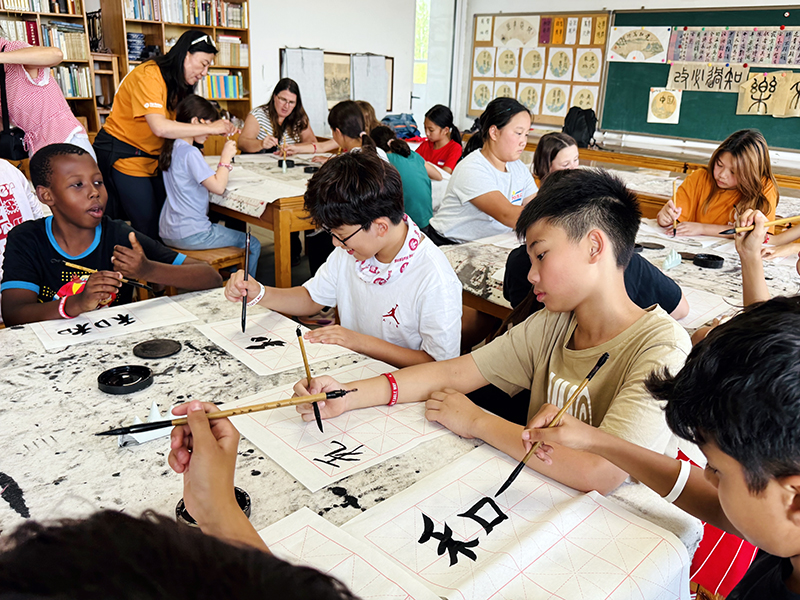
The immersion classes participate in the same annual excursions as the other grade level classes; kindergarten classes visit a nearby nursing home as part of their service learning. Many classes will visit Chinatown just before Chinese New Year, as part of Social Studies and learning about important festivals; and fifth grade students embark on an exciting Immersion Capstone Trip to China. Opportunities abound in after-school activities including calligraphy, Chinese ink painting, vlogging in Chinese, and Mandarin Model UN in Chinese.
Hear from a parent:
“We didn’t set out to look for a Chinese as a second language immersion programme for our younger kids. After seeing it in action, however, we were very impressed. It’s amazing to see our elementary school child read chapter books in Mandarin and write her own realistic fiction series using Chinese characters.” – Aisha Oravec
40 Woodlands Street 41
6363 3403 | sas.edu.sg
Swiss School in Singapore
French, German and English in a bilingual learning environment
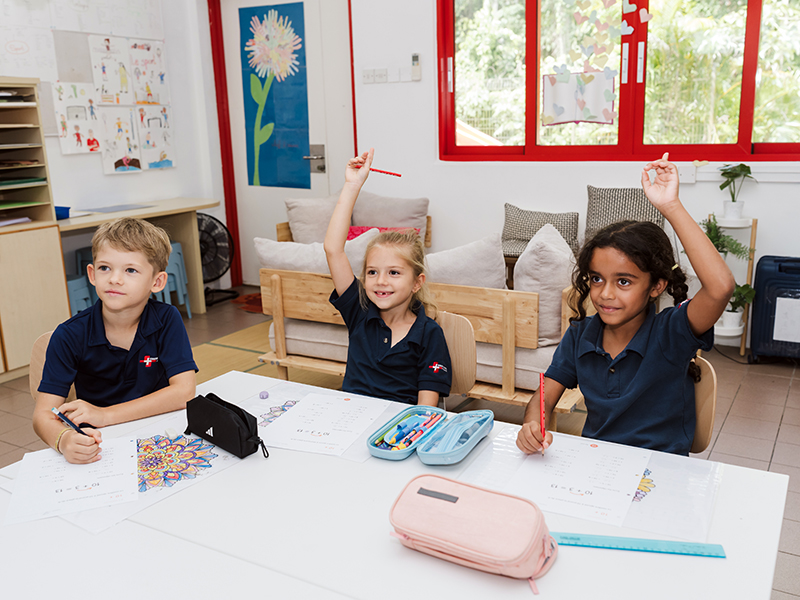
At Swiss School in Singapore (SSiS), language is not simply a subject on the timetable; it is part of the way children discover, question and connect with the world. Students follow either a French-English or German-English bilingual programme based on the Swiss curriculum, with English naturally woven into daily learning alongside French or German.
An inside look – bilingual learning in German or French and English, with Mandarin enrichment
From a lively class discussion to a visit to the library, zoo, gallery, farm or sustainability project, students are encouraged to use language with purpose. They describe what they see, exchange ideas, ask questions and create together. Lessons combine academic rigour with storytelling, hands-on exploration, project work and creative expression, giving every child meaningful opportunities to listen, speak, read and grow in confidence.
In the school’s close-knit community, teachers know their students well. This enables teachers to support each child as they become more independent, curious and comfortable communicating across languages. For families seeking an additional language experience, Mandarin is available as an optional ECA for students from Kindergarten onwards.
Hear from a family:
“Malo is happy going to school every day and has gained real self-confidence after one year in SSiS. The transition from a small preschool to an international school was smooth, thanks to the small class sizes and genuine care given to each child. He’s in the French stream but shares play areas with the German stream, so English has naturally become the children’s shared language outside class, making SSiS feel like a truly international school.” – Cecile & Sebastien Dufour, French
38 Swiss Club Road
6468 2117 | swiss-school.edu.sg
Want to know more? Read our huge guide to international schools in Singapore, and discover the best things to do in Singapore with the family. Planning to live in Singapore or new to our sunny island? Be sure to read the digital edition of our latest City Guide.
Frequently Asked Questions (FAQs) – click for the answers!
Most international schools in Singapore offer language instruction beyond English, including Mandarin, French, Spanish, German, Japanese, and more. Some schools also provide bilingual or immersive language tracks, mother-tongue support, and English-as-an-Additional-Language (EAL) programmes.
A bilingual programme means students learn two languages as part of their core curriculum — for example English and Mandarin or English and French — often with significant class time dedicated to each language. These programmes aim to build fluency and cultural understanding alongside academic subjects.
Yes — many schools offer mother-tongue or home language programmes which help students continue formal learning in their native language, whether that’s Hindi, Spanish, French, Japanese, Korean, or others. These may be part of curriculum time or available as supported classes.
Yes. Most international schools include English as an Additional Language (EAL) support so children who are still developing English proficiency can access the curriculum while improving their language skills.
Yes, languages are often offered from early years through high school, though the specific options and depth of study can vary by school. Some languages are core subjects at lower grades and may extend into advanced literature or first-language study in secondary school.
Common languages include Mandarin, French, Spanish, German, and Japanese, and some schools extend to languages like Hindi or Dutch depending on demand and enrolment. Many schools also integrate cultural and linguistic activities to deepen understanding.
Yes — bilingual and multilingual education can support academic success, cross-cultural communication skills, and global mobility. Language proficiency is also beneficial for university applications internationally.
Language classes teach a language as a subject (e.g., Spanish once or twice a week), while bilingual immersion programmes integrate two languages into various subjects across the curriculum, helping students use both languages in broader academic contexts.
Don't miss out on the latest events, news and
competitions by signing up to our newsletter!
"*" indicates required fields