Not sure if you need proper treatment or simply compression socks for your varicose veins? And is it actually possible to reduce or remove varicose veins? DR SUJIT SINGH GILL, Director and Consultant Vascular & General Surgeon at The Vascular and General Surgery Centre, answers a few of our burning questions about the condition.
I’ve noticed some varicose veins on my legs; what causes them?
Varicose veins occur when the tiny valves inside your leg veins stop working properly. Normally, these valves keep blood flowing upwards towards your heart. In other words, venous blood flow is supposed to be a one-way street. When the valves weaken, they do not close properly, allowing a backflow of blood. The veins have now become two-way streets. This blood pools in the veins in the most dependent part of your body – the legs. This increase in pressure is what causes them to stretch, dilate and bulge.

Varicose veins often start small, then progressively increase in size over time. In the long term, backflow of blood may result in skin damage in the areas around the ankles – a condition known as chronic venous insufficiency (CVI). A person with this condition is at increased risk of developing chronic ulcers or non-healing wounds of the leg.
Common causes include standing for long hours (for example, teachers, nurses, retail staff), family history (genetics matter!), pregnancy and hormonal changes, ageing, and inactivity. Varicose veins are more common in women, but men get them too. Statistically, one in three adults will develop some form of venous reflux (or backflow). Fortunately, most cases are mild. Modern treatments for varicose veins, such as endovenous ablations, are effective and minimally invasive. These are usually performed as day procedures. The best outcomes are achieved when treatment is carried out before CVI becomes established.
What are the different stages of these veins? How do I know how advanced mine are?
Varicose veins sit on a spectrum, from cosmetic nuisance to quality-of-life-threatening ulcers. Clinicians commonly describe this using stages.
Early on, you may see only tiny surface veins (spider or reticular veins) with little or no discomfort. As veins become dilated and tortuous, they form classic bulging varicosities, often accompanied by heaviness, aching, or night cramps. Later stages bring ankle swelling, brownish skin staining, eczema and eventually active venous ulcers around the ankle, which are notoriously difficult to heal.
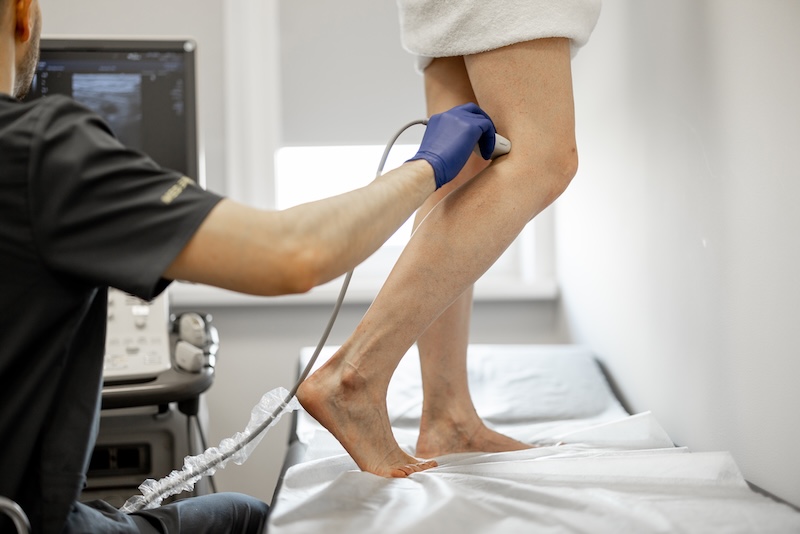
To estimate how advanced your veins are, look at these three clues:
- What you see: Are they just fine lines, or have they developed into ropey bulges, swelling or skin changes?
- What you feel: Is it purely a cosmetic concern or do you experience daily heaviness, throbbing, itching or burning?
- What you can’t see: Ultrasound findings can reveal valve leakage and reflux, which your vein specialist will assess.
If you have visible bulging veins, persistent symptoms, or any skin changes or wounds at the ankle, your veins are already in the medical, not just cosmetic, category and deserve a proper venous ultrasound and discussion of treatment options for your varicose veins. This guides you on whether you need lifestyle measures, compression, injections, laser or surgery – or simply reassurance.
How can I remove or reduce varicose veins on my legs? Do compression socks actually work?
Lifestyle measures such as regular walking, elevating the legs and maintaining a healthy weight can ease symptoms. But once a vein becomes varicose, it can’t fully be removed. Definitive improvement comes from minimally invasive treatments such as laser ablation, radiofrequency ablation, sclerotherapy, or medical adhesive closure – safe modern options that require little downtime.
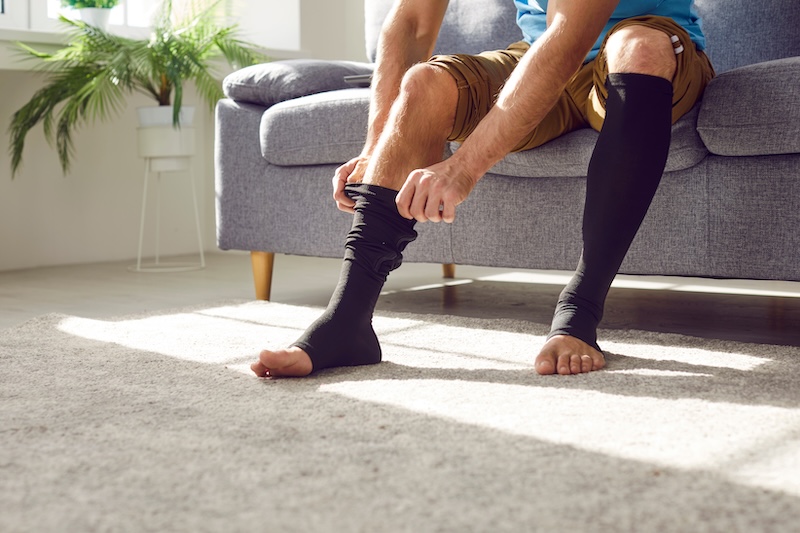
Compression socks often come up in conversation on varicose veins, and they absolutely have a place. They improve circulation by applying gentle, graduated pressure to the leg, which reduces swelling and discomfort. However, compression socks don’t remove existing varicose veins. Their real value is in symptom relief and slowing progression.
In short, compression stockings help you feel better, but targeted treatment for varicose veins is needed if your goal is long-term removal or visible improvement.
More about the doctor
Dr Sujit Singh Gill is the director and consultant surgeon at The Vascular and General Surgery Centre. He specialises in peripheral arterial disease management, hernia repair, varicose vein disease and more.
The Vascular & General Surgery Centre
#18-05 Paragon Medical Suites, 290 Orchard Road
6736 2302 | tvgsc.sg | enquiry@tvgsc.sg
Liked this article on treatments for varicose veins and whether compression socks actually work? Read more in our Health & Fitness section.
Don't miss out on the latest events, news and
competitions by signing up to our newsletter!
By signing up, you'll receive our weekly newsletter and offers which you can update or unsubscribe to anytime.