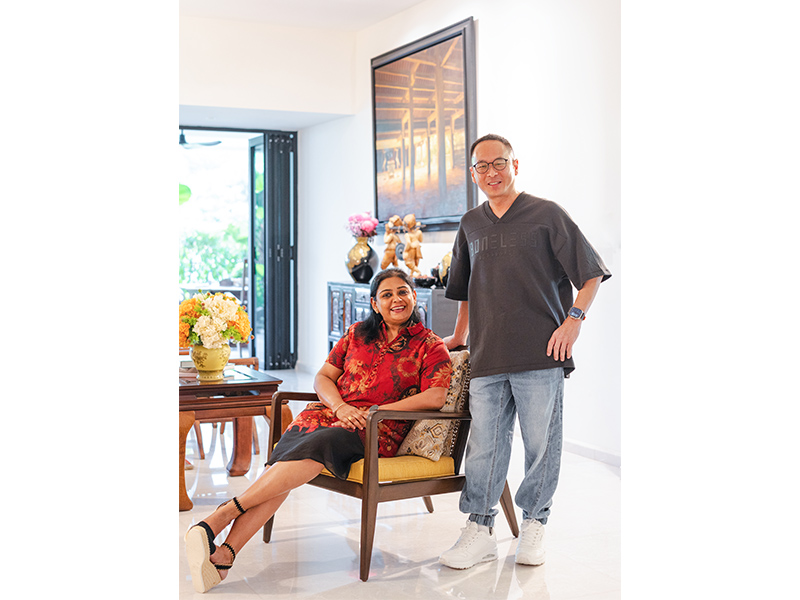
CHANDRA RAVI, founder of interior design company Denricher, shows us around her newly renovated home at Fontana Heights. She discusses the collaborative design project she carried out on the Ulu Pandan apartment, together with John Low and his design and renovation company in Singapore, Liya Interior Design Pte Ltd.
About the home
Name of condo: Fontana Heights
Location: Mount Sinai Rise, near Ulu Pandan Road
Apartment size: 5,000 square feet
What drew you to this apartment in Fontana Heights?
The alfresco living was a major factor in our choice. We had been living in a landed house with an expansive open porch and we were drawn to what we felt offered apartment-style living but with the privacy and openness of a bungalow. The moment we saw the balconies, we knew this was special – they gave the apartment such a wonderful sense of openness, filled with natural light and greenery. It gave us the chance to create the spacious, airy home we longed for, despite it being a condo.
Your home has been described as having a “landed” feel despite being an apartment. What design choices helped achieve that?
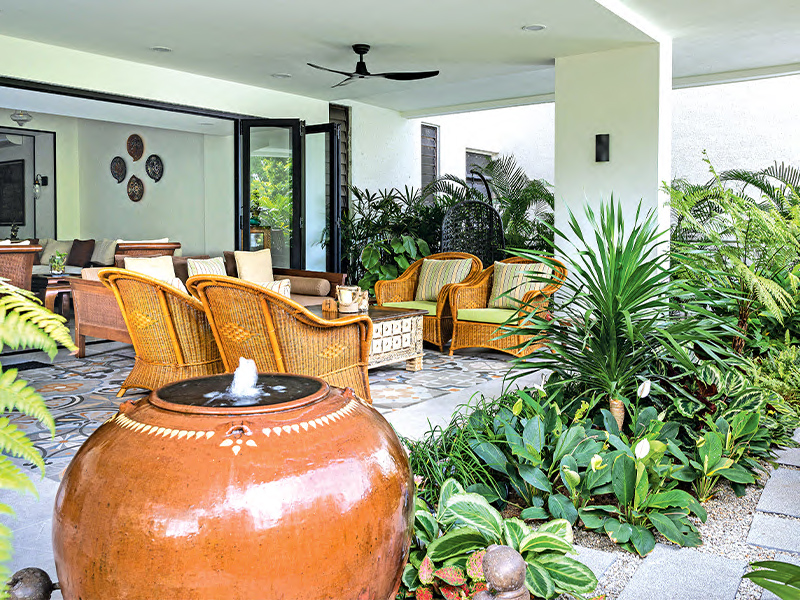
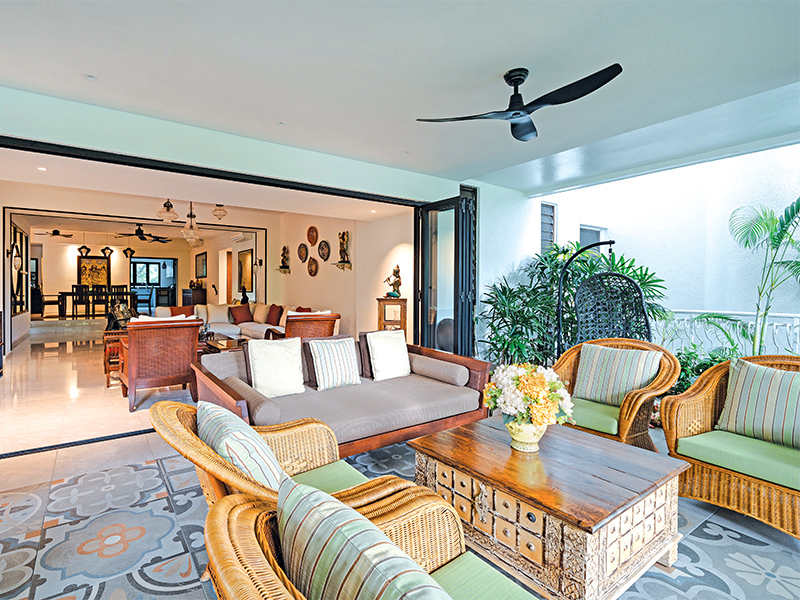
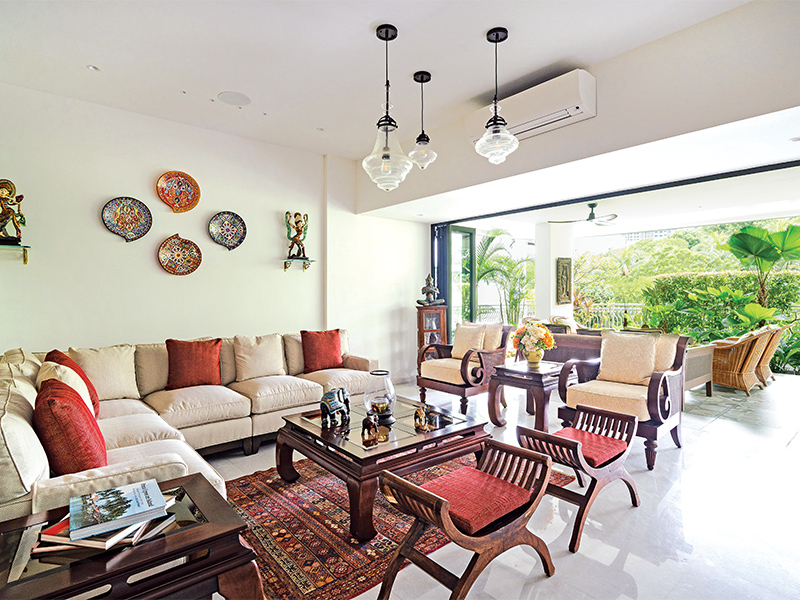
We have made our balcony gardens the centrepiece of the design, with slide-and-fold aluminium doors that blur the line between indoor and outdoor space. This creates a unified, seamless flow between the living, dining and balcony areas. It also makes the gardens feel like a true extension of the home rather than something to be viewed from behind glass.
Each balcony was carefully landscaped with its own distinct character and feel, and that sense of continuity is what gives our apartment its character – a presence that visitors and guests sense instantly upon entering. Designed by Esmond Landscape and Horticultural Pte Ltd, the balcony garden won a bronze prize in the residential Design and Build category of the LIAS Awards of Excellence 2025!
How was the experience of designing your own home different from designing for others?
The biggest difference was the decision process. When designing for clients, I spend a lot of time putting myself in their shoes and intuitively understanding their needs and preferences. With my own home, I already knew my husband’s and my tastes, which sped up many decisions.
At the same time, it was surprisingly challenging. As a client, you’re guided by personal preferences, but as a designer, you also have to weigh functionality, flow and feasibility. Balancing those two roles meant I sometimes had to step outside myself and ask, “Would I advise this if it were for a client?” It was a good reminder that, just like my clients, I have to quite literally live with the choices I make, which meant those choices had to be extremely meaningful.
What were the challenges of balancing personal desires with practical decisions?
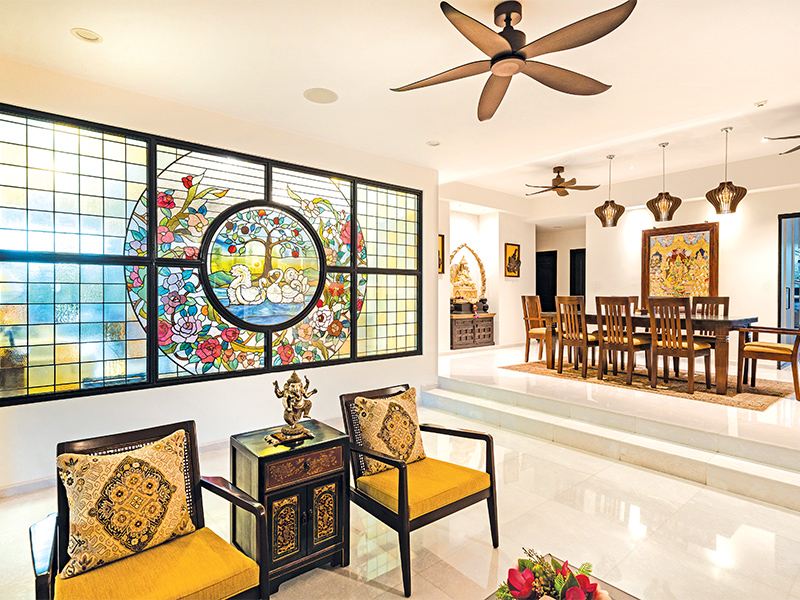
That’s a good question, and two elements stand out for me. The first was the stained-glass divider between the living and family areas – unusual both in concept and in the sheer scale required, and as bespoke as it gets. I was determined to have it, even though the technical execution was complex (including the use of a crane!). A client might have hesitated, but as the homeowner I felt the emotion and personal connection made it worth pushing through.
The second was converting the paved balcony into a fully-fledged outdoor garden. Each challenge was different, but by working closely with Liya Interiors on the execution side, we were able to turn those personal desires into practical, realised design features.
How did the collaboration with John Low influence your design proces? Did having another designer in the mix change your approach?
It was great fun collaborating with John – this was actually our first project together. His aesthetic sensibilities are very refined, and his years of experience meant he could provide both practical input to the design process and an efficient execution plan. That complemented my own design vision perfectly – ideas weren’t left as concepts, they were translated into reality in a very practical way. More than that, it felt like a true partnership, which made the whole process not just productive but also genuinely enjoyable.
You have blended tropical, heritage and contemporary elements: as a designer, what story were you trying to tell through that mix?
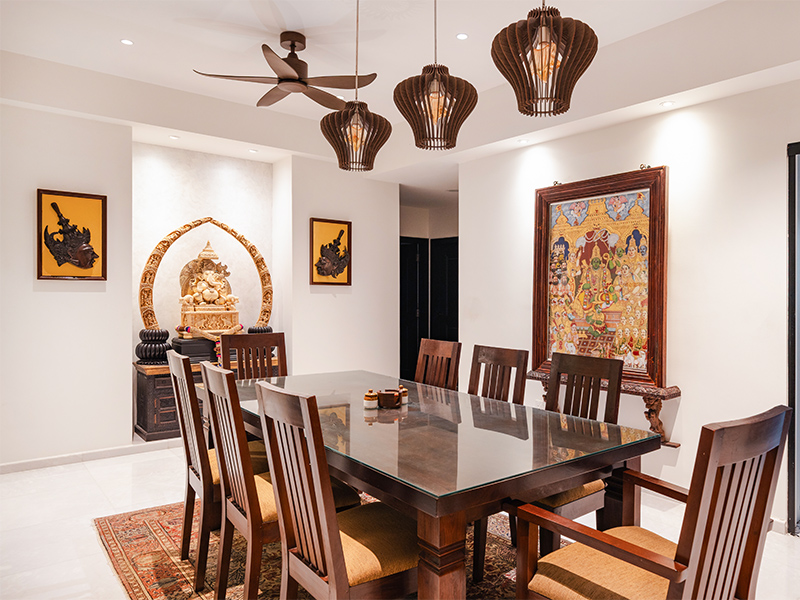
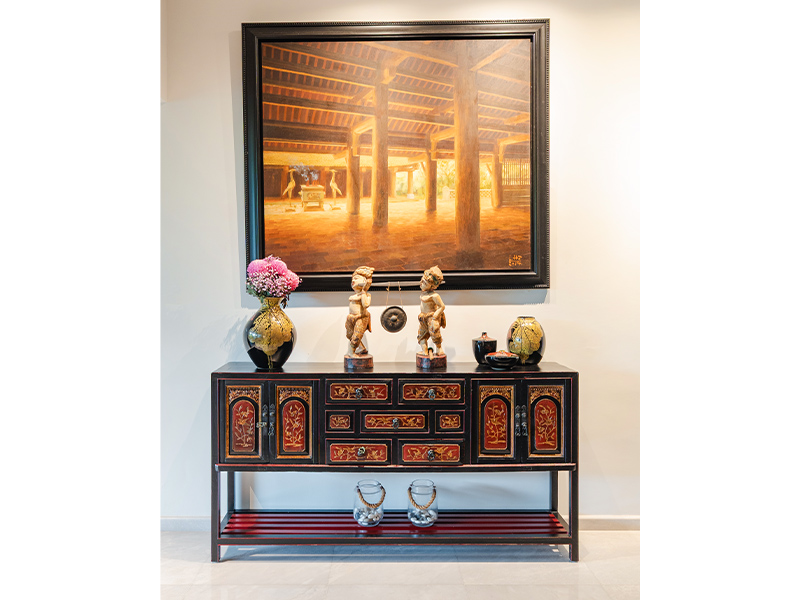
For me, design doesn’t need to follow a specific style – it should capture the homeowner’s story and lifestyle. My husband and I have lived in different parts of the world, and I wanted our home to reflect that journey. That’s why you’ll find furniture from the US, pieces from Vietnam, and Indian motifs like the Hamsa swan in the glass divider. These layered experiences from different cultures create a personal story and serve as a narrative – a story of experiences rather than a showroom of trends.

The stained-glass divider is a striking statement – what does it mean to you personally?
It represents bringing art into daily life. The divine swan motif can be deeply cultural, yet the piece itself is contemporary. It’s also a great reminder that bold choices can become the soul of a home. Every guest who walks into our home remembers it.
How do you think your home showcases your style and process as a designer?
For me, creating is about imagination. I like to push ideas as far as they can go in the early stages, without limiting myself with construction constraints too soon. Then I refine, adapt and iterate until it works in terms of execution, cost and function. My home is a reflection of that process – imagine, create, iterate and execute. At the same time, I believe a home should be personal first. It’s where you live, not a portfolio. Comfort and authenticity matter most, and that begins with flow. I never think of rooms in isolation – I think about how you move through the space every day.

Has this renovation project influenced how you approach your current or future projects?
This was my first project in Singapore, and since then I’ve gone on to complete two others, each very different in scope and design requirements. This initial project gave me a strong grounding in how designing and building works here, and that experience has flowed into my subsequent efforts.
More importantly, it reminded me how essential it is to create spaces that make you feel something every day. For me, one of the most valuable takeaways was discovering how gardens can transform apartment living. They change the energy of a space completely, and I’d love to keep exploring ways to make highrise homes feel grounded and more connected to nature.
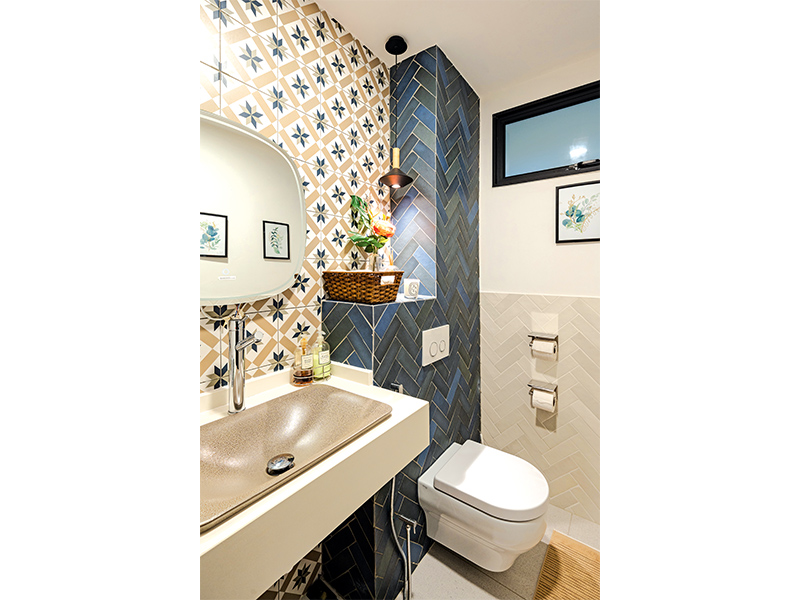

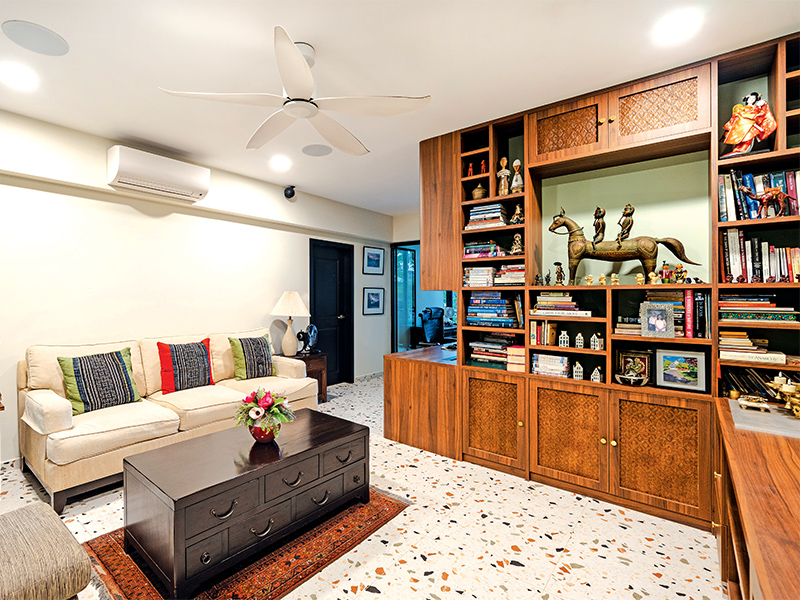


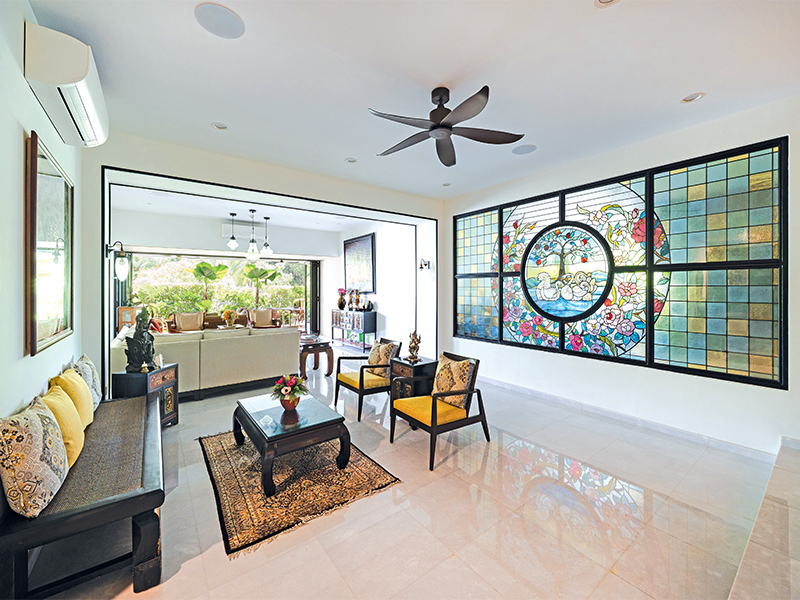
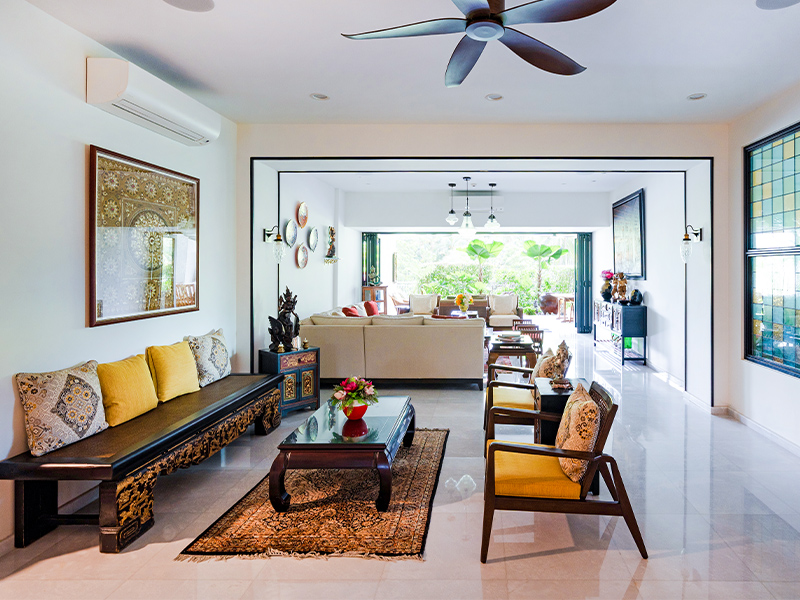
Chandra’s Recommendations
Vintage and antique furniture
Just Anthony | justanthony.com
Customised furniture
Framier | framier.sg
Handles and knobs
Vinoga | vinogasg.com
Stained glass windows
Elenora Koh Bee Liang, Artglass | artglass.com.sg
Renovation company in Singapore
Liya Interior Design Pte Ltd | 6970 2884
Interior design
Denricher | 9850 1569
chandra@denricher.com | denricher.com
This article on interior design and a renovation company in Singapore first appeared in the November 2025 edition of Expat Living. You can purchase the latest issue or subscribe so you never miss a copy!
To make the most of living in Singapore, read our latest City Guide here for free!
Don't miss out on the latest events, news and
competitions by signing up to our newsletter!
By signing up, you'll receive our weekly newsletter and offers which you can update or unsubscribe to anytime.