How can you tell if you have scoliosis and what are the symptoms to watch for? From scoliosis workouts to causes of this spinal condition, DR LAU LEOK LIM, Senior Consultant Orthopaedic Surgeon at Orthopaedic and Hand Surgery Partners, answers our questions about treating and managing scoliosis effectively.
Understanding the causes and symptoms of scoliosis
What is scoliosis?
A healthy spine appears straight when viewed from the front or back. In children with scoliosis, however, the spine grows sideways, creating an abnormal curvature. Scoliosis affects about two to three percent of the population, and most cases are mild. It can be diagnosed at any age, though it is most commonly detected during adolescence and later in older adults.
There are several types of scoliosis. The most common is idiopathic scoliosis (with no identifiable cause). Other forms include congenital scoliosis (present at birth), neuromuscular scoliosis (associated with conditions like cerebral palsy or muscular dystrophy) and degenerative scoliosis (seen in older adults).

What are some early signs or symptoms of scoliosis?
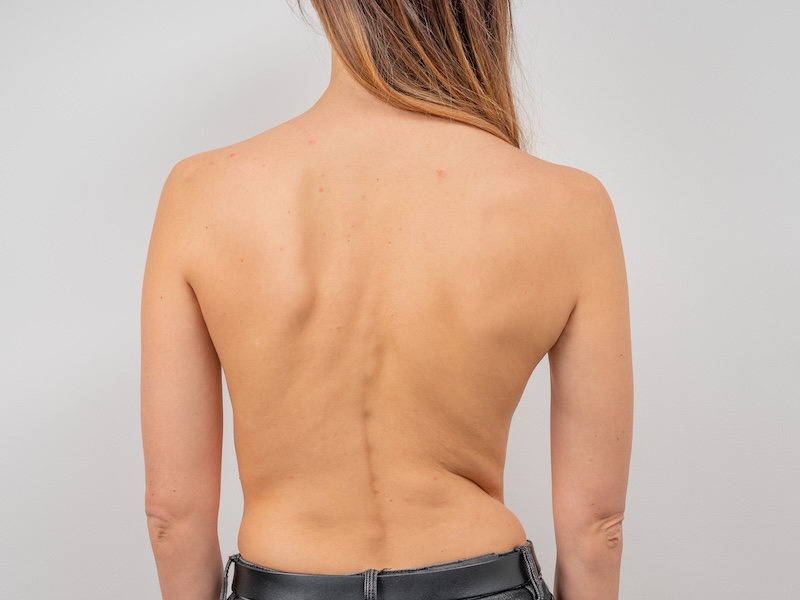
It can be difficult to tell if someone has scoliosis. Scoliosis in children is often silent, with no pain or discomfort. In contrast, adults – especially older people – may experience back pain. Early signs in children and adolescents are usually subtle and relate to body asymmetry:
• Uneven shoulders
• An asymmetrical waistline
• One shoulder blade appearing more prominent due to a rib hump
• Clothing, especially inner garments, fitting unevenly or hanging loosely on one side
Many teenagers wear loose clothing or have long hair, which can easily mask these symptoms of scoliosis. This is why routine screening or early evaluation is important.

What causes scoliosis?
Idiopathic scoliosis has no single known cause, but research shows a strong genetic component involving multiple genes that influence spinal growth. Family history is common, with siblings or parents often affected.
The condition is far more common in girls than boys, with a ratio of about seven to one. Symptoms of scoliosis such as curves progress most rapidly during puberty, which is why onset is frequently seen in tweens and early teens, particularly girls.
What are the main treatment options available?
A comprehensive assessment by a spine specialist is essential to determine the type, severity and risk of progression. For idiopathic scoliosis, three broad treatment strategies exist, and surgery is not always required.
#1 Scoliosis specific workouts: These exercises aim to optimise spinal biomechanics. They are suitable for all severities but are most effective in mild scoliosis.
#2 Bracing: For moderate curves with high risk of progression, bracing can help prevent worsening of scoliosis symptoms. A minimum wear time of about 13 hours per day is typically recommended for two to three years. Success rates are lower in boys or those who struggle with compliance.
#3 Surgery: For severe scoliosis, conventional spinal fusion surgery corrects the deformity and stabilises the spine, though at the cost of some flexibility. Minimally invasive techniques may be an option for selected patients (for more, read our patient’s story in Expat Living’s January 2026 issue).
A newer technique, anterior vertebral body tethering (aVBT), uses a keyhole approach to guide spinal growth while preserving its flexibility. It’s best suited for skeletally immature patients who have failed bracing or who wish to maintain greater spinal mobility, such as athletes and dancers.
Can someone live normally after scoliosis surgery?
Yes. Beyond the initial recovery period, most patients return to normal activities without significant limitations. Over 90 percent report high satisfaction, and many resume activities they enjoyed before surgery. Female patients can also have normal pregnancies and deliveries.
About the doctor
Dr Lau Leok Lim is a leading spine surgeon in Singapore known for his expertise in scoliosis, spinal deformity correction and patient-centred care.
#03-37 Annexe Block, Gleneagles Hospital, 6A Napier Road
Call & WhatsApp 8766 3602 | drlauspineclinic@gmail.com
drlaull.com | orthohandpartners.com
This article on scoliosis symptoms, scoliosis workouts and how to tell if you have scoliosis first appeared in The February 2026 Expat Living magazine. You can buy the latest issue or an annual subscription or read the digital version free now.
Interested in knowing about editorial options? Email us at sales@expatliving.sg.
Don't miss out on the latest events, news and
competitions by signing up to our newsletter!
By signing up, you'll receive our weekly newsletter and offers which you can update or unsubscribe to anytime.