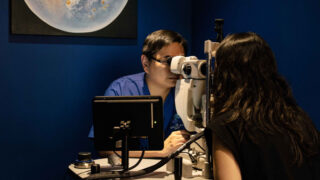
What exactly are palatal expanders and could they really help you avoid tooth extractions before orthodontic treatment like braces or aligners? Here, DR AMANDA KOH and DR KASSANDRA ONG from Kohe Dental in Singapore answer a few questions about jaw expansion methods for both adults and kids.
Is it possible to straighten crowded teeth without extractions?
“Non-extraction orthodontics” sounds simple. Keep all your teeth, align your smile. In reality, it’s more of a planning philosophy. Whenever it is safe and stable to, we try to create space without extractions of teeth. In some cases, we do so by improving the foundations rather than removing healthy teeth to make room.
Two of the most important tools for that are palatal expanders (especially in growing patients) and MARPE (a modern expansion method sometimes used in teens and adults). Combined with braces or clear aligners, these approaches can help increase space necessary to allow teeth to grow in or shift in properly, thus reducing extractions for the right candidates.
What causes teeth crowding in the first place?
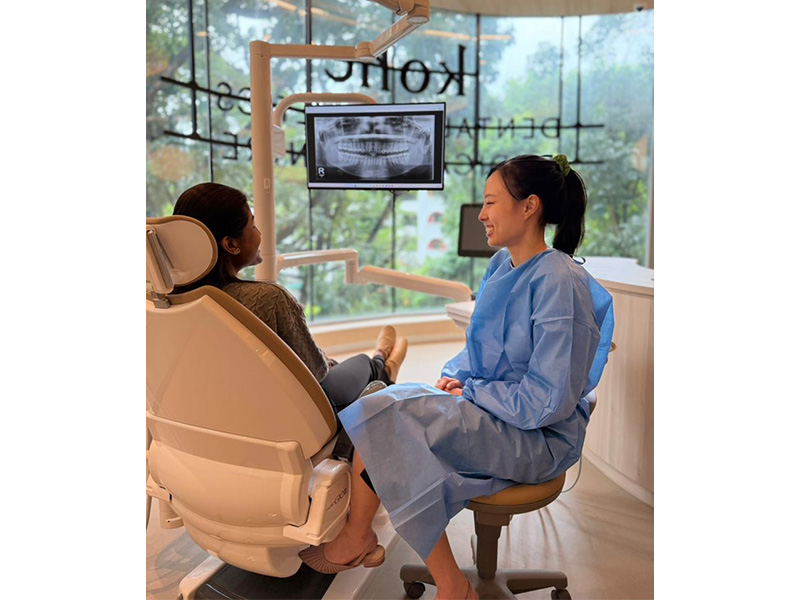
Crowding is usually caused when there is no to little space for permanent teeth to grow in. Instead of growing out in the right positions, the teeth try to “squeeze” themselves into whatever space there is, causing severe misalignment.
When most patients think of crowding and orthodontic treatment, they think of tooth extractions. What if we told you that in some cases, you do not actually need to extract teeth? In many patients we see, the upper jaw is too narrow to host all adult teeth. A narrow upper arch can show up as:
- Crooked teeth or a “V-shaped” smile
- Crossbite (upper teeth sitting inside the lower teeth)
- A bite that feels off when chewing
- Limited space for teeth to align naturally
If we try to straighten teeth without addressing a narrow upper jaw, we may be forced into compromises, such as pushing teeth outward beyond their ideal bone support, or extracting teeth to “make space.” That is why evaluating the width and shape of the upper jaw matters as much as evaluating crowding.

How do palatal expanders work?
In children and younger teens, the palate is still responsive because the midline suture has not fully matured. That is why palatal expanders can be highly effective when used at the right time.
A palatal expander can be a fixed or removable device that gradually widens the upper jaw. It’s not just about straight teeth; it’s also about building a broader, more stable arch so teeth have space to align.
Palatal expansion can help with narrow upper jaws, crossbites, crowding issues and to create a better foundation for braces or aligners later.
This is a major reason we emphasise early orthodontic development. When a child’s jaw is guided early, we often reduce the need for more aggressive interventions later.
Rather than palatal expanders, you recommend another jaw expansion method called MARPE for teens and adults. Why is that?
Adults’ palates cannot expand the same way children’s do. That’s where MARPE (MiniscrewAssisted Rapid Palatal Expansion) can sometimes help. MARPE uses small temporary anchorage screws (placed into the palate) to support expansion more skeletally than tooth-only expansion.
It may be considered when someone has a narrow upper jaw, crossbite or significant constriction, or crowding where expansion could realistically create space.
MARPE is not for everyone. Candidacy depends on anatomy, gum and bone support and bite goals. But for the right patient, it can create the space needed to align teeth more naturally, sometimes reducing the need for tooth extractions.
Should I go for braces and clear aligners to straighten my teeth after jaw expansion?
Both braces and aligners can work beautifully for complex cases. The decision should be based on biomechanics, not trends. Braces can be ideal when we need:
- Strong control for complex bite correction
- Rotations and difficult tooth movements
- Significant bite coordination (how upper and lower teeth fit)
Braces are often chosen for moderate to severe bite issues, particularly when we want maximum control during finishing. Clear aligners are excellent when:
- You want discreet treatment
- You can be consistent and compliant with wear time
- The case is suitable for aligner biomechanics
- We can stage movements carefully and use attachments/elastics as needed Aligners are commonly used after expansion, because once the jaw foundation is improved, aligning teeth into the new arch form becomes more predictable.
What does treatment usually look like?
Most non-extraction, expansion supported plans follow a sequence:
#1 Diagnosis: 3D intraoral scans, 3D facial scans, CBCT 3D scans, X-rays (OPG and Latceph), bite and gum assessment as well as photo documentation.
#2 Space planning: Your dentist will then decide whether space should come from expansion, interproximal reduction (IPR), tooth movement sequencing, or a combination.
#3 Expansion phase: Palatal expander (younger patients) or MARPE (selected older teens/adults).
#4 Alignment phase: Braces or clear aligners to straighten teeth and refine the bite.
#5 Retention: Retainers are essential for long-term stability.
Does non-extraction orthodontics always promise better results?
No, non-extraction treatment is not automatically “better”. Forcing it can lead to your teeth being pushed too far outward, gum recession risks in vulnerable areas, and instability and relapse.
Sometimes, extractions are the safest route for long-term function and gum health. The real goal is not to “avoid extractions at all costs”. The real goal is a stable bite, healthy gums, and a balanced facial outcome.

Final thoughts on palatal expanders and MARPE?
Non-extraction orthodontics can be a modern, evidence-informed approach when the underlying anatomy supports it. Palatal expanders and MARPE can help create space by improving the jaw foundation, and braces or clear aligners can then align the teeth predictably.
So, if you have been told “you must extract”, it may be worth seeking an assessment that properly evaluates expansion options. If you’ve been promised “no extractions guaranteed”, that should also raise questions.
The best orthodontic plan is not the one that sounds the nicest. It is the one that stays healthy and stable years after treatment ends.
About the dentists
Founder and Clinical Director at Kohe Dental, Dr Amanda Koh is a general dentist with a special interest in orthodontics and full mouth rehabilitation. She works frequently with young children with severe to complex orthodontic conditions. Her approach uses growth-guided orthodontic techniques to support healthy dental and facial development, with particular attention to airway and jaw development.
Dr Kassandra Ong is a Senior Dental Associate at Kohe Dental and a certified Invisalign provider with over six years of clinical experience. She works primarily with adult patients seeking a clear aligner treatment plan. Her approach is built on practicality, with clear milestones, careful bite assessment and reviews that keep treatment on track even with busy schedules.
#03-01 The Oxley, 9 Oxley Rise
8952 0083 | 9178 8969 | [email protected] | kohedental.com
This article on Kohe Dental, palatal expanders, MARPE and jaw expansion first appeared in the April 2026 issue of Expat Living. You can buy our latest magazine or an annual subscription, or read the digital version for free now.
Interested in knowing about editorial options? Email us at [email protected].
Don't miss out on the latest events, news and
competitions by signing up to our newsletter!
"*" indicates required fields