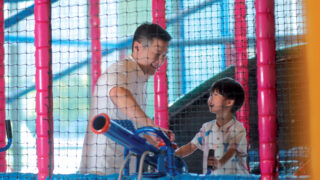
Within the walls of three landed houses, House on the Hill Balmoral nurtures children from two to 17 months in its Infant Care/Nido programme. Founder WU JING shares how integrating a Montessori curriculum, pastoral care and a carefully prepared environment helps little ones develop steadily from Playgroup through to Nursery, Kindergarten and beyond.
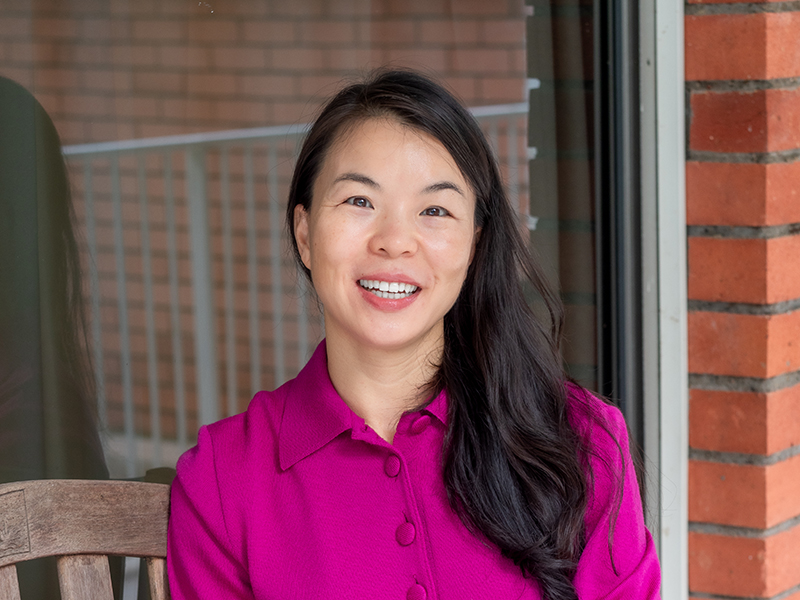
How does House on the Hill prepare kids for Kindergarten through the Nido programme?
The infant care programme supports infants from two to 17 months in a calm, open and nurturing space. Babies explore freely, develop confidence and build trust through gentle guidance and purposeful experiences.
At this age, the foundation is deeply human development: responsive communication, safe movement, sensorial exploration, emotional security, early language exposure and strong parent partnership.
Our teachers lovingly guide the daily development of infants. Supporting this are healthy eating, a continued routine from home, outdoor activities and constant communication.
As Nido children move into Playgroup, Nursery then Kindergarten, they’re already equipped with a strong foundation for concentration, independence, confidence and a strong sense of belonging.
What are the advantages of a mixed-age infant care programme over a single-age class?
Children don’t grow in neat, single-age boxes. In a mixed-age classroom, like the Nido infant care programme, younger children learn naturally by observing older children, while older children strengthen their own understanding by helping, leading and mentoring. This builds academic confidence alongside responsibility, empathy and social maturity.
For us, mixed-age learning creates a small realistic society that’s a more natural reflection of life. Children learn how to wait, lead, follow, help, receive help and respect different stages of development. Over time, each child experiences different roles, and this supports confidence, humility and social harmony.
What else is important in your pedagogical approach?
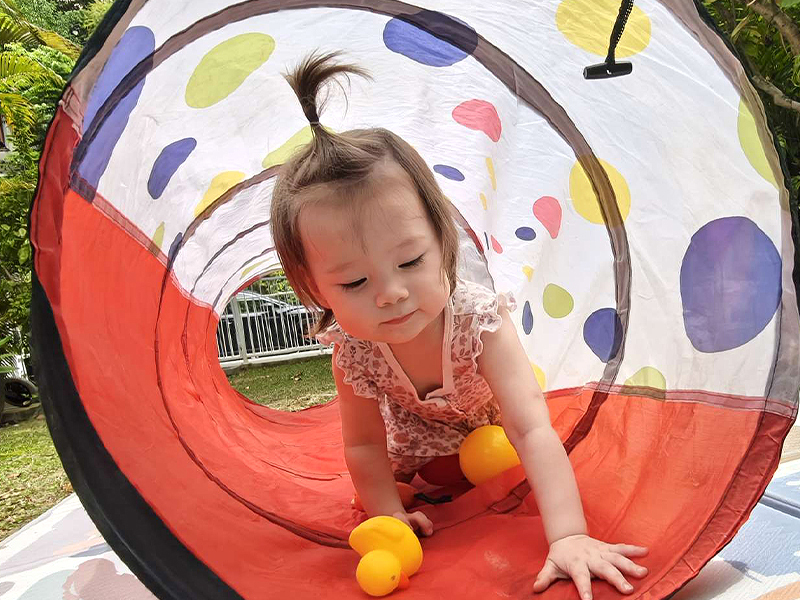
We believe that real learning happens when children are fully engaged – touching, testing, sharing and creating with their whole body and whole heart. We don’t believe that every child should move through learning in exactly the same way or speed.
Our customised pedagogy begins with teachers carefully observing each child. They prepare the right materials and offer guidance at the right moment. This allows the child to repeat, practise and deepen thinking until the child masters the interest.
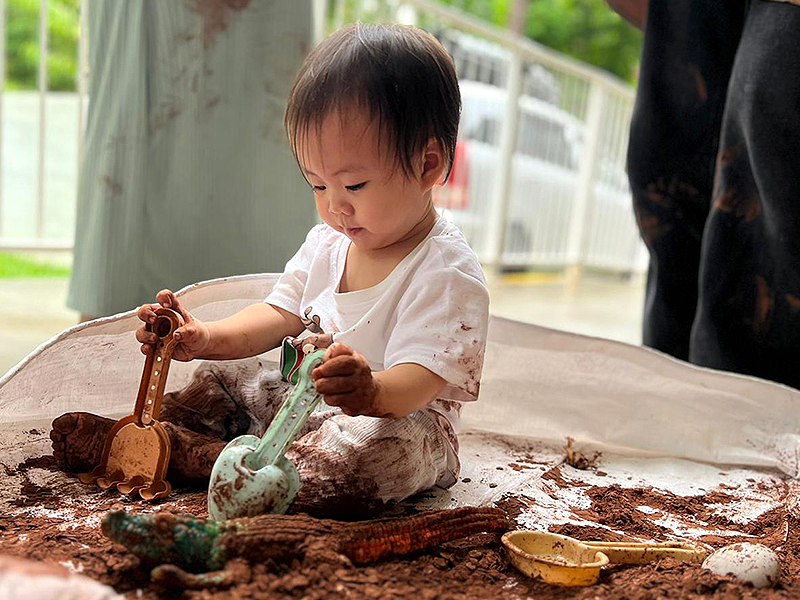
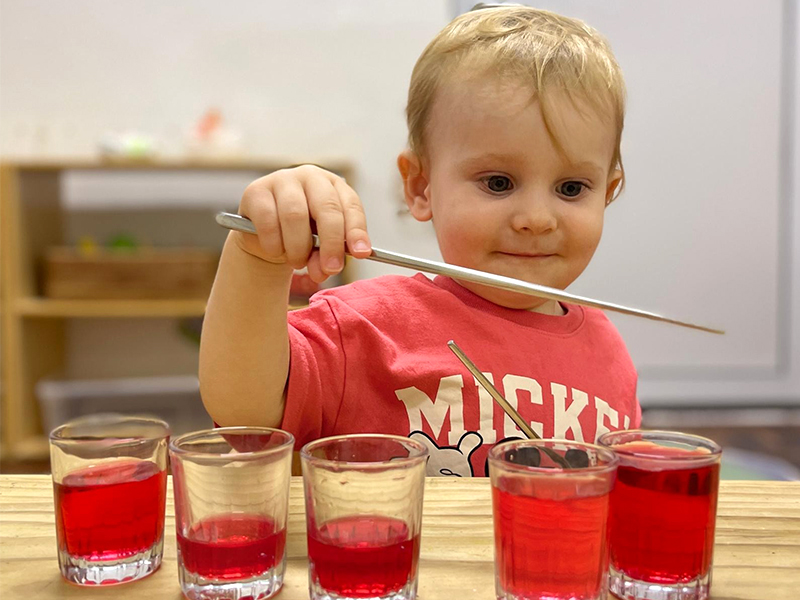
Inside the classroom, this may look like one child repeating a practical life activity to strengthen coordination and concentration, while another works with mathematics materials and another is building language through phonics or storytelling.
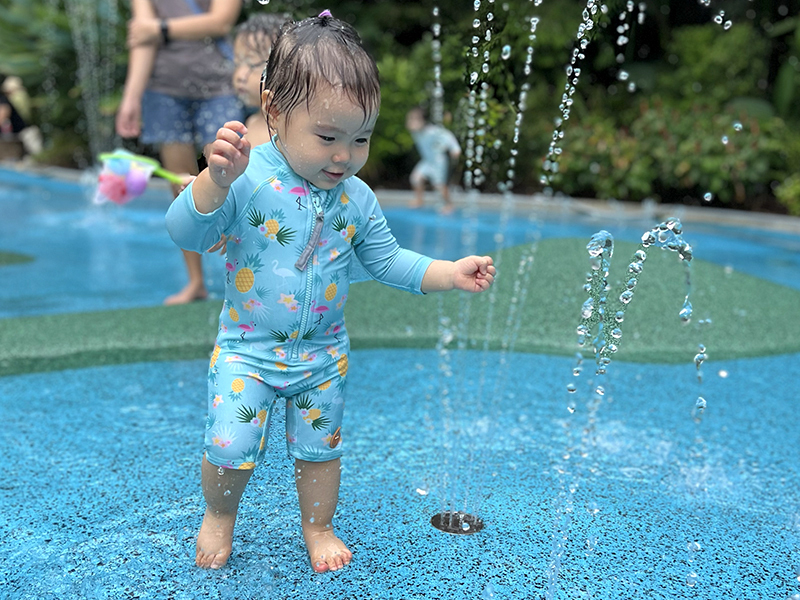
Outside the classroom, it continues through purposeful outdoor activities, outdoor classroom, gross and fine movement and daily gardening routines.
How do your campuses help to stimulate and encourage learning through play?
In Montessori, the environment is a teacher, the teachers are guides. Each of our campuses offers a different living environment for play. Balmoral, where our Nido programme is offered, is surrounded by blue sky and green grassland.
Soul, light, nature and history fill our spaces, with plenty of room for children to move, too. We prepare and design the classrooms carefully, so they support children’s independence and allow them to practice making their own choices. For instance, they’re prepared with Nienhuis Montessori materials – purposeful, hands-on tools helping children develop through movement, senses, logic, language and repetition. These strongly guide children through the concept of academics to form a solid foundation in many areas including phonics, mathematics, science, sensory, culture, geography and history.
Also, outdoor time at House on the Hill is not a break from learning; it’s where focus, self-regulation and quiet persistence can grow naturally. We ensure the child is supported, but not over-directed by providing enough structure for security, and enough freedom for initiative.
Tell us how you integrate English-Mandarin and English-Japanese bilingualism into learning.
At House on the Hill, Mandarin is part of the child’s living environment, not a separate subject that happens only once a day. The goal of our immersive Mandarin environment is not only fluency but confidence, identity and a deep cultural connection. We want children to love the language, living in the thoughts, spirits and feelings. That’s why we integrate Mandarin through cultural activities and games, and meaningful daily interactions.
The programme is led by native-speaking educators trained in Montessori methodology, giving children authentic exposure to tone, pronunciation and expression. With hands-on experiences guided by professional artists, children are encouraged to express their feelings through poetry and creative works. They are immersed in the beautiful moment of Chinese art and music, experiencing learning in a meaningful and engaging way.
For families with a Japanese language environment at home, we have a Japanese programme led by native Japanese teachers. The lessons are strongly rooted in hands-on exploration and lived cultural experiences. Children encounter the language through songs, stories, seasonal traditions, practical activities, cultural celebrations, food, art, movement and everyday expressions.
How can parents get involved at House on the Hill?
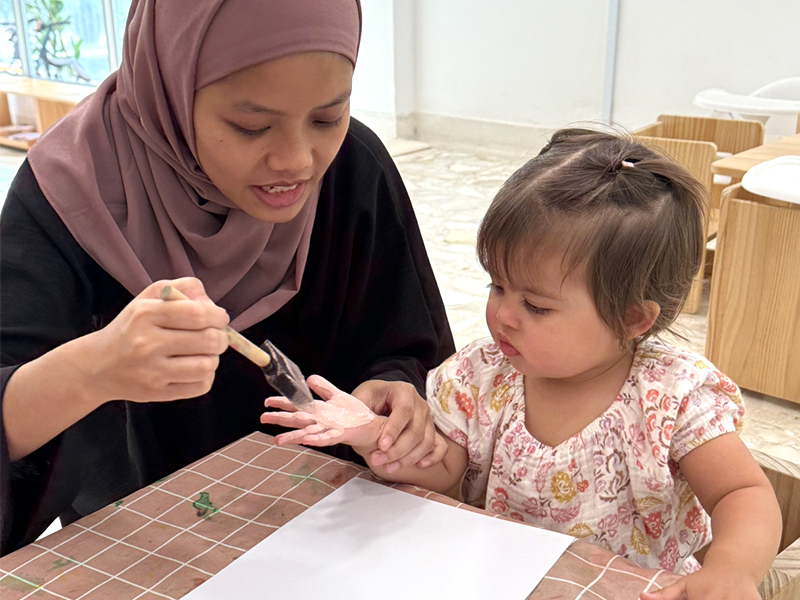
Parent partnership is very important to us as we see parents as part of the child’s full learning environment. Parents can be involved through the Parent Support Group, school events, workshops and celebrations.
Our Parent Support Group actively organises social events and encourages parent involvement both in and out of school. We also regularly provide workshops for parents, caregivers and helpers. This helps support the early childhood development journey because learning shouldn’t stop at the classroom door.
When parents understand respectful communication, child development, routines, independence and behaviour, the child receives a more consistent support between home and school. We use various communication channels to keep parents updated on how their child is growing socially, emotionally, physically and intellectually. These include our school communication platform app, parent-teacher meetings, circulars and conversations with teachers.
Beyond formal updates, we believe in open and responsive communication. Parents should feel that they understand their child’s journey, not just receive a report at the end of a term. That relationship between home and school is part of the care we promise.
About House on the Hill Montessori Preschool
Founded in 2012, House on the Hill was started with a very clear belief that early childhood education should respect the individual development journey of each child. The preschool’s aim is to provide a place where children are deeply seen, carefully guided and trusted to grow at their own pace. This is achieved through three connected layers:
- Pastoral care: Children need warmth, security and respectful relationships before deep learning can happen.
- Montessori curriculum: Children work with purposeful materials in language and mathematics. This helps them develop independence, concentration, life skills, creativity and social awareness.
- The environment: Children learn from the prepared classroom, outdoor spaces, daily routines, nature, food, community and real experiences.
Besides Infant Care and Childcare at Balmoral, House on the Hill has Preschool campuses at Mount Sophia, Hollandse Club and Pasir Panjang.
Experience the Nido programme at House on the Hill Balmoral
Visit houseonthehill.com.sg for upcoming Open House dates in September and October, or register at t.ly/HOTHBookATour for a private tour.
House on the Hill Balmoral Infant Care and Childcare is at 2H Balmoral Crescent.
6258 6061 | [email protected]
houseonthehill.com.sg/pages/balmoral-infant-care
FB & IG @houseonthehillsg
Liked this article about the infant care programme at this Montessori preschool? Head to our Kids section for more articles on Schools.
Don't miss out on the latest events, news and
competitions by signing up to our newsletter!
"*" indicates required fields