For parents considering high schools for their children, international education can seem like a maze of acronyms and pathways. The challenge is finding a programme that delivers academic excellence and also nurtures happy, well-rounded young people. Many traditional education models offer high stakes exams and rigid learning. UWC South East Asia (UWCSEA) takes a different approach.
The College has moved away from (I)GCSE in favour of a Grade 9 and 10 Programme that is modern, future-focused, prioritises student wellbeing and prepares them for the International Baccalaureate Diploma Programme (IBDP). It’s designed to help students discover their passion and purpose, and prepare for a future that’s constantly changing.
Why move beyond (I)GCSE?
As a school that deeply values innovation, UWCSEA asked some critical questions:
- In a world that needs creative, collaborative problem-solvers, is a system designed in the 1980s still the best way forward?
- Does a rigid, exam-heavy structure foster wellbeing, interdisciplinary thinking, and a genuine love of learning?
- Can we offer a seamless experience for students starting the IBDP?
High School leaders at both East and Dover campuses assembled a team of expert educators who undertook a rigorous and collaborative journey of research, data gathering and asking for feedback from a number of sources, including UWCSEA students. After five years of development, the Grade 9 and 10 Programme was launched.
“When we look at the experience of our staff in terms of IB markers, course developers, team leaders, curriculum writers, it’s phenomenal. We have an incredible wealth of experience to draw upon and we’re incredibly fortunate,” says Pippa Haley, Vice Principal of High School, UWCSEA Dover.
How the Grade 9 and 10 Programme is different
At its centre is the UWC mission to make education a force to unite people, nations and cultures for peace and a sustainable future. For example, the compulsory UWC Perspectives course explores what it means to be a global citizen, tackling topics like peacebuilding, sustainable development, and intercultural understanding. It’s the school’s mission in action, and it also prepares students for the IB Diploma’s compulsory Theory of Knowledge course.
In fact, many facets of the programme ready students for the academic expectations and assessment styles of the IB. Programme designers intentionally drew on UWCSEA’s unparalleled experience, having been the first school in Asia to offer IB in 1977. At the same time, they ensured it offered transferability for students joining from different educational systems, and those might go on to pursue non-IB pathways.
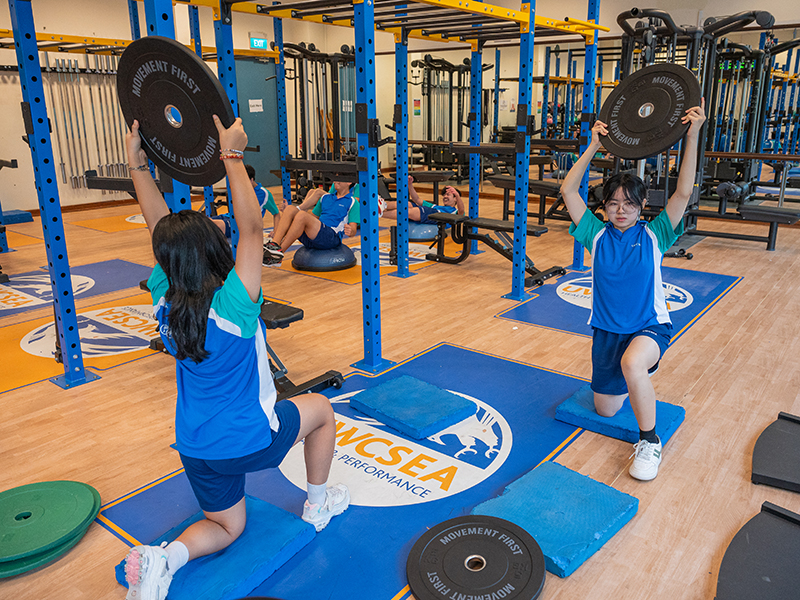
Student wellbeing is front and centre. Wellbeing and Physical Education is a compulsory course which is timetabled in the school day. Students are also supported by Personal and Social Education, one of five pillars of the UWCSEA learning programme that sits along with Academics, Activities, Outdoor Education and Service. Together they ensure a holistic, character-building experience.
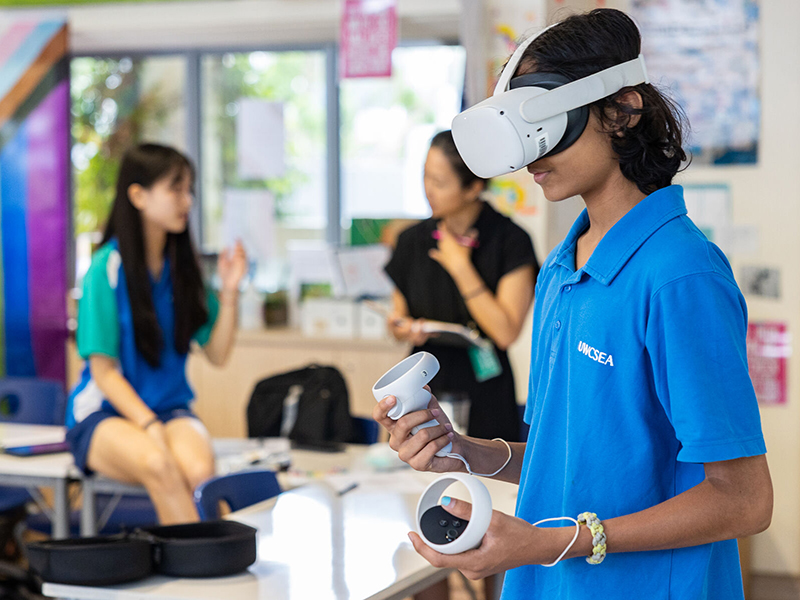
Importantly, the Grade 9 and 10 curriculum takes into account the potential impact of technologies like AI and the rapidly changing employment market. The programme is optimised to build skills and qualities that nurture success beyond education, even as the future remains unpredictable.
A wide range of subject choices
With more than 40 subjects to choose from, students can tailor their choices to fit their interests. A budding artist could dive deep into Drama, Music, and Visual Arts, for example, while a future engineer could opt for advanced “Plus” courses in Science and Maths. Students can choose ten courses with at least one course in English, Maths, Science, Humanities, a Foreign Language, and Art and Design. Plus, UWC Perspectives (one-year) and Wellbeing and Physical Education (two-years) are compulsory.
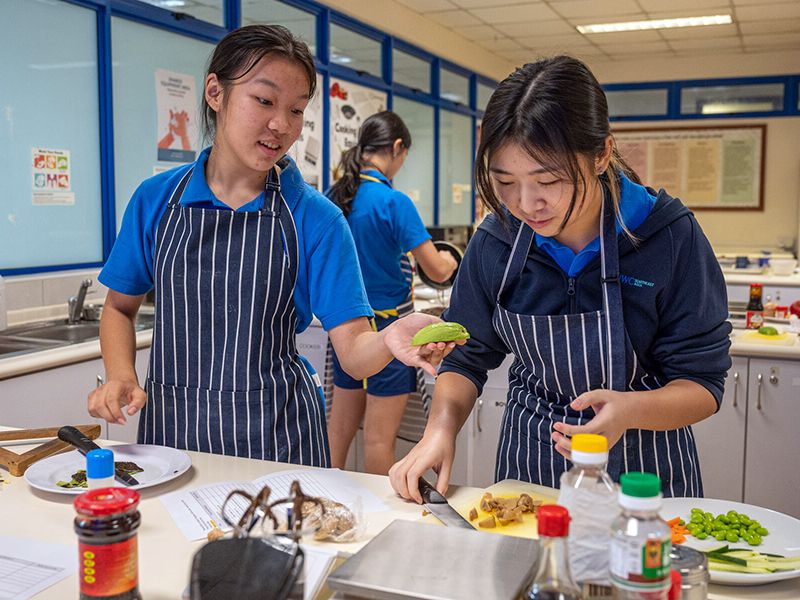
This leaves two “free choice” subjects in Grade 9 and three in Grade 10, allowing students to deepen their knowledge in subjects they enjoy or explore their interests in a new domain. These include Sports Science, Innovation Engineering, Ethics in Real Life, Social Enterprise, Graphic Design, and Food Science and Nutrition. This built-in agency is fantastic for teenagers who are still discovering their passions.
Assessments that actually support learning
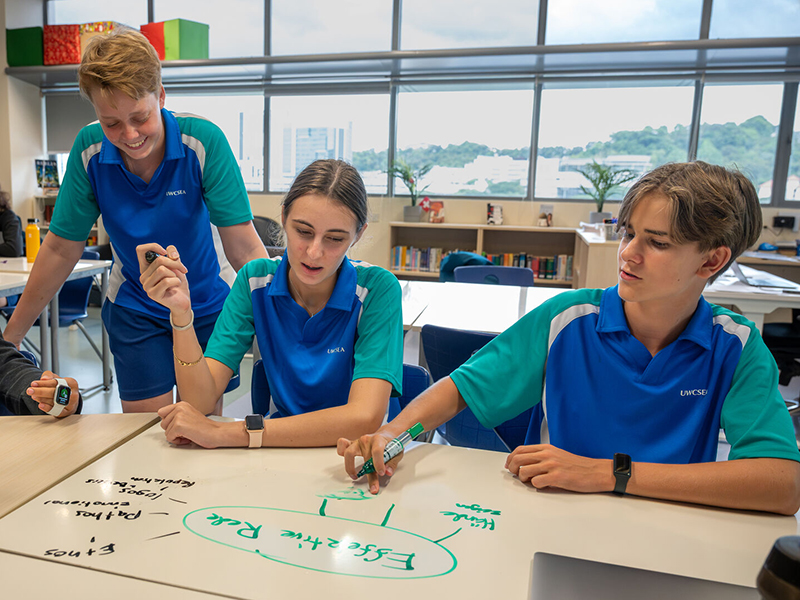
When it comes to exams, we’re all familiar with the late-night cramming and stress in a system where 100% of a grade hangs on a single test. In Grades 9 and 10, assessments are authentic. Students complete varied tasks including problem-solving, case studies and simulations, project-based learning, and reflective portfolios. These give a richer, more accurate picture of their abilities. Teachers look at this whole body of work to determine a student’s final attainment level.
There are also exams. An assessment week at the end of each year helps build the skills and confidence to perform under timed conditions. The key difference is that this is just one piece of the puzzle, not the whole picture.
“The UWCSEA Grade 9 and 10 programme allowed me to immerse myself completely in my learning,” says Nina, in G11 at UWCSEA East. “There were always opportunities to learn in fun and interesting ways, through collaborative and individual work. I think the most significant aspect of the programme is that it offers multifaceted ways of learning that suit everyone. There are a variety of opportunities to demonstrate your learning throughout the year making it suitable for all.”
Real-world, future-focused classes
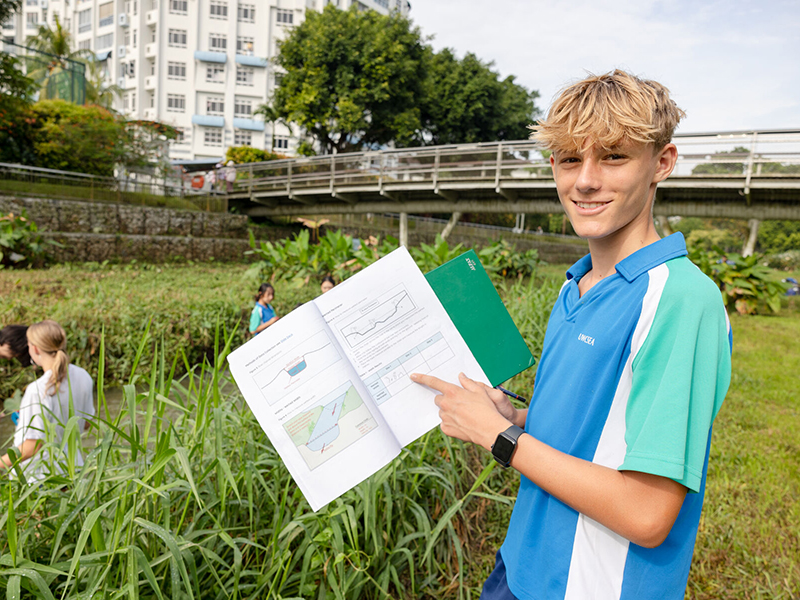
Grade 10 Mathematics
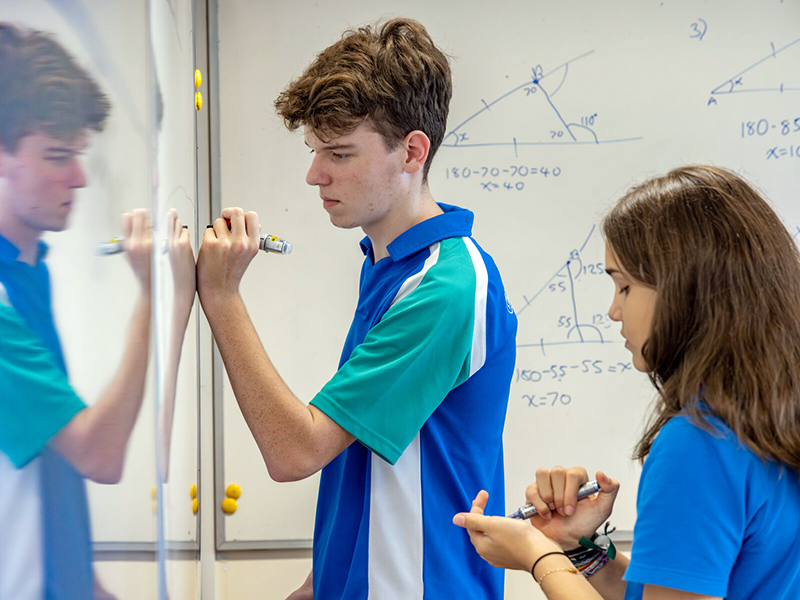
One example of an authentic assessment is “TrigVentures” in Grade 10 Mathematics. Students visit the Singapore Flyer with the main challenge of estimating its height using tools like trundle wheels, measuring tapes, and inclinometers. This task requires that they apply classroom trigonometry in an unstructured, real-world setting.
The approach presents many challenges that would be absent if working on a theoretical scenario on a piece of paper. A key obstacle is a large plant display blocking the Flyer’s base, which prevents the use of a simple right-angle triangle calculation. Students must devise their own measurement strategy and can collaborate and share ideas. They submit their own individual solutions later, having come to them through a process that mirrors real-world solution-seeking.
Grade 10 Geography
In a recent Grade 10 Geography class, students studying Tourism took part in a unique activity to make the learning more meaningful. They watched thought-provoking clips about the social and environmental harms of elephant tourism, voluntourism and cruise tourism. As a result of these clips, each tourism type was put on “trial” whereby students were then tasked with forming a prosecution and defence and undertaking rigorous research to defend their positions. As juries, they deliberated and agreed on a verdict about whether these types of tourism should be stopped or allowed to continue.
This professional courtroom setup made learning engaging, and students connected with their own travel experiences. The follow-up involved students forming task forces to draft policy-level regulations and guidelines for tourists, ultimately developing a balanced, nuanced understanding of complex tourism ethics.
“The trials were a really engaging way for us to develop a nuanced understanding of how tourism impacts different people, animals and places. My biggest takeaway was that for tourism to have more positive than negative impact it requires careful regulation,” shared one participant.
“We really wanted students to think more deeply about tourism experiences that were meaningful to them,” says Jodie Chambers. Jodies is High School Teaching and Learning Lead at UWCSEA East. “By taking on different roles in three tourism trials, students were able to recognise patterns across different types of tourism. This let them understand how tourism can both help and harm communities. The approach moved them beyond factual knowledge about just one place and took them deeper into concepts of management, sustainable development and impact.”
University admission and beyond
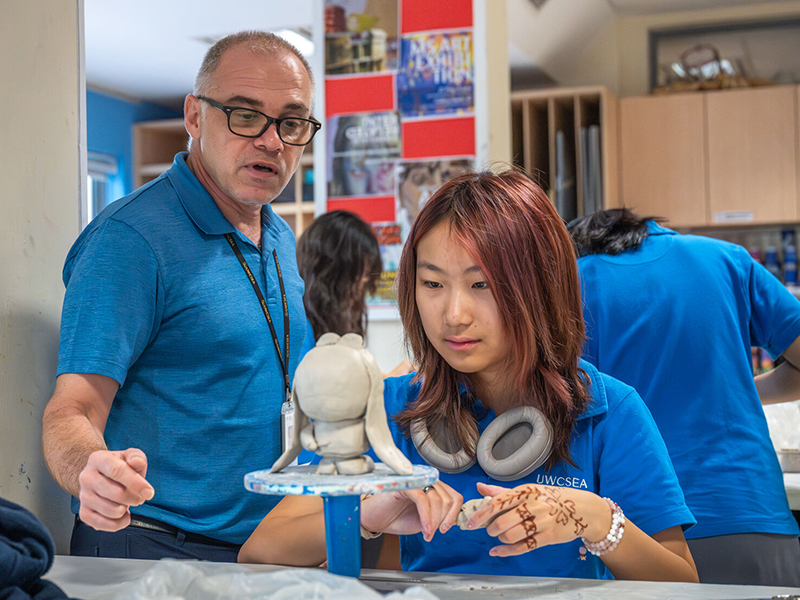
For many parents, the bottom line is university admission. Will a programme without the (I)GCSE tick the box for top universities? The answer is yes. UWCSEA has consulted with admissions offices from top-tier institutions around the globe. They are experienced in accepting students from all manner of educational backgrounds, and value the rigour of the IB. In Grades 9 and 10, the dedicated University Advising team guides students and families in planning their course options and future pathways, whether students are bound for another high school after Grade 10 or their dream university after IB.
UWCSEA
• Dover Campus: 1207 Dover Road | 6774 2653
• East Campus: 1 Tampines Street 73 | 6305 5353
uwcsea.edu.sg
Read more about the IB course at UWCSEA. You can also head to our Kids section for more about schools in Singapore and things to do with kids. To make the most of living in Singapore, read our latest City Guide here for free!
Don't miss out on the latest events, news and
competitions by signing up to our newsletter!
By signing up, you'll receive our weekly newsletter and offers which you can update or unsubscribe to anytime.